
Best Things to Do in Lanzarote is less about finding a secret attraction and more about combining the island’s strongest landscapes in a sensible order. Lanzarote is unusually coherent as a travel destination. Volcanoes, low white architecture, black lava, vineyards, art and Atlantic beaches feel connected rather than scattered. César Manrique’s influence is visible in how many major attractions use the landscape instead of competing with it. A good itinerary alternates ticketed sites with open coastal time, because trying to visit every cultural centre in one day makes the island feel like a checklist.
The official tourism portal for Lanzarote is Hello Canary Islands. Use it alongside local authority pages for final checks on regulated access, trail closures, events and opening arrangements. This guide focuses on how to build a rewarding trip rather than freezing changeable details into a permanent itinerary.
Who is Lanzarote best for?
Lanzarote is particularly good for couples, families who prefer manageable driving distances, first-time road-trippers and travellers interested in architecture and landscape. It also works for people who do not want a nightlife-first holiday. Surfing, cycling and hiking can make the trip active, while resort bases such as Playa Blanca, Puerto del Carmen and Costa Teguise keep logistics simple.
The best things to do in Lanzarote
1. Visit Timanfaya National Park
Timanfaya is the essential volcanic introduction to Lanzarote. The most visited Montañas del Fuego experience uses controlled access and an official route, so do not assume you can freely drive through the core landscape. Book or check current arrangements before the day and leave margin for queues. The Timanfaya National Park guide explains what the standard visit includes and how to combine it with nearby stops.
2. Explore Jameos del Agua
Jameos del Agua transforms a volcanic tube into one of the island’s most distinctive cultural spaces. Go for the integration of geology, architecture and design rather than treating it as a quick photo stop. Opening times and event access can vary, so confirm the current schedule. Our Jameos del Agua guide covers tickets and practical planning.
3. Tour Cueva de los Verdes
Cueva de los Verdes gives you a different perspective on the same volcanic system. Visits are guided and timed, which makes planning more important during busy periods. Wear stable footwear and arrive before your slot. The Cueva de los Verdes guide helps you decide whether to pair it with Jameos or spread the two experiences across separate days.
4. Take in the view from Mirador del Río
César Manrique’s Mirador del Río is one of the best examples of architecture disappearing into the landscape. The view over La Graciosa and the Chinijo Archipelago is the star, so visibility matters. If cloud is dense, reorganise the day if possible. See the Mirador del Río guide for current practical details.

5. Walk or swim at Papagayo
The Papagayo coves are among Lanzarote’s best-known beaches, but access, road conditions and the lack of extensive services mean you should plan rather than arrive casually. Sea conditions still matter despite the sheltered appearance of some coves. Use the Papagayo beaches guide and carry what you need for the day.
6. Experience Famara
Famara is about space, surf culture and the huge Risco de Famara backdrop. The beach can be windy and exposed, which is excellent for some sports but not automatically ideal for relaxed swimming. Sunset is beautiful when conditions cooperate. Read the Famara guide and choose the activity that matches the sea state.
7. Drive through La Geria wine country
Lanzarote’s vineyards are one of the clearest examples of adaptation to volcanic conditions. The route through La Geria is visually striking even if you do not drink wine. If you plan tastings, designate a driver or use an organised option. Our Canary Islands wine guide gives context for Malvasía and the island’s wine landscape.
8. Visit Teguise
The former capital is one of the best places to slow the itinerary down. Its historic streets, courtyards and market atmosphere provide a cultural pause between volcanic drives. Market days can be much busier than ordinary weekdays, so choose based on whether you want energy or quiet. The Teguise guide helps with timing.
9. See the César Manrique Foundation
The Foundation at Tahíche is one of the most revealing places for understanding Manrique’s approach to volcanic architecture. It is especially worthwhile before or after visiting his other island projects because it gives them context. Check the current opening schedule and use our César Manrique Foundation guide for practical details.
10. Take a day trip to La Graciosa
La Graciosa is close enough to visit from Lanzarote but different enough to feel like a separate journey. Ferries leave from Órzola, and once there the rhythm changes to walking, cycling, beaches and simple village life. Do not over-plan the day. Start with our La Graciosa travel guide and La Graciosa beaches guide.
11. Add a north-island loop
Haría, Órzola and the northern viewpoints create a relaxed road-trip day that does not depend on one major attraction. It is especially useful when you have already booked the volcanic sites on another day. Our Haría guide and Órzola guide make good anchors.
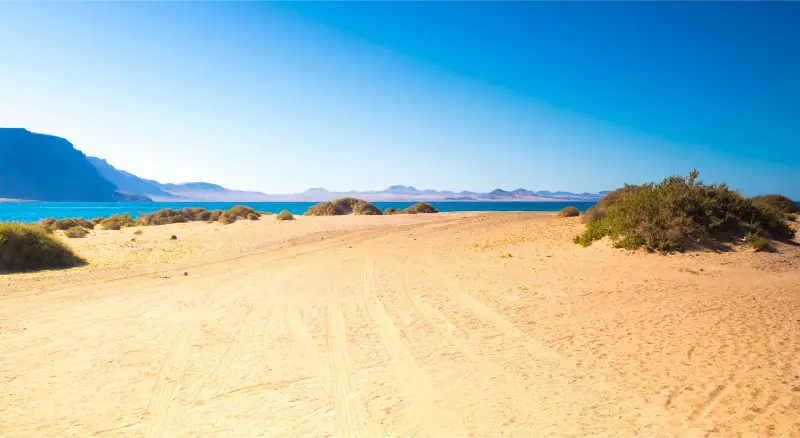
12. Leave room for an unplanned coastal stop
Lanzarote’s strength is the space between headline attractions: lava fields, low villages, small coves and sudden viewpoints. Keep at least one half-day without a timed ticket. That flexibility lets you respond to wind and cloud rather than forcing a beach or viewpoint when conditions are poor.
How many days do you need?
For a first trip to Lanzarote, three days is enough to understand the basic geography, but five to seven days produces a much better rhythm. With three days, choose one major region per day and accept that you will miss places. With five days, add a slower coast or village day. With a week, you can repeat a favourite area, wait for better mountain weather and spend an afternoon without sightseeing pressure.
The biggest planning improvement is to stop counting attractions and start counting transfers. A day with one mountain drive, one substantial walk and one town is often fuller than a day with six pins on a map. If you are moving accommodation, treat the transfer itself as part of the day rather than pretending it consumes no time.
Where should you stay?
Your base changes the trip more than most travellers expect. Read our where to stay in Lanzarote before booking. Choose accommodation for the activities you will actually do, not the place with the longest list of facilities. A hotel that saves forty minutes of driving every morning can be more valuable than a slightly cheaper property on the wrong coast.
If the trip is longer than a week and the island has clearly separated regions, a split stay can make sense. For shorter trips, one well-chosen base usually beats packing and checking in twice. Always inspect the exact map position: municipality names can cover large areas and dramatic changes in altitude.
Do you need a car?
A car gives the greatest freedom on Lanzarote, especially for viewpoints, trailheads and small villages, but it is not automatically necessary for every visitor. Strong resort or city bases can be used with buses, taxis and organised excursions. If you drive, read our driving in the Canary Islands guide and check your rental contract before using rough or unpaved roads.
Download offline maps and avoid building a route that requires perfect timing. Mountain roads, parking searches, road works and scenic stops stretch travel time. The safest schedule has a margin at the end rather than a fixed dinner reservation immediately after a remote sunset.
How to organise the experiences into a realistic itinerary
- Group sights by the same coast, valley or mountain area
- Reserve only activities that genuinely need a permit, timed ticket or limited-capacity boat
- Leave ordinary beaches and viewpoints flexible until you see the weather
- Plan one proper meal break instead of eating only between attractions
- Keep a lower-altitude or indoor alternative for mountain-cloud days
- Avoid long unfamiliar mountain drives immediately after sunset
For a self-drive framework, use our Lanzarote road trip. It is better to reverse a route because of wind or cloud than to force the original order. Canary Islands microclimates reward travellers who can swap morning and afternoon plans.
Weather, ocean and outdoor safety
The Canary Islands are mild year-round, but mild does not mean uniform. Wind, cloud, altitude and Atlantic swell can change an experience completely. A sunny resort forecast says little about a mountain ridge, and a calm-looking cove can still have current. Check the specific location on the day and follow lifeguard flags, barriers and official warnings.
For walking, carry water, high-SPF sun protection, footwear with grip and a layer for wind or altitude. On protected land, stay on authorised paths and never remove stones, plants or shells. If access is closed, do not treat another person’s social-media track as permission to bypass it.
How to keep the trip enjoyable rather than exhausting
Build days around contrast. A demanding hike works well with an easy coastal evening; a ticketed cultural attraction works well with an unstructured village lunch; a long road day should be followed by a local day near your accommodation. This approach produces more memorable trips than putting every famous sight into consecutive twelve-hour days.
Also leave room to repeat something. The first beach you planned may be windy, the first stargazing night may be cloudy and the first viewpoint may disappear into mist. A schedule with no spare time turns normal island weather into a disappointment. A schedule with one flexible half-day turns it into a simple change of order.
Frequently asked questions
What is the number-one thing to do in Lanzarote?
There is no single answer that works for every traveller. The best first choice is the experience that expresses what is most distinctive about Lanzarote and fits the day’s conditions. Use the first three or four ideas in this guide as anchors, then choose the rest according to your interests rather than trying to complete the list.
Should I book activities before arrival?
Book genuinely limited experiences such as regulated trails, timed attractions, ferries with constrained capacity and popular boat trips when your dates are fixed. Keep ordinary beaches, town walks and viewpoints flexible. This gives you certainty where it matters without making every day dependent on a timetable.
Can I see the island without driving?
Yes, but the experience changes. Public transport works best when you choose a strong base and accept a smaller geographic radius each day. Organised excursions can cover difficult mountain areas. Trying to reproduce a rental-car itinerary by bus usually creates unnecessary waiting and very long days.
Is the island good with children?
Most Canary Islands work well for families when the itinerary is simplified. One major activity, a proper lunch and a beach or promenade is enough for a full day. Choose bathing spots for conditions, not fame, and avoid adding a long mountain drive after children are already tired.
What is the biggest mistake first-time visitors make?
Underestimating geography. Islands look compact on a map, but mountain roads, parking, ferry schedules and local microclimates make real travel slower. Plan by regions and experiences, not by straight-line kilometres.
Final advice
The best things to do in Lanzarote are the ones that fit together. Choose a few non-negotiable experiences, place them on geographically sensible days and leave enough flexibility for weather. That approach gives you the famous highlights while still making room for the quiet village, empty viewpoint or beach you did not know about before arriving.
Best planning rule: one major experience, one nearby extra and enough unplanned time to let the island surprise you.