
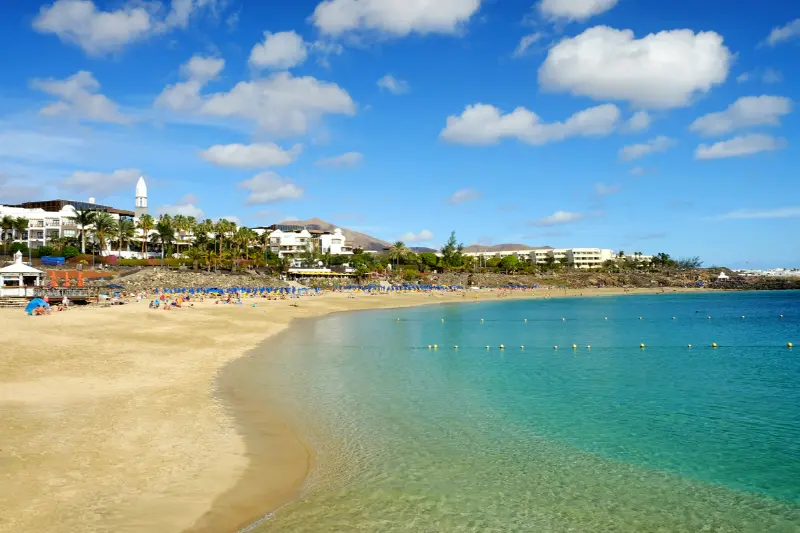
The Papagayo beaches are the classic image of southern Lanzarote: pale sand, clear water, black and ochre volcanic slopes and a coastline with very little development. Playa de Papagayo is the best-known cove, but the wider Los Ajaches area contains several beaches, so a day here can be as active or as lazy as you want.
The key to enjoying Papagayo is understanding the access and choosing a beach that suits the day’s wind and sea conditions. If you are staying nearby, read our Playa Blanca guide and best beaches in Lanzarote before deciding how much time to spend here.
At a glance
| Island | Lanzarote |
|---|---|
| Area | Los Ajaches Natural Monument, east of Playa Blanca |
| Main beach | Playa de Papagayo |
| Typical visit | Half day to full day |
| Access | Unpaved approach by vehicle or walking routes from Playa Blanca area |
| Best for | Scenery, sheltered coves, snorkelling and a beach day |
Why Papagayo Beaches Lanzarote is worth visiting
Papagayo is popular because it combines dramatic scenery with relatively sheltered water. The main cove is shaped like a small shell beneath low cliffs, making it feel more intimate than Lanzarote’s long open beaches. On calm days the water can be excellent for swimming and snorkelling.
The wider protected area is just as important as the famous viewpoint above the cove. Playa Mujeres, Playa del Pozo and other nearby stretches let you walk between different bays and find more space. This is one of the best places on Lanzarote to make the journey itself part of the beach day.
What to see and how to experience it
If your priority is the iconic view, start at Playa de Papagayo and walk to the cliff-top viewpoints before settling on the sand. If your priority is space, consider one of the larger neighbouring beaches. Carry enough water and sun protection because services are limited compared with resort beaches.
Snorkelling is most rewarding when the water is calm and visibility is good. Stay close to the protected parts of the cove, avoid boat traffic and never assume a clear-looking sea is automatically safe. There is no substitute for checking actual conditions when you arrive.
How to get there and plan the route
Vehicle access into Los Ajaches uses an unpaved track, and the official tourism information notes that access by vehicle is not free. Drive slowly, especially in a small rental car, and keep extra distance from the vehicle ahead to reduce dust and stone damage. Parking is available near the beaches, but busy periods can still feel crowded.
Walking from the Playa Blanca side is an excellent alternative for fit visitors, especially in cooler months. The route is exposed, so carry more water than you think you need and avoid the hottest hours. Do not treat the walk as a casual promenade in strong sun.
Tickets, opening details and what to check
There is no normal “beach ticket” for Playa de Papagayo, but vehicle access into the protected area is subject to a fee. The official Canary Islands tourism page confirms parking, a nearby restaurant/beach-bar option and the fact that the main beach does not have lifeguard surveillance.
Because access arrangements can change, especially around protected areas, check local signage and official information before driving in. Bring a card and some cash rather than relying on a single payment method.
A realistic visit: how much time to allow
Most travellers do better when they give Papagayo Beaches Lanzarote a clear role in the day rather than treating it as one more pin on a map. Use the typical-visit estimate above as a minimum planning block, then add driving, parking, food and photo time. Canary Islands roads often look short on a map but can be slow when they cross volcanic or mountainous terrain.
If you have a fixed reservation elsewhere, work backwards from that time and leave a generous buffer. A relaxed plan is especially valuable when wind, cloud, tides or road conditions affect the experience. The islands reward flexibility: if one stop is not working, moving to a different altitude or coast can completely change the day.
Best nearby places to combine with the visit
Playa Blanca
The easiest resort base for Papagayo, with restaurants, shops and ferry connections.
Marina Rubicón
A pleasant marina area for dinner after the beach.
Yaiza
A whitewashed village that works well on a south-Lanzarote road trip.
Timanfaya
Combine only if you start early; both places deserve unhurried time.
Femés
A small inland stop with elevated views over the south.
Visiting with children
Families often love Papagayo because the main cove can be sheltered, but the lack of lifeguard surveillance matters. Choose conditions carefully, supervise children closely and bring everything you need for shade, water and snacks. For very young children, one of Playa Blanca’s serviced beaches may be easier on a windy or busy day.
Best time of day and weather considerations
Morning is best for easier parking and cooler walking. Late afternoon can be beautiful for colour and softer light, but do not leave a long unpaved drive or exposed walk until after dark. In summer, wind and sun exposure can be more important than air temperature.
What to bring
- Water: even short stops become dehydrating in wind and sun.
- Sun protection: sunscreen, sunglasses and a secure hat are useful year-round.
- A light layer: viewpoints and northern areas can feel much cooler than resort beaches.
- Suitable footwear: choose shoes for the actual surface, not just the temperature.
- Offline directions: save the route and key confirmations before leaving reliable mobile coverage.
Responsible visiting and safety
The Canary Islands are visually robust but ecologically fragile. Stay on authorised paths, use established access points, take all rubbish away and never build stone stacks or remove volcanic material, shells or plants. In protected areas, a barrier or closure is part of the conservation system rather than an inconvenience to work around.
For beaches and natural pools, make the decision to enter the water from the conditions in front of you, not from photographs taken on another day. Respect lifeguard flags, warning signs and local advice. For mountain and forest routes, check official trail status after rain, wind, fire-risk periods or maintenance closures.
How this stop fits into a first trip
If this is your first visit to the archipelago, use our Canary Islands travel guide to decide how much of your holiday should be beaches, towns, nature and driving. A good itinerary normally has one major objective per half-day, with smaller nearby stops added only when they are genuinely on the route.
That approach is especially useful on the smaller islands, where a day can look empty on paper but feel full once scenic roads, viewpoints and local meals are included. It also gives you space to return to a favourite place rather than turning the holiday into a race.
Frequently asked questions
Is Papagayo one beach or several?
Playa de Papagayo is the famous cove, but it sits within a group of beaches in the Los Ajaches protected area.

Can you drive to Papagayo?
Yes, vehicle access is possible via an unpaved track and is subject to a fee. Drive slowly and check rental-car conditions.
Is Papagayo good for children?
It can be on calm days, but the main beach currently has no lifeguard surveillance, so close supervision is essential.
Can you walk from Playa Blanca?
Yes. Walking is popular, but the route is exposed to sun and wind, so carry water and use proper footwear.

Final advice
Papagayo Beaches Lanzarote is most rewarding when you plan for the real conditions of the place rather than the ideal version seen in photographs. Check the official information before you leave, give yourself enough time, and keep one flexible alternative nearby. That small amount of planning usually makes the difference between a rushed stop and one of the days you remember from the trip.
Planning mistakes to avoid
The most common mistake at Papagayo Beaches Lanzarote is underestimating the difference between arrival time and experience time. Parking, walking from the car, checking conditions and orienting yourself can easily add 20–40 minutes before the visit really begins. Build that margin into the day instead of cutting the final stop short.
A second mistake is following an old itinerary without checking live access information. The Canary Islands increasingly manage busy natural sites with permits, timed tickets, parking rules or temporary closures. Save the official page before travel and check it again when the visit depends on a specific trail, road or attraction.
A third mistake is planning every meal and stop at the exact same latitude or altitude. Weather on the islands is highly local. If cloud covers a viewpoint, the coast may be sunny; if strong wind makes a beach unpleasant, a village or museum inland may be comfortable. Keep your route modular so you can switch the order without losing the day.
Finally, avoid judging value only by how many attractions you fit in. One long beach walk, a slow museum visit or an hour watching changing cloud over a volcanic valley can be more memorable than five rushed photo stops. The best Canary Islands itineraries are selective, not exhaustive.
A simple half-day plan
For a low-stress half day at Papagayo Beaches Lanzarote, start by arriving before the busiest middle part of the day and spend the first 15 minutes orienting yourself rather than immediately following the crowd. Identify the main viewpoint, trail, beach section or indoor route, then decide what deserves most of your time. This prevents you from spending the visit moving constantly without actually experiencing the place.
After the main experience, leave at least 30–45 minutes for the less obvious part of the site: a secondary viewpoint, a slower walk, a café, a short stretch of coast or a nearby village. That buffer also absorbs parking delays and weather changes. If conditions are poor, reverse the plan and use the nearby stop first, then return when visibility, tide or wind improves.
For lunch, choose somewhere naturally on the onward route rather than driving back to a resort simply because it has more restaurants. One of the pleasures of exploring the islands is connecting landscapes with local settlements. A simple meal in a nearby village often makes the day feel more coherent and reduces unnecessary driving.
If you are travelling in peak holiday periods, keep the final part of the half day flexible. Popular parking areas and ticketed attractions can take longer than expected, and a rigid schedule creates pressure to speed through the very place you came to see. One major stop plus one nearby extra is usually the right rhythm.