
Villa de Teguise is one of Lanzarote’s most attractive historic towns and the former capital of the island. Its white buildings, cobbled streets, plazas and old churches create a completely different experience from the beach resorts, while the large Sunday market transforms the quiet centre into one of the island’s busiest weekly gatherings.
Teguise is essential for travellers interested in history, architecture and inland Lanzarote. Visit on a quiet weekday for atmosphere, on Sunday for the market, or ideally experience both if you are staying nearby.
Why visit Teguise?
Teguise adds a different dimension to a Lanzarote holiday because it works best when you slow down enough to notice how local life, landscape and history fit together. It can be visited as a day trip, but travellers who stay longer often discover that mornings and evenings are more rewarding than the busiest middle of the day.
If this is your first trip to Lanzarote, use our Lanzarote travel guide to see how Teguise fits into the island as a whole. The right amount of time depends on whether you are using it as a base or simply adding it to a larger road trip.
Best things to do in Teguise
Walk the old capital before the crowds
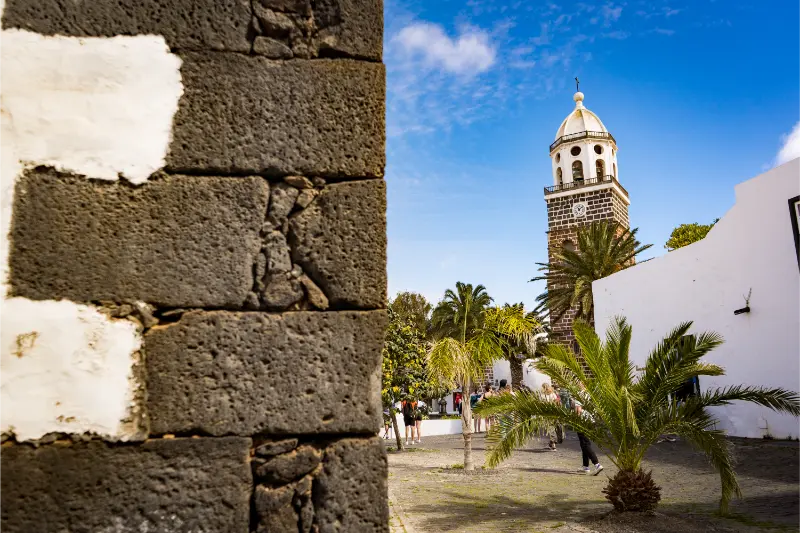
Teguise was Lanzarote’s capital until Arrecife took over in the nineteenth century. The old centre preserves stately buildings, churches and paved streets that reflect centuries of political and religious importance.
Early morning is the best time for photographs and quiet courtyards. Give yourself permission to wander without a fixed route; the centre is compact enough that getting slightly lost is part of the experience.
Decide whether the Sunday market is for you
The Sunday market fills streets and plazas with stalls and attracts large numbers of visitors. It is lively and fun, but it is not the best moment to appreciate Teguise’s quieter architectural character.
If shopping is not your priority, arrive very early or choose another day. If you love markets, allow extra time for traffic and parking rather than scheduling another major attraction immediately afterwards.
Look toward Guanapay and Santa Bárbara
The castle on the Guanapay volcano has long watched over Teguise and reflects the island’s history of raids and defence. Access and museum arrangements can change, so check current information before planning around an interior visit.
Even without entering, the elevated landscape helps explain why the old capital developed inland, away from a vulnerable coast.
Use Teguise to understand rural Lanzarote
The wider municipality stretches across a huge part of the island and includes very different landscapes, from inland villages to Famara and Costa Teguise. That contrast makes the historic town a useful anchor for exploring the north.
Combine Teguise with Famara, the César Manrique Foundation area or northern attractions rather than driving south immediately afterward.
Where to stay in Teguise
Accommodation choice matters because Teguise has a different rhythm from the major beach resorts. Decide first whether you want to walk to restaurants and sights, prioritise easy parking, or use the area mainly as a base for driving around Lanzarote.
Before booking, read the most recent guest reviews for noise, parking and access rather than relying only on the hotel description. On the Canary Islands, a property that looks very close on a map can still involve steep streets, stairs or a difficult drive.
- Historic Villa de Teguise: best for quiet evenings and heritage atmosphere.
- Costa Teguise: better for beach facilities while keeping the old town close.
- Famara area: ideal for surf and dramatic scenery, but much more exposed to wind.
Getting around and parking
A car is the simplest way to use Teguise as part of a wider Lanzarote itinerary. Buses serve the town, but they are less convenient for linking several rural sights in one day. On market Sundays, road conditions and parking demand change significantly.
On ordinary days, parking around the edges of the old centre is manageable. On Sunday, use designated parking and expect a walk. Do not enter narrow historic streets hoping to find a space beside the main square.
If you rent a car, do not treat driving time on Lanzarote as a simple distance calculation. Mountain roads, village streets, viewpoints and occasional roadworks can make a short route take much longer than expected. Leave margin in the day instead of planning back-to-back timed attractions.
What and where to eat
Teguise is a good lunch stop for Canarian dishes, tapas and Lanzarote wine. Market day brings extra choice but also busier terraces. On quieter days, the slower pace makes it easier to choose a restaurant based on the menu rather than the nearest free table.
One useful rule is to eat at least one meal away from the busiest tourist-facing street. Look for a short menu, local products and dishes that make sense for the island rather than trying to find an invented list of “must-eat” restaurants. Recent opening days matter, particularly in smaller towns where kitchens may close one or two days per week.
For a broader introduction to island flavours, see our Canary Islands food guide. It explains papas arrugadas, mojo, island cheeses, fish, wines and regional specialties without turning every meal into a checklist.
Best time to visit Teguise
The town is enjoyable year-round. Summer midday sun can feel strong on open streets, while winter and shoulder seasons are excellent for walking. Wind is common across Lanzarote, but inland Teguise often feels different from exposed Famara only a short drive away.
The most useful forecast is the local one for the exact altitude and coast you plan to visit. Canary Island microclimates are real: sunshine at the hotel does not guarantee the same conditions in the mountains, and cloud inland does not mean the beach will be grey. Keep one flexible half-day whenever weather matters to the experience.
Best day trips from Teguise
Famara, Costa Teguise, the César Manrique Foundation, Jardín de Cactus and the northern volcanic coast are all natural extensions. Arrecife is close enough for an evening meal if you are driving back toward the capital.
Avoid measuring a successful Lanzarote trip by the number of pins you collect. Two well-chosen stops, a proper lunch and one unplanned viewpoint usually produce a better day than six hurried attractions linked by constant driving.
A practical one-day itinerary for Teguise
Start in Teguise early enough to walk the main streets or waterfront before the busiest period. Spend the morning on the two sights that matter most to you rather than trying to see everything. Around lunchtime, choose a local restaurant and give yourself enough time to sit down rather than eating in the car.
Use the afternoon for one complementary experience: a viewpoint, beach, garden, short walk or nearby village. If you are staying overnight, return to the centre in the early evening. This is often when day visitors have left and the destination feels most personal.
If your visit includes a timed ticket, regulated trail or boat departure, build the itinerary around that fixed element and keep the rest loose. Transport delays and weather are much easier to handle when every hour is not pre-booked.
Useful travel tips
- Start early: parking and popular sights are easier before the main day-trip period.
- Carry layers: altitude, trade winds and Atlantic exposure can change how the temperature feels.
- Use proper footwear: volcanic surfaces, cobbles and steep streets are harder than resort promenades.
- Check official information: trail rules, opening hours and transport schedules can change.
- Keep valuables out of sight: use the same normal precautions you would in any visitor area.
- Respect local streets: do not block driveways or narrow lanes while searching for the closest parking place.
Common mistakes to avoid
The first mistake is trying to combine Teguise with too many distant attractions. Canary Island maps can make routes look deceptively short, especially where mountain roads are involved. The second is assuming every important experience requires a ticket: often the historic streets, viewpoints, local food and evening atmosphere are what make the visit memorable.
Another mistake is using old travel information for access rules. Protected areas across the Canaries increasingly use reservations, controlled visitor numbers or transport changes. If a hike or natural site is central to your trip, verify it shortly before departure on the official tourism or local-authority website.
Frequently asked questions about Teguise
How long do you need in Teguise?
Allow at least half a day for the core sights. A full day is better if you want a long lunch, a nearby walk or another village. Staying two or three nights makes sense when Teguise is also a base for exploring this part of Lanzarote.

Do you need a car for Teguise?
Not always. You can enjoy the centre without one, and public transport may be enough for a simple visit. A car becomes more useful when your plan includes rural viewpoints, mountain routes or several stops across Lanzarote.
Is Teguise worth staying overnight?
Yes if you value quiet mornings and evenings, local restaurants and less driving. If your main priority is a beach resort elsewhere on Lanzarote, a day trip may be more efficient.
Should you book attractions in advance?
Book anything with limited capacity, permits or fixed guided departures. For ordinary streets, viewpoints and local meals, flexibility is often more valuable than advance reservations.
Final planning advice
Teguise is most rewarding when it is allowed to feel like a real place rather than another stop on a Canary Islands checklist. Build the day around one or two strong experiences, then leave room for a café, a side street, a view or a conversation that you did not plan.
For the rest of your trip, continue with Costa Teguise guide and Arrecife guide. Linking nearby destinations this way helps you create a route that is geographically sensible and much more enjoyable.
For current local information, opening details and access updates, consult the official Lanzarote tourism page for Teguise before travelling.