
Garajonay National Park is one of the most rewarding places to add to a La Gomera itinerary, but the best visit starts with understanding what the experience actually involves. At the centre of La Gomera, Garajonay protects humid laurel forest and high ridges where mist can turn a sunny coastal day into a cool, green mountain walk within a short drive.
This guide explains what to see, how much time to allow, how to organise transport, what needs to be booked, and which practical details matter once you arrive. It is written for travellers who want a realistic plan rather than a list of attractions with no sense of timing or geography.
If you are still planning the wider trip, start with our La Gomera travel guide. You may also find our La Gomera day trips guide useful for deciding what can sensibly be combined on the same day.
Garajonay National Park at a glance
| Planning point | What to know |
|---|---|
| Island | La Gomera |
| Best for | Hiking, forests, viewpoints and slow nature days |
| Allow | Half day to full day |
| Booking | Most ordinary visits do not require one universal entry ticket |
| Main practical issue | Rapid weather change and winding mountain roads |
Garajonay is not a single viewpoint or one compulsory trail. It is a network of forests, ridges, visitor facilities, viewpoints and signed routes. The best plan depends on cloud level, walking ability and where you enter the park.
Why visit Garajonay National Park?
The laurel forest is the defining reason to visit. Moist trade winds maintain an ecosystem that feels dramatically different from the dry coasts, and the moss, ferns and twisted trunks create an atmosphere found in few other places in the Canary Islands.
The park also explains La Gomera’s geography. Viewpoints around the high interior reveal deep ravines falling toward the sea, helping you understand why journeys between apparently nearby villages take time.
What to see and do
1. Laurel-forest walks
Choose a signed route that matches the day’s conditions and your real fitness. Short forest walks can be more atmospheric than a long exposed ridge on a misty day.
2. Laguna Grande
This central recreational area is a useful orientation stop and a practical base for easier walks. It can also help families experience the forest without committing to a long trek.
3. Alto de Garajonay
The island’s highest point is reached by walking routes and can offer broad views in clear weather. Cloud may remove the panorama entirely, which is part of the mountain climate rather than a reason to take risks off-trail.
4. Los Roques viewpoints
The sculptural volcanic plugs visible from the road are among La Gomera’s most memorable mountain scenes. Use designated pull-offs and viewpoints rather than stopping on narrow roads.
5. Visitor information
The official visitor guide includes park maps, itineraries, visitor centres and recommendations. Check this material before choosing a route instead of relying only on a generic hiking app.
6. Forest-to-coast contrast
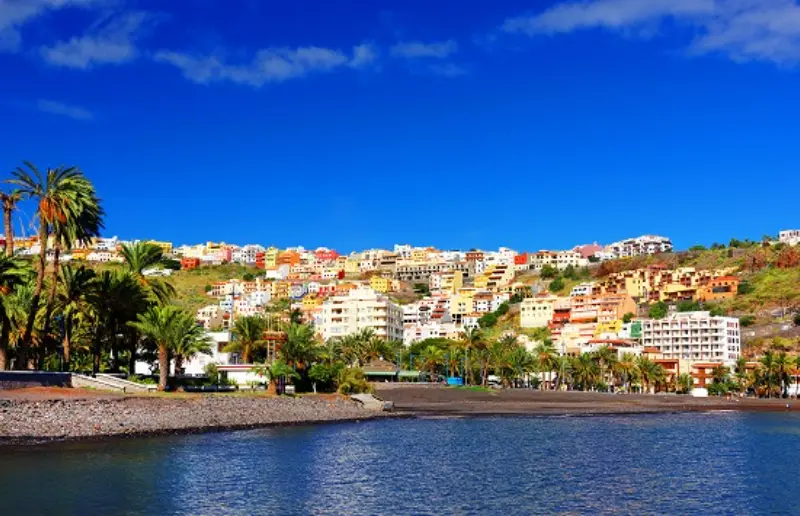
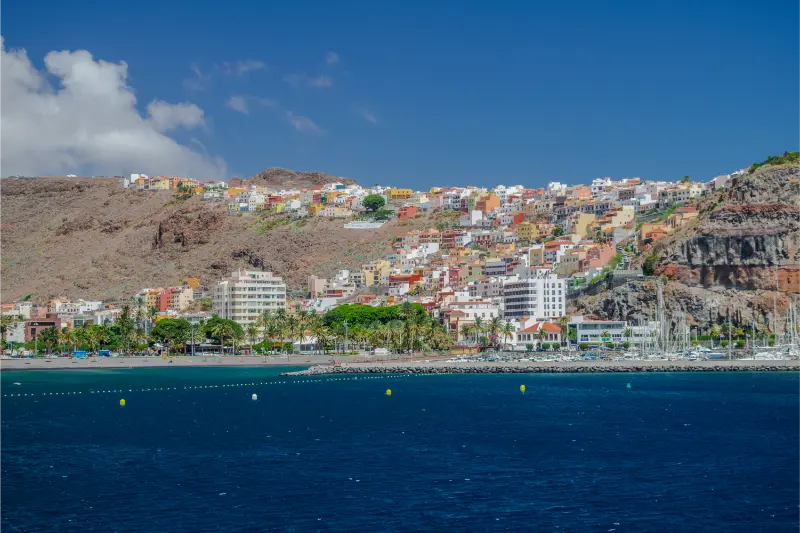
One of the best ways to appreciate Garajonay is to descend afterward toward Valle Gran Rey, Hermigua or San Sebastián and notice how quickly the vegetation changes.
Tickets, reservations and current access rules
Garajonay is a national park crossed by public roads and a network of official trails. There is no single universal entrance ticket for an ordinary drive through the park, but individual activities, closures or specific services can have their own conditions.
Weather, fire risk, maintenance and conservation work can temporarily close paths. Check the official park information before setting out, particularly after storms or during periods of high fire risk.
Because rules, capacity limits and opening arrangements can change, check the official Garajonay National Park visitor guide shortly before travelling. For a protected landscape, an access rule is part of conservation rather than an inconvenience to work around.
How to get there
A rental car gives the most flexibility because the park has multiple access points. Roads are good but often narrow and winding, so journey times should be treated seriously.
Buses can connect some towns and mountain points, but a car-free hiking plan requires timetable research and may work better as a linear route than as a conventional sightseeing loop.
How long should you allow?
A half day is enough for a short forest walk and two or three viewpoints. A full day is better if hiking is one of the main reasons you chose La Gomera.
Do not measure the day only in kilometres. Parking, cloud, photography and slow driving through bends all add time.
Best time of day and best season
Garajonay is rewarding year-round. The forest is often cool, damp and misty even when the coast is warm, so carry a light waterproof layer.
Clear early periods can be good for high viewpoints, while mist can make the laurel forest especially atmospheric. Avoid exposed or difficult routes in strong wind or severe weather.
Visiting with children
Families can enjoy short walks around accessible recreational areas and viewpoints. Choose distance based on the youngest child rather than an adult hiking target.
Bring layers and snacks. A child dressed for the sunny coast may become cold quickly in damp mountain cloud.
Accessibility and physical effort
Roadside viewpoints and visitor facilities can make the park accessible to travellers who cannot complete a long hike, although individual sites vary.
Natural trails include roots, gradients and uneven surfaces. Check the official map and facility information if step-free access is essential.
What to combine with the visit
Garajonay combines naturally with Valle Gran Rey, San Sebastián, Hermigua or a village lunch, depending on your driving route.
For a wider plan, use our where to stay in La Gomera and La Gomera with kids guides.
A practical half-day or full-day plan
Start with the clearest high viewpoint available, then choose a forest walk based on conditions. Eat or rest at a practical central stop before descending to a different side of the island.
Keep the final coastal stop optional. If the mountain drive takes longer than expected, skip it rather than rushing La Gomera’s bends after dark.
What to bring
- Walking shoes with grip.
- A light waterproof or windproof layer.
- Water and snacks.
- Offline map or saved official trail information.
- Sun protection for exposed viewpoints.
Common mistakes to avoid
- Dressing only for coastal weather.
- Choosing a long trail without checking current conditions.
- Stopping the car on narrow roads for a photograph.
- Assuming cloud means the whole day is ruined.
- Trying to drive every side of La Gomera after a long hike.
The most useful habit is to keep one backup plan. Weather, sea conditions, road closures, capacity limits or a child’s energy level can change the best choice for the day. A flexible schedule usually produces a better Canary Islands trip than forcing a reservation-heavy itinerary from morning to night.
Responsible visiting
Stay on marked trails and follow closure notices. Laurel forest soils and vegetation can be easily damaged by shortcutting bends or widening muddy paths.
Keep noise low, take rubbish out and do not pick plants, moss or other natural material.
FAQ
Do you need a ticket for Garajonay?
There is no single general entrance ticket for an ordinary visit to the national park, but specific activities or facilities may have conditions.
What is the best walk in Garajonay?
There is no single best route. Choose by weather, fitness and the part of the park you are visiting.
Is Garajonay cold?
It can be much cooler and damper than the coast because of altitude and trade-wind cloud.
Can you visit Garajonay without hiking?
Yes. Roadside viewpoints and visitor areas allow a meaningful visit without a long trek.
Is Garajonay good with kids?
Yes, especially with short forest routes and flexible stops.
How much time do I need?
Allow at least half a day; a full day is better for hikers.
Is Garajonay National Park worth it?
Garajonay is the landscape that turns La Gomera from a small beach-and-village island into one of the Canaries’ great nature destinations.
Do not chase only a summit view. The mist, forest, ravines and slow mountain roads are the experience.
Extra planning notes that make the visit easier
Build the day around Garajonay National Park, not around the number of stops you can fit before dinner. On La Gomera, distances can look short on a map while parking, mountain roads, queues, ferry times or protected-area controls add real time. A comfortable margin before and after the main visit gives you space for a coffee, an unexpected viewpoint or a slower meal without turning the day into a race.
Download or screenshot the reservation, map and key directions before leaving your accommodation. Mobile coverage is usually good in towns and resorts but can be less reliable inside volcanic tubes, deep ravines, remote trails or forested mountain areas. Keep the booking name, QR code or permit easy to reach rather than buried in an email thread.
If you are driving, check where visitors are actually allowed to park instead of assuming the entrance itself has unlimited spaces. In protected landscapes, parking restrictions are often designed to reduce congestion and environmental pressure. In paid attractions, arriving near opening time can make the first part of the visit calmer, while late afternoon sometimes works well if the venue timetable and daylight allow it.
For a balanced holiday, follow a high-effort day with something simple: a town walk, a sheltered beach, a short sunset viewpoint or an unhurried dinner. The Canary Islands are at their best when volcanic landscapes, local places and time by the ocean are mixed rather than treated as a checklist of headline sights.