
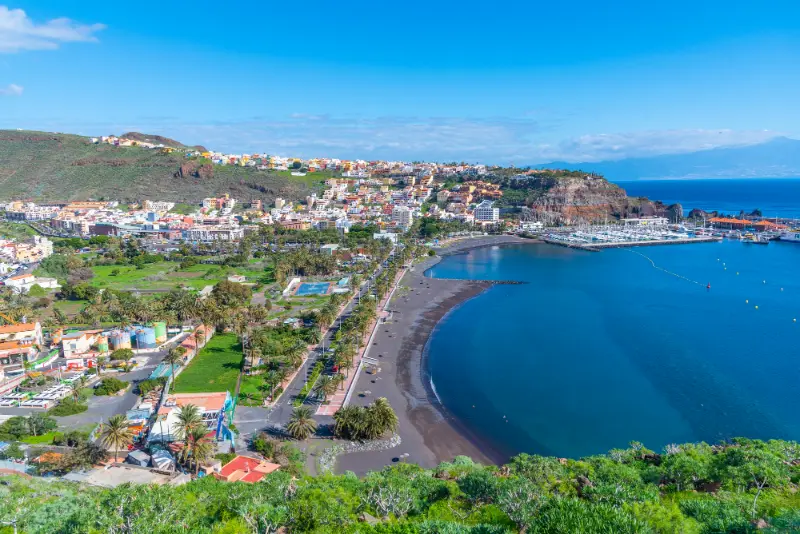
San Sebastián de La Gomera is much more than the place where the ferry arrives. The island capital has a compact historic centre, beaches beside town, a harbour that connects La Gomera with other islands and a strong association with Christopher Columbus’s Atlantic voyages. It is also one of the easiest bases for travellers who want services and simple logistics.
The town suits first-time La Gomera visitors, car-free travellers staying only a few nights and anyone with an early ferry. Hikers may eventually prefer Valle Gran Rey or a rural base, but San Sebastián is an excellent introduction before moving deeper into the island.
Why base yourself here
San Sebastián de La Gomera works best when its location matches the kind of days you actually want. Instead of choosing a hotel only by star rating, look at the walk to the beach or centre, the evening atmosphere, parking, gradients and how often you expect to drive elsewhere on La Gomera. A slightly simpler property in the right neighbourhood often produces a better holiday than a more luxurious room in an inconvenient position.
For a first trip, combine this local guide with our La Gomera travel guide. It helps place San Sebastián de La Gomera within the wider island and prevents a common mistake: booking one corner of La Gomera and then discovering that most of your planned activities are on the opposite side.
Walk the historic centre
The old centre is small enough to explore without an itinerary app. Colourful façades, wooden balconies, courtyards and traditional shops create a calm urban texture. The official La Gomera tourism site emphasises the preserved historic centre and the town’s importance as the island’s principal settlement.
Start early if you are arriving on a day-trip ferry. You will see the streets before excursion groups spread out, then you can move inland or to the beach later.
Columbus-era landmarks
San Sebastián is strongly connected with Columbus, who stopped on La Gomera before crossing the Atlantic in 1492. Several landmarks and interpretations around town use that history, including sites associated with water supplies, churches and former residences.
Treat the story as context rather than a theme-park trail. The broader value is understanding La Gomera’s strategic Atlantic position and how the island interacted with early transoceanic routes.
Torre del Conde
Torre del Conde is one of the town’s most recognisable historic structures and sits in a green area close to the centre. It is easy to include on foot between the port and older streets.
Because the capital is compact, combine the tower with a café, the church area and a beach rather than assigning a separate sightseeing block to each monument.
Beaches beside the capital
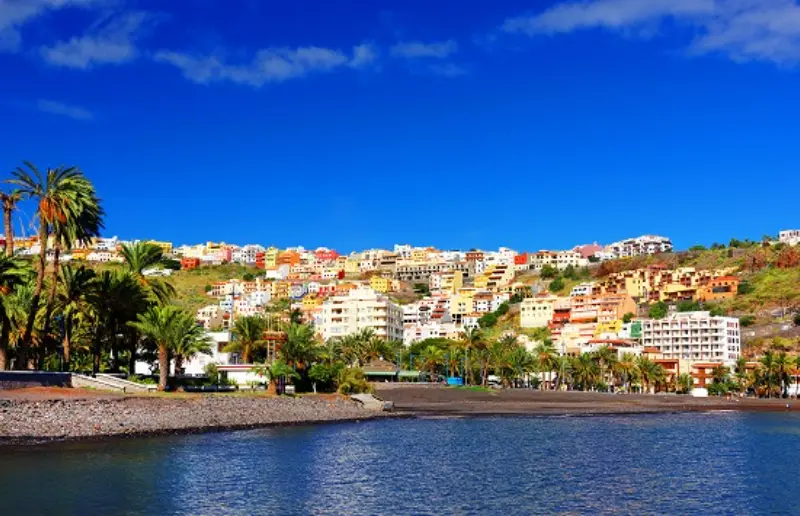
The coastline gives San Sebastián an unusually easy mix of town and beach. Playa de San Sebastián is the obvious urban option, while nearby coves can add variety depending on conditions.
La Gomera is not primarily a resort-beach island, and that is an advantage for many visitors. Use swimming as part of the day, then devote your main exploration time to valleys, viewpoints and forest.
Where to stay in San Sebastián de La Gomera
Accommodation in San Sebastián de La Gomera should be chosen by micro-location rather than by resort name alone. Two hotels that appear to be in the same destination can offer very different experiences once walking gradients, beach access, road noise and parking are considered.
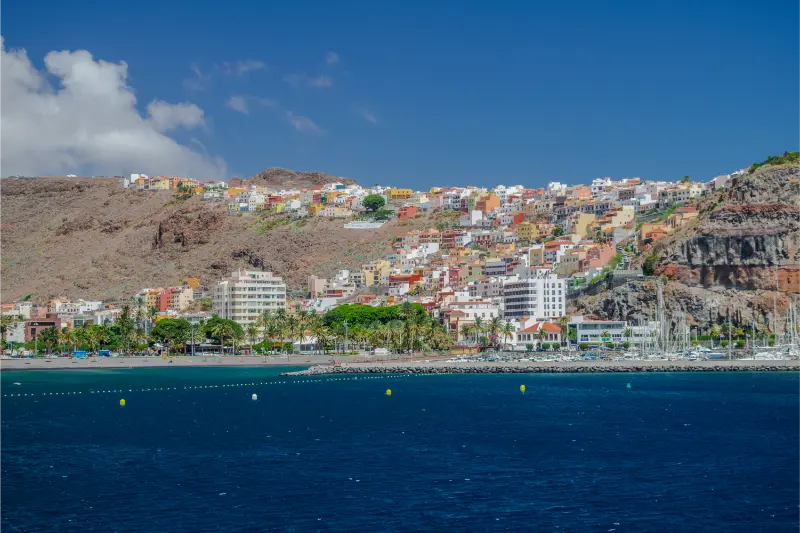
Before booking, open the map and trace the route you will use every day: breakfast, beach, evening restaurants and the nearest useful transport stop. Then read recent guest comments specifically for noise, parking and steep streets. Those practical details matter more over a week than a small difference in room size.
- Historic centre: best for cafés, restaurants and walking to landmarks.
- Near the port: ideal for ferry connections and short stays.
- Residential edges: often quieter, but check hills and walking gradients before booking.
Getting around and whether you need a car
You can enjoy San Sebastián without a car, and organised tours can cover a first island overview. For independent multi-day exploration, a rental car is extremely useful. Book early in busy periods because the island has fewer vehicles than Tenerife, and pay attention to steep, winding roads and limited village parking.
If you do rent a car, keep at least one or two local days when it stays parked. The Canaries reward road trips, but a holiday becomes tiring when every morning starts with navigation and every afternoon ends with a search for parking. On La Gomera, group sights geographically and leave room for stops you did not plan.
Best day trips from San Sebastián de La Gomera
Garajonay National Park is the essential inland day, but it should not be rushed between ferry times. Hermigua, Agulo and the north provide another route, while Valle Gran Rey is best treated as a destination in its own right. La Gomera’s winding roads mean a short straight-line distance can take far longer than expected.
A useful rule is to make one major objective the anchor of each excursion, then add only nearby secondary stops. This protects the day when weather, queues or a long lunch changes the timing. It also gives you permission to stay longer when a beach, village or viewpoint turns out to be better than expected.
Food and evenings
The capital is a good place to begin with Gomera flavours such as almogrote, palm honey and local cheeses before exploring rural restaurants elsewhere. Try these as part of normal meals rather than collecting them as separate “must-eat” items. A relaxed lunch before a ferry can be one of the easiest ways to end the island stay.
For restaurant choices, recent reviews are most useful when you read for patterns rather than scores. Look for repeated comments about fresh fish, service pace, noise and value. Reserve only the meals that genuinely matter to you; keeping other evenings flexible lets you return to a place you discover during the trip.
Best time to visit
The island is mild throughout the year, but altitude creates sharp differences. San Sebastián can be sunny while Garajonay is cool, misty and wet. Pack a light rain layer and something warmer for the forest even when the harbour feels like beach weather.
Do not rely on a single “La Gomera weather” icon. Elevation, orientation and trade winds create strong microclimates across the archipelago. Check the forecast for the exact coast or mountain area you plan to visit, and move your most weather-sensitive day when necessary.
A realistic three-day plan
Day 1: Stay local. Walk San Sebastián de La Gomera, use the nearest beach or waterfront and learn where you actually want to eat. This sounds modest, but it prevents the common mistake of driving away immediately and never understanding the place you booked.
Day 2: Make the biggest nearby excursion your priority, starting early if parking or visitor numbers are likely to matter. Keep lunch in the same geographic area and add only one secondary stop on the return journey.
Day 3: Choose contrast. If the first two days were coastal, go inland; if they were active, make this a slower beach-and-food day. A good Canary Islands itinerary alternates effort and recovery rather than trying to maximise the number of pins visited.
Common planning mistakes to avoid
The first mistake is judging distance only in kilometres. Island roads can be fast and easy on the coast, then slow dramatically in mountains or old villages. Use realistic driving times and add a buffer for viewpoints, parking and roadworks.
The second is assuming every famous beach is suitable for swimming every day. Atlantic swell, wind and currents can change quickly. Follow flags and local advice, especially at wild beaches and natural pools.
The third is overbooking. Cable cars, protected trails, ferries and popular tours may deserve advance reservations, but a completely fixed week leaves no room to respond to weather. Book the scarce experiences and keep ordinary sightseeing flexible.
- Do not leave valuables visible in a parked car.
- Carry water, sun protection and a light layer even on apparently easy sightseeing days.
- Save important tickets and confirmations offline.
- Check official access information on the morning of hikes, ferry journeys and regulated attractions.
Useful official information
For current local information, beach services and destination updates, use the official San Sebastián de La Gomera tourism page. Opening hours, ferry schedules, trail rules and event arrangements can change, so the official source should always take precedence over an older itinerary.
For broader trip planning, also see our Canary Islands island-hopping guide and Canary Islands hiking guide. Linking local guides with island-wide planning pages makes it much easier to decide where to stay and how many days to allocate.
Frequently asked questions
How many nights should you stay in San Sebastián de La Gomera?
Three nights is enough to understand the area and make one substantial day trip. Five to seven nights works well when San Sebastián de La Gomera is your main base. If your plans repeatedly take you to the opposite side of La Gomera, split the stay instead of spending hours on the road.
Is San Sebastián de La Gomera good for a first visit to La Gomera?
Yes, provided its strengths match your travel style. The location offers a practical introduction to La Gomera, but no single base is perfect for every traveller. Compare beaches, nightlife, transport and the attractions you care about before booking.
Should you book tours before arrival?
Book experiences with limited capacity, fixed permits or a very specific date. For ordinary boat trips and general sightseeing, keeping some flexibility can help you choose the better-weather day. During school holidays and peak winter periods, popular excursions may still sell out.
Can you visit without renting a car?
Yes for a local stay, especially if you choose accommodation near the centre or beach. A car becomes much more valuable when you want to explore multiple parts of La Gomera independently.
Final planning advice
The best way to enjoy San Sebastián de La Gomera is to use it as a base rather than a box to tick. Learn the local promenade, beach or historic centre first, then let the rest of La Gomera unfold in manageable day trips. This produces a holiday with both discovery and downtime instead of a schedule that feels like a driving challenge.
Keep one half-day unplanned. It can absorb bad weather, a delayed ferry or a closed trail, but it can also become the moment you return to your favourite beach, stay longer over lunch or follow a recommendation you hear locally. That flexibility is one of the simplest ways to make a Canary Islands trip feel personal.