
Island hopping in the Canary Islands works brilliantly when you combine islands that are naturally connected—not when you try to collect as many islands as possible. The archipelago has frequent inter-island flights and ferry routes, but every move consumes time for packing, check-out, port or airport transfers and a new rental-car decision.
The best island-hopping holidays usually pair two islands in one week to ten days or three islands in two weeks. Tenerife and La Gomera form the easiest western combination; Lanzarote and Fuerteventura are a natural eastern pair; Tenerife, La Palma and La Gomera can make an excellent nature-focused circuit if you have enough time.
Ferry or plane?
Ferries are excellent when ports are convenient, the crossing is short and you value travelling with more luggage or possibly a vehicle. Flights are often better for longer inter-island jumps, especially when the ferry would require a connection or several hours at sea.
Binter operates an extensive inter-island air network, with frequencies that can change seasonally. Fred. Olsen Express and Naviera Armas cover major ferry corridors. Always compare the total door-to-door journey rather than only the scheduled crossing time.
The easiest island-hopping routes
- Tenerife + La Gomera: ideal for first-time island hopping; fast ferry from Los Cristianos to San Sebastián.
- Lanzarote + Fuerteventura: short ferry between Playa Blanca and Corralejo; perfect for road-trip travellers.
- Tenerife + La Palma: strong for hiking, volcanoes and stargazing; choose ferry or inter-island flight according to your bases.
- Tenerife + El Hierro: excellent for divers and slow travel, but allow connection buffers.
- Lanzarote + La Graciosa: simple day trip or one-night add-on from Órzola.
- Gran Canaria + Tenerife: easy by flight or ferry and gives the broadest mix of city, beaches and major attractions.
Tenerife and La Gomera
This is the most beginner-friendly two-island combination in the west. South Tenerife and Los Cristianos are convenient for the ferry to San Sebastián de La Gomera, and Fred. Olsen Express currently lists a direct fast crossing of around 50 minutes. Schedules vary, but the geography makes the pairing naturally efficient.
Spend five to seven nights on Tenerife and three to five on La Gomera. Tenerife supplies Teide, Anaga, beaches and major attractions; La Gomera provides Garajonay, ravines and slower hiking days. Our 10-day Tenerife and La Gomera itinerary shows how to structure the transfer without wasting a day.
Lanzarote and Fuerteventura
Playa Blanca in Lanzarote and Corralejo in Fuerteventura are separated by a short ferry crossing, making these islands a natural pair. The contrast is useful: Lanzarote for volcanic landscapes, César Manrique sites and compact sightseeing; Fuerteventura for huge beaches, dunes and surf culture.
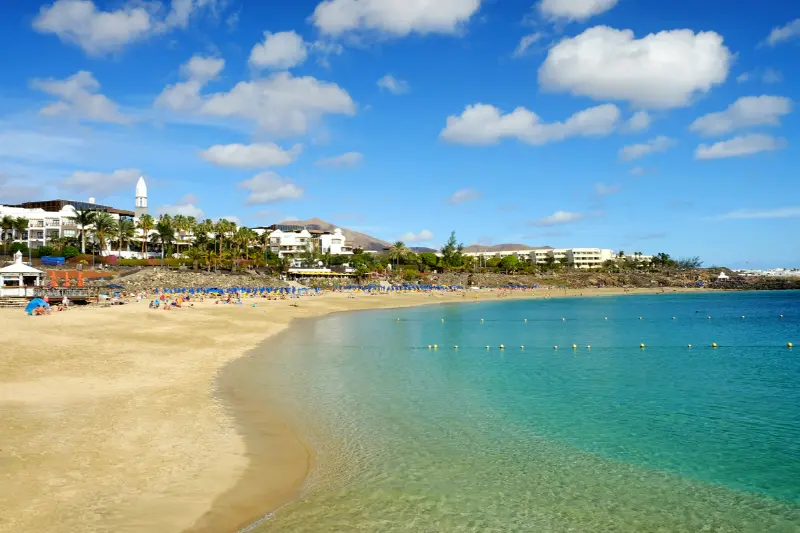
Seven nights can be split four-and-three, but ten to fourteen nights is better if you want relaxed beach days. Our 14-day Lanzarote and Fuerteventura itinerary builds a complete route around this pairing.
Tenerife, La Gomera and La Palma
This is one of the best three-island routes for hikers. Begin in Tenerife, continue by ferry to La Gomera, then connect to La Palma by ferry or flight depending on schedules. Reverse the route if international flights or accommodation prices work better that way.
Allow at least thirteen or fourteen nights. Anything shorter risks turning a nature holiday into a sequence of transfers. A strong split is six nights Tenerife, four La Gomera and four La Palma.
Gran Canaria and Tenerife
The two largest and most diverse islands are linked by frequent flights and ferry services. The ferry can work well if your accommodation is convenient to the relevant ports; flying may be faster if you are already near the airports.
This combination is best for travellers who want variety rather than quiet. Las Palmas, Maspalomas, Teide, La Laguna, south Tenerife resorts and the mountain interiors can easily fill two weeks.
Lanzarote and La Graciosa
La Graciosa is not a substitute for a second major island; it is a highly distinctive add-on. Ferries leave from Órzola in northern Lanzarote for Caleta de Sebo. Stay one night if you want to cycle, walk and experience the island after day visitors leave.
You can then continue south through Lanzarote and, if time allows, cross from Playa Blanca to Fuerteventura. This creates a very logical north-to-south route.
When an inter-island flight is smarter
Flights usually make sense when islands are far apart, when ferry times do not fit your itinerary or when you are travelling without a car and can reach airports easily. They are especially useful for connections involving La Palma, El Hierro, Gran Canaria, Lanzarote or Fuerteventura when a direct route exists.
Check the whole journey: a 35-minute flight can still require airport arrival time, security and baggage collection. Conversely, a two-hour ferry may depart from a port close to your hotel and allow you to walk straight into the destination town.

Can you take a rental car on the ferry?
Sometimes, but do not assume so. Rental companies set their own rules about taking vehicles between islands. Some allow it with conditions; others prohibit it or restrict insurance cover. Get permission in writing before buying a vehicle ferry ticket.
For many trips, separate rentals are simpler: return the car on island A, cross as a foot passenger and collect a new car on island B. This avoids ferry-car restrictions and can save money if vehicle fares are high.
Luggage and ferry logistics
Foot passengers should pack so they can move luggage independently through terminals. Some operators have luggage storage or handling systems, but procedures differ by ship and port. Keep medication, documents, electronics and a light layer in a small personal bag.
If you are prone to seasickness, choose a stable seat, look towards the horizon, avoid a heavy meal immediately before sailing and consider advice from a pharmacist or doctor if appropriate for you.
How much connection time should you allow?
Never build a critical same-day international connection around the final ferry or inter-island flight. Weather, sea conditions, baggage and ordinary delays happen. If missing your long-haul or international flight would be expensive, spend the final night on the departure island.
The same principle applies on arrival. A low-cost flight saving is not worth much if a late arrival forces an unplanned hotel because you missed the last ferry.
A 7-day island-hopping plan
For only seven nights, use a short, natural pairing: four nights Lanzarote plus three Fuerteventura, or five nights Tenerife plus two La Gomera. Do not try three islands. You will lose too much of the week to logistics.
If you are a first-time visitor and unsure, staying on one island may be even better. Our one-week Canary Islands itineraries includes single-island alternatives.
A 10-day plan
Ten nights is enough for two islands at a comfortable pace. Tenerife plus La Gomera works especially well: six nights on Tenerife, four on La Gomera. Lanzarote plus Fuerteventura can be split five-and-five if beaches are important.
Avoid adding a third island just because flights are available. The value of island hopping comes from contrast, not count.
A 14-day plan
Two weeks allows two islands very comfortably or three if connections are efficient. A western nature itinerary could combine Tenerife, La Gomera and La Palma; an eastern itinerary can devote a full week each to Lanzarote and Fuerteventura with a La Graciosa day or overnight.
If you choose three islands, schedule the most logistically difficult or weather-sensitive transfer in the middle of the trip rather than immediately before flying home.
Booking strategy
Book international flights first, then the first and last hotels. Next secure inter-island transport for dates that cannot move. Rental cars come after you know whether each segment needs one. Finally book weather-sensitive tours with cancellation terms you understand.
Check Fred. Olsen Express routes and Binter for current schedules. Our broader Canary Islands transport guide covers airports, buses and car rental too.

Common island-hopping mistakes
- Trying to visit three islands in one week.
- Booking ferries by crossing time without considering port transfers.
- Assuming a rental car is automatically allowed on another island.
- Leaving no buffer before the flight home.
- Choosing islands because they are famous rather than because they connect logically.
- Packing so much luggage that every transfer becomes a project.
Practical tip: Add an island only when it creates a clear contrast—such as Tenerife plus La Gomera or Lanzarote plus Fuerteventura. If the second island offers almost the same holiday you already have, stay longer on the first.
Final advice
Island hopping is one of the best ways to understand how varied the Canaries are, but good routing matters more than ambition. Use short ferry corridors where they exist, flights for longer jumps and separate rental cars when that simplifies the trip.
Before committing to dates, compare each island in our guide to choosing the right Canary Island. A well-planned two-island holiday is almost always better than a rushed four-island checklist.
Extra planning notes before you book
Build your itinerary around geography first and individual attractions second. The Canary Islands often look compact on a map, but volcanic terrain, mountain roads, parking and changing weather can make a short distance consume a surprising part of the day. Group nearby stops together, avoid crossing an island repeatedly and keep at least one half-day flexible for changes.
When comparing accommodation, look beyond the room rate. Check whether you can walk to dinner, whether parking is realistic, how long the airport transfer takes and whether your planned day trips start on the same side of the island. Paying a little more for the right base can reduce fuel, taxis and lost holiday time.
For any outdoor plan, check official notices close to the day of travel. Trail closures, parking controls, fire restrictions, strong wind and Atlantic swell can change access. A flexible alternative—a town, museum, protected beach or easy coastal walk—turns a closure into a change of plan rather than a ruined day.
Finally, resist the urge to pre-book every meal and hour. Reserve the things that genuinely sell out, but leave normal beaches, cafés and short viewpoints flexible. The islands are easiest to enjoy when the itinerary can respond to cloud, wind and energy levels.