
La Gomera is one of the best Canary Islands for travellers who want walking, dramatic valleys and a genuine break from large resort tourism. Its roads climb from black-sand coves into cloud forest, cross high ridges and descend through palm-filled ravines. The island is small, but the terrain makes every journey scenic and often slower than expected.
Most first-time visitors arrive by ferry from Tenerife, which makes La Gomera easy to combine with a larger island. Yet it deserves more than a rushed day trip. Three nights is enough for a taste; five to seven nights gives you time for Garajonay National Park, Valle Gran Rey, northern villages, beaches and several hikes without living in the car.
Why choose La Gomera?
La Gomera suits hikers, couples, photographers and travellers who prefer local villages to international resort strips. More than a third of the island is protected natural territory, and the centre is dominated by Garajonay National Park and its ancient laurel forest. Deep ravines cut the island into natural sectors, so landscapes can change dramatically within a short distance.
It is also culturally distinctive. Silbo Gomero, the island’s traditional whistled language, remains one of its best-known traditions. Terraced agriculture, palm groves and small settlements create a strong sense of place that is easy to miss on a one-day coach tour.
- Best for: hiking, nature, couples, slow travel and a Tenerife add-on.
- Ideal stay: four to six nights for a first trip.
- Best-known base: Valle Gran Rey.
- Car: highly recommended unless you are planning a very local, bus-based stay.
Garajonay National Park
Garajonay is the essential experience on La Gomera. The humid laurel forest is a living remnant of vegetation that once covered large areas around the Mediterranean and North Africa. Under mist, moss-covered branches and fern-filled paths can feel almost prehistoric.
Do not assume the whole park is one single hike. There are viewpoints, short walks, picnic areas and longer trails, which means visitors with very different fitness levels can experience it. Trail conditions can change after rain, wind or maintenance, so check official information before a major walk.
Cloud is part of the ecosystem rather than automatically “bad weather”. A grey morning can be perfect for the forest, while the coast remains sunny. Carry a light waterproof layer even when you leave Valle Gran Rey under blue skies.
Valle Gran Rey: the classic holiday base
Valle Gran Rey spreads down a spectacular ravine to the Atlantic and is the island’s main tourist area without feeling like a mass-market resort. The lower valley includes several small neighbourhoods, beaches, apartments, cafés and a harbour at Vueltas. Sunsets are a major part of the appeal.
This is the easiest base for travellers who want a mix of walking and sea time. You can spend a morning in Garajonay and be back for a swim or sunset. The trade-off is location: reaching San Sebastián and the east side requires a long mountain drive, so staying here works best when your itinerary is not built around daily ferry connections.
San Sebastián de La Gomera
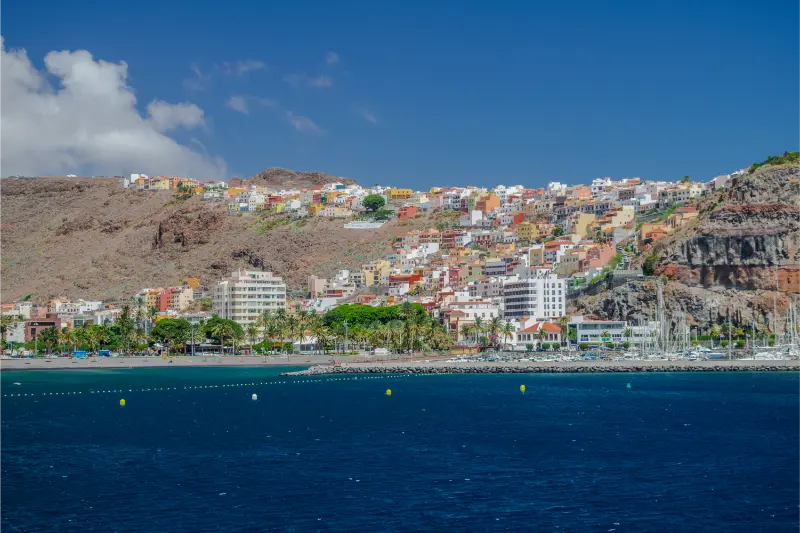
San Sebastián is the capital and main ferry gateway. It is compact, walkable and historically associated with Christopher Columbus’s Atlantic voyages. The town makes a practical first or final night, especially if you have an early ferry, and it gives a more urban counterpoint to the island’s rural interior.
If you only have two or three nights, staying in San Sebastián can reduce transport stress. From here you can make a full circuit through the north and Garajonay, then return without worrying about a ferry-day drive across the island.
The north: Hermigua, Agulo and Vallehermoso
Hermigua sits in a lush agricultural valley backed by steep rock walls. It is a good area for rural accommodation and access to northern trails. Nearby Agulo is often praised as one of the prettiest villages on the island, with traditional houses and broad views towards Tenerife when the air is clear.
Vallehermoso and the roads around the northwest feel even quieter. These are places to stop for a local lunch, short walk or viewpoint rather than tick off at speed. The island’s road network is paved and generally good, but bends and altitude make average speeds low.

Beaches and the Atlantic
La Gomera’s beaches are smaller and darker than the long sandy beaches of Fuerteventura. Playa de Santiago offers a low-key coastal base; Valle Gran Rey has several accessible swimming spots; San Sebastián has town beaches; more remote coves reward walkers and confident independent travellers.
The Atlantic deserves respect. Exposed beaches can have strong currents and shore break even when the weather is warm. Use lifeguarded areas when possible, follow flags and local warnings and never make a remote beach the centre of the day if sea conditions are poor.
Whale and dolphin watching
The waters between La Gomera and Tenerife are known for cetacean activity, and boat trips operate from the island. Choose operators that follow responsible wildlife-watching practices, keep distance from animals and avoid promising guaranteed close encounters.
A boat trip can be a good rest day between hikes, but sea conditions matter. If you are prone to seasickness, choose a larger vessel, sit where motion is reduced and keep the rest of the day flexible.
Where to stay
Valle Gran Rey is best for a relaxed holiday with beaches, restaurants and sunsets. San Sebastián is most convenient for ferry connections and short trips. Playa de Santiago is quiet and coastal, while Hermigua and the north are ideal for rural stays and walkers.
For more comparisons across the archipelago, see where to stay in the Canary Islands. On La Gomera, the “best” base is determined less by hotel quality than by which side of the island you want to explore most often.
How to get to La Gomera
The most common route is by ferry from Los Cristianos in south Tenerife to San Sebastián de La Gomera. Fred. Olsen Express currently lists a fast crossing of about 50 minutes on the direct route, while schedules and operators can vary by season. La Gomera also has an airport with inter-island services rather than a broad network of international flights.
If your international flight arrives at Tenerife South Airport, the ferry combination can be straightforward, but never book a tight same-day connection. Flights can be delayed and ferries can be affected by sea conditions. Read our Canary Islands transport guide and check the current ferry routes and times before booking.
Driving on La Gomera
A car turns La Gomera into an easy road-trip destination, but it is not a place for hurried driving. Main roads are full of bends, viewpoints and sudden changes in weather. Fuel stations are less frequent than on Tenerife or Gran Canaria, so do not wait until the tank is nearly empty in a remote area.
If you rent the car on Tenerife and want to take it on the ferry, confirm that the rental contract allows inter-island transport. Many travellers find it simpler to rent a separate car on La Gomera.
A 5-day La Gomera itinerary
- Day 1: ferry to San Sebastián, explore the old town and stay locally or drive to your chosen base.
- Day 2: Garajonay National Park with two or three short trails and viewpoints.
- Day 3: Hermigua, Agulo and the north coast.
- Day 4: Valle Gran Rey, beach time and sunset.
- Day 5: a whale-watching trip, Playa de Santiago or a second hike before departure.
Best time to visit
Walking is possible year-round, but spring and autumn are especially comfortable for long days on the trails. Winter brings mild coastal temperatures and lush vegetation, although the high interior can be damp, cool and windy. Summer is warmer and drier, with long daylight for road trips.
The island’s microclimates are important: a cloud layer over Garajonay can coexist with sunshine on the coast. Pack a light waterproof jacket and footwear with grip even if the forecast for Valle Gran Rey looks perfect.

Food and local culture
Look for almogrote, a strong cheese spread traditionally made with mature cheese, peppers and oil; watercress dishes; local goat cheeses; palm honey; fresh fish; and Canarian staples such as papas arrugadas with mojo. Small restaurants away from the main resort zones can have limited opening days, so avoid assuming that every village stop will provide lunch at any hour.
If you encounter a demonstration of Silbo Gomero, treat it as more than a tourist curiosity. The whistled language developed as a practical way to communicate across ravines and is an important part of island identity.
Common mistakes
- Visiting only on a rushed day trip from Tenerife.
- Assuming short distances mean short drive times.
- Packing only beach clothes for Garajonay.
- Planning a remote hike without checking trail conditions.
- Taking a rental car on a ferry without contract permission.
- Expecting Fuerteventura-style beaches or Tenerife-style nightlife.
Practical tip: Plan La Gomera by regions, not by kilometres. One north-coast day, one Garajonay day and one Valle Gran Rey day is usually more enjoyable than crossing the island repeatedly.
Final advice
La Gomera is easy to add to Tenerife but difficult to appreciate if you treat it as an excursion. Stay overnight, wake up on the island and give the forest time to reveal its atmosphere. The combination of Garajonay, ravines, coastal villages and quiet roads is exactly what makes it different from the larger Canary Islands.
For current trail, destination and event information, use the official La Gomera tourism website. If you are building a two-island holiday, our 10-day Tenerife and La Gomera itinerary gives a practical route.