
La Palma is the Canary Island for travellers who want mountains, forests, volcanoes, stargazing and a slower pace. It has beaches and resort areas, but they are not the main reason to come. The island is shaped by steep relief: roads climb quickly from the Atlantic to pine forest, volcanic ridges and viewpoints above the clouds. That geography makes La Palma feel dramatic even on a short drive.
A first trip works best when you treat the island as a nature destination with comfortable towns and coastal bases rather than as a conventional beach resort. Give yourself time for Caldera de Taburiente National Park, Roque de los Muchachos, the volcanic landscapes around Cumbre Vieja, the green northeast and at least one relaxed day by the sea. If you are still comparing islands, start with our guide to choosing the best Canary Island.
Why visit La Palma?
La Palma is one of the best choices in the archipelago for hikers and independent travellers. The contrast is the attraction: humid laurel forest in the northeast, enormous ravines in Caldera de Taburiente, black lava in the south and west, banana plantations near the coast and a summit high enough to rise above the trade-wind cloud layer.
The island is also internationally known for astronomy. Roque de los Muchachos reaches 2,426 metres and hosts a major astrophysical observatory. Even if you never enter the observatory, a clear night at an authorised stargazing viewpoint can be one of the most memorable experiences of the trip. The official La Palma tourism site describes the island as a Starlight destination with exceptional sky quality.
- Best for: hiking, scenery, stargazing, road trips and quiet couples’ holidays.
- Less suitable for: travellers whose priority is nightlife or a huge choice of sandy resort beaches.
- Ideal stay: five to seven nights for a first visit; longer if hiking is the main purpose.
- Car: strongly recommended for most itineraries.
Santa Cruz de La Palma and the east coast
Santa Cruz de La Palma is a compact historic capital with colourful balconies, traditional architecture, cafés and a seafront that makes an easy first or final stop. It is worth walking Calle O’Daly and the surrounding streets slowly rather than treating the city only as a place to collect a rental car.
Los Cancajos, just south of the capital and close to the airport, is one of the island’s easiest coastal bases. Its volcanic beach, restaurants and convenient road access make it practical for short stays and for travellers who want to split time between sightseeing and the sea. The east side can be cloudier than the west under the trade winds, but it gives fast access to Santa Cruz and the green northeast.
Caldera de Taburiente: the essential mountain experience
Caldera de Taburiente National Park is the natural centrepiece of La Palma. Deep ravines, Canary pine forest, high crater walls and long hiking routes make it very different from the volcanic desert landscapes many people associate with the Canaries. You do not have to attempt a demanding full-day trek to appreciate it: viewpoints and shorter walks can still provide a strong sense of scale.
One of the best-known accesses is the Mirador de La Cumbrecita. Access by private vehicle is regulated during busy daytime hours and a parking reservation is required in the controlled period. Rules and trail status can change after weather, fire or maintenance, so check the official National Parks booking and trail-status service before leaving.
For longer hikes, start early, carry significantly more water than you think you need and be conservative about distance. A route that looks short on a map can involve substantial elevation change. Mountain conditions can also be cooler, windier and cloudier than the coast.
Roque de los Muchachos and stargazing
Roque de los Muchachos is the highest point on La Palma and one of the island’s must-see drives. On a clear day the summit area opens views over the Caldera and, at times, towards Tenerife, La Gomera and El Hierro. The road is paved but winding, so allow more time than the distance suggests and avoid building a tight schedule around the trip.

The astrophysical observatory occupies the summit zone, while public viewpoints and trails allow visitors to enjoy the landscape. Observatory visits, when available, are separate organised experiences and should be booked through official channels. At night, use designated astronomical viewpoints, keep lights low and never stop dangerously on mountain roads just because the sky looks good.
If stargazing is important to you, plan it for more than one possible night. High cloud, wind or calima can affect visibility. The official La Palma stargazing information is a useful place to check recognised viewpoints and responsible behaviour.
Tajogaite and the landscapes of the 2021 eruption
The 2021 eruption transformed part of the west side of La Palma and created a new volcanic landscape around Tajogaite. This is an extraordinary place to understand that volcanic activity is not simply ancient history on the island. It should, however, be approached with respect for residents, private property and controlled areas.
The official tourism authority states that the designated walking route towards the new volcano must be done with an authorised guide. The route uses marked paths through a sensitive exclusion area. Do not leave the route, collect volcanic material or attempt to reach the crater independently. You can also understand the new coastline from viewpoints and boat excursions from the west coast.
Fuencaliente and the volcanic south
At the southern end of the island, Fuencaliente offers a completely different landscape: dark lava, vineyards, salt pans, lighthouses and open ocean. The San Antonio and Teneguía volcanic area is one of the easiest places to appreciate the island’s volcanic story without committing to a very long hike.
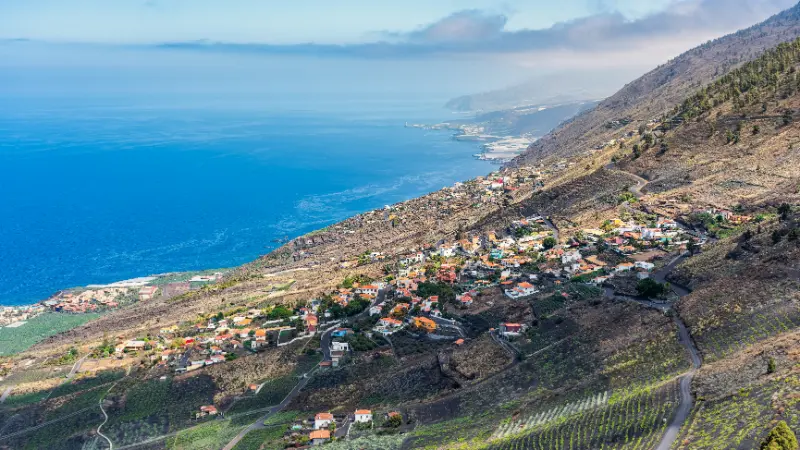
The road towards the coast passes through vines that survive in ash-rich soils and ends near the saltworks and lighthouses. Combine the area with a winery visit if you are interested in local Malvasía and other island wines, but keep in mind that opening days and tasting schedules vary.
The green north: Los Tilos, San Andrés y Sauces and natural pools
The northeast is where La Palma becomes intensely green. Around San Andrés y Sauces, laurel forest and steep valleys create excellent walking territory. Los Tilos is one of the headline natural areas, while the historic village of San Andrés and the natural pools of Charco Azul can make an attractive combined day.
Further north, Barlovento and Garafía feel increasingly rural. La Fajana natural pools, traditional hamlets and dramatic coastal viewpoints reward travellers who enjoy quiet road trips. Roads here are curvy and travel times accumulate quickly, so avoid trying to “do the whole north” in a few hours.
Best beaches and natural swimming spots
La Palma is not a classic white-sand island. Its beaches are mainly volcanic, and that is part of their character. Los Cancajos is convenient and well served; Puerto Naos and Charco Verde are popular on the west; Tazacorte combines a beach with a harbour and restaurants; Playa de Nogales is spectacular but requires a walk and deserves extra caution when the Atlantic is rough.
Natural pools such as Charco Azul and La Fajana are excellent alternatives when open and conditions are suitable. Even in pools, waves can overtop sea walls, so never assume that a built swimming area is safe in every swell.
Where to stay in La Palma
Santa Cruz de La Palma works for atmosphere, restaurants and a short airport transfer. Los Cancajos is convenient for an easy coastal stay. Los Llanos de Aridane is the most useful urban base on the west side, while Tazacorte is appealing for sun, sunsets and access to the coast. Rural houses around El Paso, Breña Alta, Garafía or Puntagorda suit travellers who want silence and scenery.
For a one-week trip, changing hotel is optional. The island is compact on a map but roads are slow enough that splitting three nights east and four nights west can reduce repeated driving. Compare the trade-off in our guide to where to stay in the Canary Islands.
Getting around La Palma
A rental car gives the most freedom. Public buses connect main towns, but they are less convenient for sunrise starts, trailheads, remote viewpoints and multi-stop scenic days. Choose a small car unless you need extra luggage space; village streets and parking areas can be tight.
Do not judge a drive by kilometres alone. Mountain roads contain hairpins, tunnels and altitude changes, and the route between two nearby-looking points may be indirect. For wider inter-island transport planning, see our flights, ferries, buses and rental-car guide.
A realistic 7-day La Palma itinerary
- Day 1: arrive, explore Santa Cruz and settle into the east coast.
- Day 2: Caldera de Taburiente visitor centre, La Cumbrecita and El Paso.
- Day 3: Roque de los Muchachos and a northwestern village; keep the evening flexible for stargazing.
- Day 4: Los Tilos, San Andrés and Charco Azul.
- Day 5: Tajogaite authorised guided route and Los Llanos de Aridane.
- Day 6: Fuencaliente, volcanoes, salt pans and a west-coast sunset.
- Day 7: beach, natural pools or a second hike according to weather.
Best time to visit
La Palma is a year-round destination, but hikers often prefer spring and autumn for long days outdoors without the busiest holiday periods. Winter can be excellent for mild coastal temperatures and green scenery, yet mountain weather can be cold and changeable. Summer is drier and brighter but can bring heat, fire risk and haze episodes.
Because elevation matters so much, always pack for two climates: beach weather at sea level and a genuinely cool mountain layer for the high country. Read our month-by-month Canary Islands weather guide before choosing dates.
Food, costs and practical planning
Try local cheeses, mojo, papas arrugadas, fresh fish, almond sweets and wines from the island. For a self-drive trip, keeping water and simple snacks in the car is useful because scenic routes may have long gaps between services.
La Palma can be good value compared with the largest resort islands, but rental-car supply and rural accommodation can tighten during holiday periods. Book the car early if your itinerary depends on it. The biggest budget mistake is choosing a cheap base that forces two hours of extra driving every day.
Common mistakes to avoid
- Trying to see the entire island every day instead of grouping east, west, north and south.
- Arriving at La Cumbrecita without checking whether a parking reservation is required.
- Attempting the Tajogaite exclusion area without an authorised guide.
- Underestimating cold, wind and UV exposure at high altitude.
- Planning exposed beaches as guaranteed swimming stops regardless of swell.
- Leaving stargazing to a single night with no weather backup.
Practical tip: On La Palma, weather should shape the itinerary. If cloud covers the summit, switch to the coast; if the ocean is rough, move inland for forest, towns or volcanic scenery.
Final advice
La Palma rewards travellers who are comfortable with a slower rhythm. Do not try to turn it into Tenerife in miniature. Its best moments are often a quiet road through pine forest, a viewpoint above the clouds, a local lunch after a hike or a dark sky with almost no artificial light.
For current access information, trail notices and destination updates, consult the official La Palma tourism website shortly before your trip. Build in flexibility, respect closures and give the island at least five nights if nature is the reason you are coming.