
Islote de Lobos is one of the most rewarding places to add to a Fuerteventura itinerary, but the best visit starts with understanding what the experience actually involves. The protected islet sits just off Corralejo and feels surprisingly remote despite the short sea crossing, with volcanic terrain, marked paths and clear water replacing resort infrastructure.
This guide explains what to see, how much time to allow, how to organise transport, what needs to be booked, and which practical details matter once you arrive. It is written for travellers who want a realistic plan rather than a list of attractions with no sense of timing or geography.
If you are still planning the wider trip, start with our Fuerteventura travel guide. You may also find our Fuerteventura day trips guide useful for deciding what can sensibly be combined on the same day.
Islote de Lobos at a glance
| Planning point | What to know |
|---|---|
| Island | Fuerteventura |
| Best for | Walking, volcanic scenery, quiet coastal time and day trips |
| Allow | Half day to most of a day |
| Booking | Access authorisation required |
| Main practical issue | Permit, ferry times, sun and limited services |
Lobos works best for travellers who arrive prepared for a protected natural area rather than expecting a serviced beach club. The day is shaped by your access authorisation, boat schedule, walking distance, heat and sea conditions.
Why visit Islote de Lobos?
The contrast with Corralejo is immediate. Within a short crossing, paved streets and shops disappear and the landscape becomes low, volcanic and open to the wind.
The island is small enough for a substantial walk but large enough that you must choose between a relaxed beach-focused visit and a faster circuit. Trying to do every path, swim and photo stop in a short ferry window is the main planning mistake.
What to see and do
1. The arrival pier and visitor area
Use the first few minutes to confirm return-boat arrangements, read current signs and decide whether your priority is walking or water. Do not wander off without understanding the time you need to return.
2. El Puertito
The small settlement and sheltered water are among the most photographed parts of Lobos. Swimming suitability still depends on current sea conditions, and the protected setting should be treated gently.
3. La Concha or La Calera beach
This broad sheltered bay is one of the easiest places to build beach time into the visit. Bring your own sun protection because shade is limited.
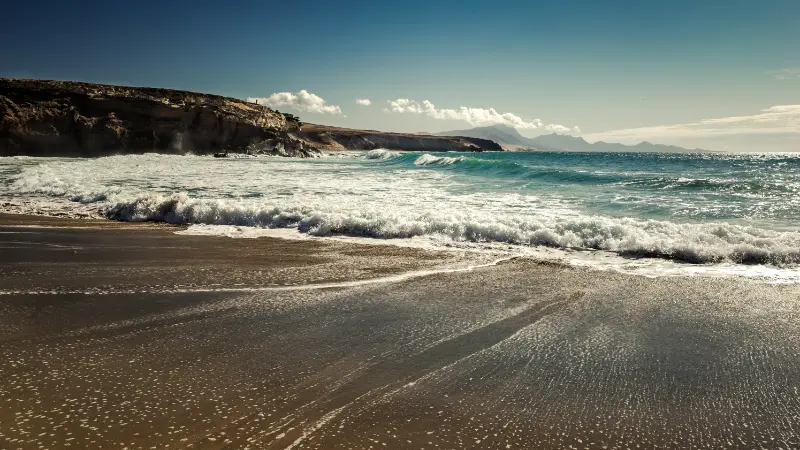
4. Marked walking routes
The official visitor route allows you to experience saltmarsh, volcanic terrain and open coast without leaving permitted paths. The landscape may look empty, but it is ecologically sensitive.
5. Montaña La Caldera views
The volcanic cone adds elevation and wider views for walkers. Only attempt routes that are open and suitable for the day’s wind and heat, and never create shortcuts across protected terrain.
6. Birdlife and quiet landscapes
Part of Lobos’s value comes from what is not built there. Slow down, keep voices low and watch the landscape rather than treating the island as a backdrop for a quick social-media stop.
Tickets, reservations and current access rules
The Cabildo de Fuerteventura states that authorisation is required to enter the Islote de Lobos Natural Park. The official tourism information also directs visitors to the Lobos Pass system and advises advance reservation.
Access management has changed over time and the Cabildo has been consulting on visitor charges and services. Check the current authorisation process immediately before booking transport so that your permit and ferry plan match.
Because rules, capacity limits and opening arrangements can change, check the Cabildo de Fuerteventura visitor-access page shortly before travelling. For a protected landscape, an access rule is part of conservation rather than an inconvenience to work around.
How to get there
Most visitors travel from Corralejo by authorised passenger boat or water taxi. Compare departure and return times carefully; the shortest crossing does not mean you can ignore the schedule.
If you are staying elsewhere on Fuerteventura, allow driving and parking time in Corralejo before the boat. A missed sailing can disrupt both your permit window and the rest of the day.
How long should you allow?
A half day is enough for a focused visit with either a moderate walk or beach time. A longer visit is better if you want both.
The island’s open terrain can make walking feel slower in heat or wind. Plan using realistic walking speed, not only kilometre distance.
Best time of day and best season
Lobos can be visited year-round, but wind, sun and sea state matter more than the calendar. A clear winter day can be excellent; a hot windless summer midday can feel demanding.
Early departures are often useful for walking before the strongest heat. If swimming is the priority, choose conditions rather than a fixed seasonal assumption.
Visiting with children
Older children who enjoy boats, walking and simple beaches can love Lobos. Younger children need a conservative plan because shade, food options and easy exits are limited.
Carry more water and sun protection than you would for a resort beach. Do not promise a long summit walk and a long swim in the same short visit.
Accessibility and physical effort
The boat transfer, pier and natural paths can create barriers for reduced mobility. Ask the boat operator and park authority about current arrangements before booking.
A short stay close to the arrival area may be possible for some travellers even when a full island circuit is not.
What to combine with the visit
Keep the day centred on Corralejo. After returning, the dunes or an easy dinner fit better than a long drive to southern Fuerteventura.
If beaches are your priority, compare Lobos with the options in our Fuerteventura beaches guide and Fuerteventura with kids article.

A practical half-day or full-day plan
Secure the required authorisation first, then book a boat that fits it. Arrive in Corralejo early, carry your own essentials and choose either a walking-first or beach-first plan.
Turn back with generous time for the pier. Once back in Corralejo, keep the evening relaxed and avoid committing to another timed attraction.
What to bring
- Access authorisation and boat booking.
- At least enough drinking water for the whole visit.
- Hat, sunscreen and protective clothing.
- Closed shoes if you plan to walk beyond the easy coastal areas.
- Snacks and any essential medication.
- A bag for every item of rubbish you create.
Common mistakes to avoid
- Booking a ferry before confirming the current permit process.
- Underestimating sun and lack of shade.
- Leaving marked paths for a shortcut.
- Planning a full circuit in a very short boat window.
- Assuming sea conditions are safe because the water looks clear.
The most useful habit is to keep one backup plan. Weather, sea conditions, road closures, capacity limits or a child’s energy level can change the best choice for the day. A flexible schedule usually produces a better Canary Islands trip than forcing a reservation-heavy itinerary from morning to night.
Responsible visiting
Stay on authorised paths, do not collect rocks or shells, do not build stone towers and do not disturb wildlife. The official tourism guidance specifically asks visitors not to remove natural material or leave the permitted routes.
Take all rubbish back with you and avoid feeding animals. A protected islet with few services depends on visitors carrying out what they bring in.
FAQ
Do you need a permit for Lobos Island?
Yes. The Cabildo currently requires authorisation to enter the natural park.
Where do boats to Lobos leave from?
Most visitor boats leave from Corralejo in northern Fuerteventura.

How long should I spend on Lobos?
Half a day works for a focused visit; allow longer if you want a substantial walk and beach time.
Are there shops on Lobos?
Do not rely on island services for your essentials. Carry water, sun protection and snacks.
Can children visit Lobos?
Yes, but choose a shorter plan for young children and be conservative about heat, walking and sea conditions.
Can I walk anywhere I want?
No. Follow marked and authorised routes to protect the natural park.
Is Islote de Lobos worth it?
Lobos is one of Fuerteventura’s best short escapes for travellers who like simple landscapes and self-contained outdoor days.
The permit, ferry and lack of shade make preparation essential, but once those details are handled the experience can feel far more remote than its location suggests.
Extra planning notes that make the visit easier
Build the day around Islote de Lobos, not around the number of stops you can fit before dinner. On Fuerteventura, distances can look short on a map while parking, mountain roads, queues, ferry times or protected-area controls add real time. A comfortable margin before and after the main visit gives you space for a coffee, an unexpected viewpoint or a slower meal without turning the day into a race.
Download or screenshot the reservation, map and key directions before leaving your accommodation. Mobile coverage is usually good in towns and resorts but can be less reliable inside volcanic tubes, deep ravines, remote trails or forested mountain areas. Keep the booking name, QR code or permit easy to reach rather than buried in an email thread.
If you are driving, check where visitors are actually allowed to park instead of assuming the entrance itself has unlimited spaces. In protected landscapes, parking restrictions are often designed to reduce congestion and environmental pressure. In paid attractions, arriving near opening time can make the first part of the visit calmer, while late afternoon sometimes works well if the venue timetable and daylight allow it.
For a balanced holiday, follow a high-effort day with something simple: a town walk, a sheltered beach, a short sunset viewpoint or an unhurried dinner. The Canary Islands are at their best when volcanic landscapes, local places and time by the ocean are mixed rather than treated as a checklist of headline sights.