
Fuerteventura works extremely well for a family holiday because you can combine simple beach days with nature, short drives and attractions that feel different from a standard resort break. The key is choosing the right base and keeping the itinerary lighter than you would for an adults-only trip. Children rarely need ten sights in a day; they need enough time to swim, eat, rest and become interested in where they are. This guide focuses on practical family decisions: where to stay, which beaches are easiest, what to do beyond the beach, how to handle driving and what kind of weekly rhythm makes the island enjoyable rather than exhausting.
If this is your first visit, read our Fuerteventura travel guide alongside the general Canary Islands with kids guide. The island-specific approach below is more useful once you know that Fuerteventura is likely to be your destination.
Is Fuerteventura good for families?
Yes, but the island suits families best when accommodation location matches the children’s age and the adults’ priorities. Keep the week beach-heavy. One inland day and one boat or wildlife day are enough for many families. The island’s strength is space, not a dense checklist of monuments. A toddler-friendly week may revolve around a sheltered beach, an apartment with a kitchen and one major outing every second day. Older children can handle longer scenic drives, volcanic landscapes, boat trips or beginner water sports, but they still benefit from unscheduled afternoons.
Best areas to stay with children
Corralejo is best for active families who want restaurants, dunes and Lobos day trips; Caleta de Fuste is easiest for short airport transfers and simple family logistics; Costa Calma and Morro Jable suit families who want long southern beaches and a quieter beach-first rhythm; El Cotillo is excellent for independent families who prefer a small-town feel.
When comparing accommodation, look beyond the swimming pool. Check walking gradient, supermarket distance, whether the bedroom can be separated from the living area, air-conditioning or ventilation, laundry access and the real route to the beach. A hotel that looks close on a booking map may sit above a steep hill. An apartment farther from the waterfront may be easier if it has parking directly outside.
Family-friendly beaches
La Concha, El Cotillo
A curved, relatively sheltered-feeling beach that is especially popular with families, with the village close enough for lunch.
Caleta de Fuste
The resort bay is practical with younger children because accommodation, promenade and services are concentrated nearby.

Costa Calma
Long sandy beaches and many resort hotels make it easy to build low-effort beach days in the south-east.
Morro Jable and Jandía
Huge sandy beaches suit families who love long walks and plenty of space, with restaurants and resort facilities close by.
Things to do with kids beyond the beach
Corralejo dunes
The dunes create an easy nature experience without a long hike. Go at cooler hours, protect children from windblown sand and avoid trampling protected vegetation. Combine the dunes with a short beach session rather than spending the entire day exposed.
Lobos Island
A boat trip from Corralejo can make a memorable family day, but visitor controls may apply. Check current authorisation requirements, carry enough water and choose a walking distance appropriate to the youngest child. The island has little shade.
Oasis Wildlife
Fuerteventura’s major wildlife attraction can be a useful full-day change from the beach, particularly for younger children. Check current opening times and programme details directly before travel because schedules change.
Betancuria and the mountains
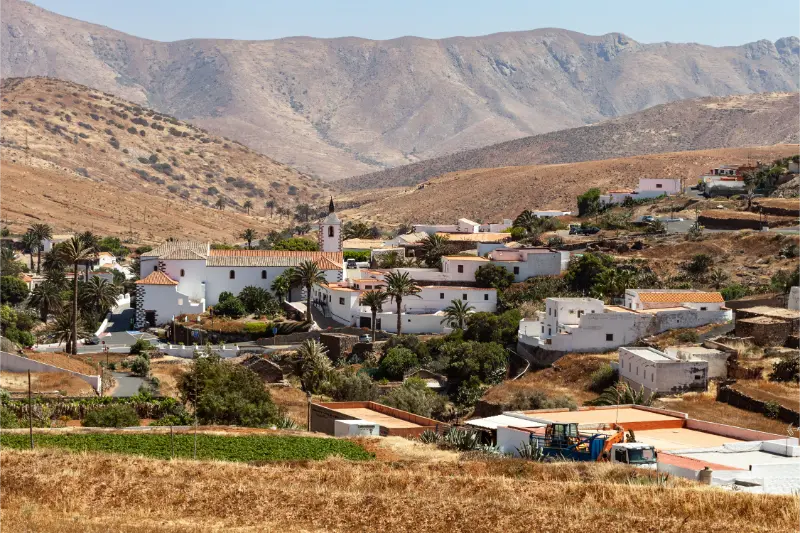
The historic centre and nearby viewpoints show a side of Fuerteventura far removed from resort beaches. The roads are winding but distances are manageable. One village, one viewpoint and lunch is enough for a family day.
Beginner surf or water sports
Older children may enjoy a beginner lesson in suitable conditions. Use a reputable school that chooses the beach according to swell and wind rather than promising the same location every day.
Getting around as a family
A car is more useful here than on a city-based island because beaches and attractions are spread out. Main roads are easy, but do not take rental cars onto rough tracks unless the contract explicitly permits it. Families staying in Caleta de Fuste can manage short trips; Corralejo and Jandía benefit from a car for exploration.
If you rent a car, reserve appropriate child seats in advance rather than assuming every category will be available on arrival. Photograph the seats and vehicle condition before leaving the depot, and keep one bag accessible with water, wipes, snacks, hats and a light layer. Mountain roads can make children carsick, so do not schedule the twistiest route immediately after a large breakfast.
Weather, sun and what to pack
Wind is part of Fuerteventura’s personality. It can make mild temperatures feel cooler and can turn a sandy beach uncomfortable for toddlers. Take a light wind layer, secure umbrellas and hats, and have a sheltered backup beach or pool plan.
For children, the most important items are high-protection sunscreen, hats, refillable water bottles, a warmer layer for altitude or windy evenings, comfortable shoes and swimwear that dries quickly. Bring less entertainment than you think: beaches, promenades, volcanic landscapes and hotel pools already fill much of the day. A few familiar snacks and a small travel activity kit are more useful than an overpacked suitcase.
Food and eating out with children
Fuerteventura makes casual family meals easy. Look for restaurants with simple grilled fish or meat, potatoes, rice, pasta, croquettes, tortillas and local cheeses rather than relying only on children’s menus. Earlier dinners are easier in resort areas than in very local towns, where kitchens may follow Spanish meal times. In fishing towns, ordering one fresh fish for the table with potatoes and salad can be easier than finding separate children’s meals. Resort areas have plenty of familiar options when children need something predictable. Keeping breakfast and one snack predictable gives children a familiar anchor even when lunch and dinner are more adventurous.
A realistic seven-day family rhythm
- Day 1: arrive, unpack and use the nearest beach or pool.
- Day 2: easy beach morning and local promenade or town.
- Day 3: one major island experience, with an early start.
- Day 4: slow day with swimming, playground time or a short coastal walk.
- Day 5: scenic drive or nature outing with only two main stops.
- Day 6: children choose the main activity; adults choose dinner or sunset.
- Day 7: flexible beach time and an uncomplicated departure plan.
This rhythm works because it alternates stimulation with recovery. If a child is tired, the “slow day” can move. If the weather changes, the major outing can swap with a beach day. The goal is not to complete the island; it is to leave with everyone still enjoying one another.
Safety and small details that matter
Take Atlantic conditions seriously. Choose lifeguarded beaches when possible, keep young children within reach at the waterline, and respect flags even when the sea looks inviting. On volcanic trails, keep children away from unstable edges and do not rely on phone signal for navigation. Save accommodation details and emergency contacts offline. If a child has dietary or medical requirements, carry what you need for a full day rather than assuming a remote village will have an open pharmacy or suitable meal at the exact time you arrive.
Family rule for Fuerteventura: one memorable outing plus plenty of unstructured beach or pool time usually produces a better holiday than trying to turn every day into a sightseeing marathon.
Planning with enough flexibility
Planning a trip around Fuerteventura with kids also becomes easier when you leave deliberate margin in the day. Traffic, parking, wind and appetite do not follow an itinerary, and the Canary Islands are best enjoyed when one good stop can last longer than expected. Keep reservations for genuinely capacity-limited experiences, but let beaches, cafés, viewpoints and short walks remain flexible. This approach is particularly useful for families and first-time visitors because it protects the important booking without turning every delay into a problem. Save the location of your accommodation, a fuel station, a supermarket and one alternative beach or activity offline before leaving each morning. If conditions change, switch plans rather than forcing the original idea. The islands reward travellers who respond to weather and geography instead of trying to defeat them.
Planning a trip around Fuerteventura with kids also becomes easier when you leave deliberate margin in the day. Traffic, parking, wind and appetite do not follow an itinerary, and the Canary Islands are best enjoyed when one good stop can last longer than expected. Keep reservations for genuinely capacity-limited experiences, but let beaches, cafés, viewpoints and short walks remain flexible. This approach is particularly useful for families and first-time visitors because it protects the important booking without turning every delay into a problem. Save the location of your accommodation, a fuel station, a supermarket and one alternative beach or activity offline before leaving each morning. If conditions change, switch plans rather than forcing the original idea. The islands reward travellers who respond to weather and geography instead of trying to defeat them.
Planning a trip around Fuerteventura with kids also becomes easier when you leave deliberate margin in the day. Traffic, parking, wind and appetite do not follow an itinerary, and the Canary Islands are best enjoyed when one good stop can last longer than expected. Keep reservations for genuinely capacity-limited experiences, but let beaches, cafés, viewpoints and short walks remain flexible. This approach is particularly useful for families and first-time visitors because it protects the important booking without turning every delay into a problem. Save the location of your accommodation, a fuel station, a supermarket and one alternative beach or activity offline before leaving each morning. If conditions change, switch plans rather than forcing the original idea. The islands reward travellers who respond to weather and geography instead of trying to defeat them.