
Where you stay in La Orotava changes the trip more than a hotel star rating does. This is not a destination where every postcode produces the same holiday. The practical difference between Historic centre, Villa de Arriba and the upper town, Lower La Orotava and valley-facing neighbourhoods, Rural fincas in the Orotava Valley and Puerto de la Cruz as a nearby alternative affects whether you walk to dinner, need a car, wake up to mountain or sea views, and how much time disappears into daily transfers.
This guide focuses on choosing the right area first and the property second. It is designed for travellers who already know they want to spend time in La Orotava, but are deciding whether to sleep in the centre, a quieter residential area or a more scenic base nearby. For wider island planning, open our Tenerife travel guide alongside this page.
Quick answer: the best place to stay in La Orotava
Choose the historic centre for a short cultural stay and a rural finca for a slower north-Tenerife holiday with a car. Families who value parking and space may prefer lower valley accommodation. If you want a conventional resort-style hotel with pools and extensive services, nearby Puerto de la Cruz generally offers more choice.
The right choice depends on what you want to do before breakfast and after dinner. A property that saves money but forces two extra taxi rides every day can be worse value than a slightly more expensive room in the correct micro-area. Use walking distance, parking, road access and evening atmosphere as part of the price comparison.
Best areas to stay in La Orotava
Historic centre
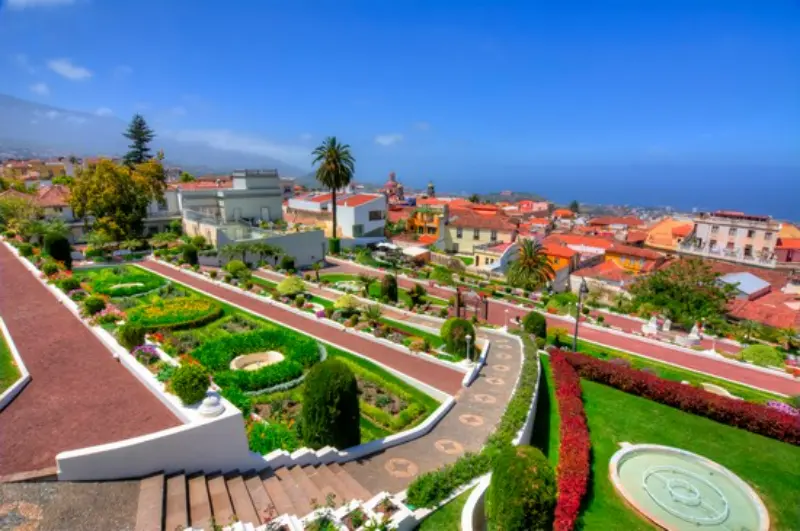
The strongest choice for atmosphere. Staying among the historic streets means you can see La Orotava early and late, when day visitors have gone, and walk to traditional architecture, gardens and restaurants. Small hotels and apartments often occupy character buildings, which is part of the appeal. The same character can mean steps, no lift or difficult vehicle access, so confirm practical details before choosing a romantic-looking property solely from photographs.
Villa de Arriba and the upper town
A more residential, elevated option with traditional streets and a stronger sense of everyday local life. It can suit walkers and repeat visitors who want less tourist traffic. Gradients matter more here, particularly on the return from dinner or when carrying luggage. A car is useful but parking should be checked carefully because narrow streets and older urban layouts were not designed around modern visitor traffic.
Lower La Orotava and valley-facing neighbourhoods
A practical compromise for travellers who want road access and views rather than being directly inside the oldest streets. Modern apartments and homes can be easier for parking, families and longer stays. You may need a car or bus for the historic centre, but the position can reduce friction on days toward Puerto de la Cruz, the TF-5 and the rest of north Tenerife.
Rural fincas in the Orotava Valley
Choose a finca or rural house if landscape, privacy and slow mornings matter more than walking to restaurants. The valley combines cultivated slopes, greenery and views toward the Atlantic or Teide. Read access instructions carefully: rural lanes can be narrow, entrances steep and the final approach very different from a city hotel. This is a particularly good choice for couples and travellers who want the accommodation itself to be part of the experience.
Puerto de la Cruz as a nearby alternative
Puerto de la Cruz is not La Orotava, but it is the obvious alternative if you want a larger choice of hotels, a seafront promenade and more evening activity. Staying there and visiting La Orotava works well; staying in La Orotava is better when heritage, rural atmosphere and the valley are the reason you chose north Tenerife in the first place.

Which area is best for a first visit?
For a first stay, prioritise the part of La Orotava that makes the destination itself easiest to experience. First-time visitors usually gain more from being able to walk to the main streets, restaurants or waterfront than from having a larger apartment several kilometres away. Once you know the area, a second trip is the time to choose a more specialised rural or residential base.
Read our dedicated La Orotava travel guide before booking. Mark the three places you expect to visit more than once, then compare accommodation around those points. This simple exercise prevents a common mistake: choosing a hotel because it looks centrally located on an island map even though it is inconvenient for your actual daily plans.
Best choice for couples
Couples should decide whether the priority is atmosphere or privacy. In La Orotava, the most romantic choice is often a smaller property with character, a terrace or an evening walking route rather than a large resort with the longest facility list. If you expect to eat out most nights, being able to walk home comfortably is a meaningful advantage. If the accommodation itself is part of the escape, a rural property can be worth the extra driving.
Best choice for families
Families should look beyond photographs of the pool. The useful questions are whether a child can walk the route to dinner, whether the apartment has a separate sleeping space, whether parking is dependable, and whether breakfast can be solved without a car. A washing machine, kitchenette or nearby supermarket can add more practical value than a decorative rooftop terrace. For younger children, also check stairs, balcony design and the distance from the room to the street or car.
Staying without a car
If you do not plan to drive, stay where ordinary days are easiest rather than where nightly rates are lowest. La Orotava can work without a car for a focused stay, but the wider value of the base depends on transport connections and how many island excursions you want to make. The broader Canary Islands without a car guide explains which islands and bases are most practical.
A car is useful for La Orotava because the municipality stretches from the valley toward high mountain terrain and much of its appeal lies beyond one walkable centre. It is not essential for a short city stay, but it adds flexibility for Teide, viewpoints and northern villages. Never treat a listed private parking space as a minor detail here; it can transform the daily experience.
Parking and road access
Parking is one of the most underestimated accommodation filters in the Canary Islands. A listing that says “parking nearby” may mean a private space, a public car park, unrestricted street parking or simply that other guests eventually found somewhere. Ask for the exact arrangement if you will have a rental car. In historic and rural areas, also check whether the final street is narrow, pedestrianised, steep or difficult for luggage.
Hotel, apartment or rural house?
- Hotel: best when you value reception, housekeeping, breakfast and easier arrival logistics.
- Apartment: useful for families, longer stays and travellers who want a kitchen or washing machine.
- Rural house: best for privacy, scenery and a slower trip, but usually more dependent on a car.
- Boutique property: often the most atmospheric option in historic areas, though accessibility and room layouts vary.
- Large resort: worthwhile when pools, kids’ facilities and on-site dining are central to the holiday; not every destination in this guide has meaningful resort inventory.
How many nights should you stay?
Two nights are enough to appreciate La Orotava as part of a road trip, while three or four allow a slower pace and nearby excursions. A full week makes sense only if the location aligns with several of your highest-priority days. Do not split a seven-night holiday into three hotels simply to reduce individual drives; every move costs packing time, check-in time and mental energy.
Best day trips from La Orotava
La Orotava is a logical base for Puerto de la Cruz, Teide National Park, Icod de los Vinos and the north coast. Group north-western places together instead of repeatedly crossing the island. If most of your planned days are around Costa Adeje or Los Cristianos, choose a southern base instead.

Use our best things to do in Tenerife guide to choose the experiences that actually justify travel time. Then group them by geography. A good itinerary has fewer road crossings and more time in each place.
Check live accommodation prices
Accommodation prices in La Orotava change with winter-sun demand, school holidays, local events, flight capacity and the remaining supply for your dates. Fixed “average prices” age quickly. Compare the live total for the exact room type and cancellation conditions instead.
The button above is an affiliate link. If you book after following it, WelcomeToCanaries may receive a commission at no extra cost to you. Compare recent reviews, the final price, taxes, meal plan and cancellation conditions before confirming.
When to book
Book earlier for Christmas and New Year, school-holiday weeks, Carnival periods and any dates tied to a major local event. Small historic hotels and rural houses can have very little inventory, so “the destination is not full” does not mean the particular type of room you want will remain available. Flexible cancellation is useful when flights are not yet final, but read the deadline and payment conditions carefully.
What to check before paying
- The exact map position, not only the destination name used in the listing title.
- Walking time to the place you expect to visit most often.
- Parking arrangements if you will rent a car.
- Air-conditioning or heating if either matters for your season and elevation.
- Lift access, stairs and luggage route in older buildings.
- Recent comments about noise, renovation works and road access.
- Whether a terrace, pool or parking space is private or shared.
- The complete cancellation policy and the currency in which you will actually be charged.
What makes this destination different
La Orotava is a rare municipality that links a historic town, a cultivated Atlantic valley and high-altitude Tenerife. The official tourism authority notes that a large share of Teide National Park lies within the municipality, which helps explain why this is such a useful base for travellers who want culture and mountain scenery in the same trip.
For details that can change, check the official tourism information for La Orotava shortly before travel. Opening arrangements, road conditions, event dates and access rules should always be confirmed close to the trip rather than treated as permanent.
A practical booking strategy
Shortlist two micro-areas before opening dozens of hotel tabs. In each area, keep only three or four properties that satisfy your non-negotiables. Compare the total stay price on identical conditions, then ask which property removes the most daily friction. A five-minute easier walk, guaranteed parking or a kitchen you will actually use can be worth more than a facility that looks impressive but changes none of your days.
If you are still unsure whether La Orotava is the right base, compare it with our broader where to stay in Tenerife guide. The goal is not to find a universally “best” hotel; it is to find the location that matches your particular itinerary.
Frequently asked questions
What is the best area to stay in La Orotava for a first visit?
Choose the historic centre for a short cultural stay and a rural finca for a slower north-Tenerife holiday with a car. Families who value parking and space may prefer lower valley accommodation. If you want a conventional resort-style hotel with pools and extensive services, nearby Puerto de la Cruz generally offers more choice.
Do I need a rental car?
A car is useful for La Orotava because the municipality stretches from the valley toward high mountain terrain and much of its appeal lies beyond one walkable centre. It is not essential for a short city stay, but it adds flexibility for Teide, viewpoints and northern villages. Never treat a listed private parking space as a minor detail here; it can transform the daily experience.
Is it worth staying here instead of making a day trip?
Yes when the evening atmosphere, early-morning access or surrounding area is part of what you want from the trip. If you only need two or three hours for the headline sights, a day trip from another well-chosen base may be simpler.
Should I book a hotel or an apartment?
Choose a hotel for services and easy arrivals; choose an apartment for space, kitchens and longer stays. In historic or rural locations, the exact building and access often matter more than the category label.
How far in advance should I reserve?
Reserve earlier when dates are fixed, room requirements are specific or you are travelling in a peak holiday period. Small properties can sell out long before an entire destination appears busy.
Final recommendation
Choose accommodation in La Orotava by imagining one ordinary day, not the most exciting day of the trip. Where will you get breakfast, how will you reach the first activity, where will the car sit, and can you go out for dinner without turning it into another transfer? If those four answers are easy, the area is probably right.