
You can visit the Canary Islands without renting a car, but the quality of the trip depends heavily on choosing the right island and, even more importantly, the right base. Public buses—called guaguas—connect major towns and resorts, while Tenerife also has trams in the metropolitan area. Taxis, ferries and organised excursions can fill the gaps. What changes is not whether a car-free holiday is possible, but how much remote countryside you expect to reach independently.
The best Canary Islands for a car-free holiday
Tenerife and Gran Canaria are the easiest all-round choices because their bus networks are extensive and the main urban/resort corridors are well connected. Lanzarote can also work very well from Puerto del Carmen, Costa Teguise or Playa Blanca if you combine buses with one or two excursions.
Fuerteventura is possible without a car, especially for a beach-focused stay, but the island’s long shape makes multi-stop sightseeing slower. La Palma, La Gomera and El Hierro have bus networks, yet remote trailheads and viewpoints often require more timetable planning, taxis or guided tours. La Graciosa is naturally car-light: walking, cycling and authorised 4×4 taxis are the normal visitor options.
Tenerife without a car
Good bases include Santa Cruz or La Laguna for city and north-east access, Puerto de la Cruz for the north, and Los Cristianos or Costa Adeje for the south. TITSA buses connect major towns and resorts, and the Santa Cruz–La Laguna tram makes the metropolitan area especially easy.
Teide, Masca and remote hiking areas are where planning matters. A guided excursion can be more efficient than combining multiple buses, particularly when an attraction has a timed reservation. Do not choose accommodation high on a steep resort hillside if you plan to walk to the bus station every day.
Gran Canaria without a car
Las Palmas de Gran Canaria is an excellent car-free base thanks to urban buses, interurban services and a walkable beach/city combination. In the south, Playa del Inglés and Maspalomas have strong resort transport and frequent links along the main corridor.

Mountain villages such as Tejeda can be reached by public transport in some schedules, but a road-trip style day with several viewpoints is much harder. Choose one destination and plan around the return bus rather than trying to reproduce a rental-car itinerary.
Lanzarote without a car
Puerto del Carmen is arguably the easiest base because it is close to the airport and linked along the resort coast. Costa Teguise and Playa Blanca also work. Buses can cover towns and resorts, while organised tours are useful for Timanfaya and multi-stop northern attractions.
La Graciosa remains easy as a day trip: reach Órzola by suitable transport, take the ferry and explore from Caleta de Sebo on foot, bicycle or authorised island taxi. Check the return connection before committing to the last ferry of the day.
Fuerteventura without a car
Choose a base that matches your priority. Corralejo works for the north and ferries to Lanzarote; Caleta de Fuste is close to the airport; Costa Calma and Morro Jable suit the southern beaches. Buses connect the main areas, but moving between north and south every day is inefficient.
Cofete is a special case because of its rough access and remote setting. A suitable excursion or specialist transport is often more sensible than trying to improvise public transport around a place that is not served like a normal resort beach.
La Palma, La Gomera and El Hierro without a car
These islands reward slower travel. Base yourself in a town with services—Santa Cruz de La Palma, Los Llanos, San Sebastián de La Gomera, Valle Gran Rey or Valverde depending on the island—and plan one major destination per day.
Bus routes connect many towns, but trailheads and high viewpoints may be far from a stop or have only limited services. Taxis can be cost-effective when shared, especially for one-way hikes. Guided walking transfers are also useful because they solve the problem of returning to a parked car.
How to choose accommodation when you will not drive
- Measure walking time to the bus station, not only distance to the beach.
- Check gradients. A 700-metre walk can be unpleasant if it climbs steeply every evening.
- Prioritise a supermarket, breakfast option and evening restaurants within walking distance.
- For early excursions, confirm the pickup area before booking a hotel far outside the resort centre.
- If travelling with children or luggage, a direct airport transfer can be worth more than a cheaper but complicated connection.
Buses, taxis and excursions: the best combination
Use buses for straightforward point-to-point journeys, taxis for short gaps or early/late transfers, and organised excursions for complex days with several remote stops. Trying to force every journey onto the cheapest possible bus can cost more in holiday time than it saves in money.
A good car-free week often includes two excursion days and several independent days. This preserves freedom without paying for a rental car that would otherwise sit unused beside the hotel.
Airport transfers without a car
The major airports have taxi services and bus links to key towns or resorts, but frequency and directness vary. Before arrival, check the official airport and local transport pages, particularly for evening flights. A connection that is easy at midday may be much less convenient after the last direct service.
If your accommodation offers a transfer, compare the total price for your group with a taxi. For three or four people the convenience difference can be larger than the cost difference.

Can you still hike without a car?
Yes, but choose hikes based on transport logistics first. Linear routes can actually work well when buses or transfer companies serve different start and end points. Conversely, a famous trail may be a poor car-free choice if the last return service leaves before you can comfortably finish.
Never rush a mountain walk to catch the last bus. Leave a safety margin and carry the taxi number or backup plan for the area.
A sample car-free week
A simple Tenerife example could combine three local beach or city days, one Teide excursion, one whale-watching trip, one bus day to La Laguna or Puerto de la Cruz and one fully flexible day. On Gran Canaria, use Las Palmas for culture and beach time, then add an organised mountain day and a south-coast excursion.
If you decide a car would improve only part of the holiday, rent one for one or two days rather than the full stay. Our Canary Islands transport guide explains the wider choice between cars, buses, ferries and flights.
Who should seriously consider skipping the rental car?
Travellers who dislike mountain driving, plan to spend most days on one beach, expect to drink wine with lunch, or are staying in a well-connected city often enjoy the holiday more without a vehicle. Parking fees and rental formalities disappear, and everyone in the group gets to look at the scenery.
A car becomes more valuable for photographers chasing sunrise, families carrying substantial beach equipment, travellers staying in isolated villas and anyone building days around multiple remote viewpoints.
The official Canary Islands transport overview lists island-by-island bus, taxi and mobility information. Always verify current timetables with the local operator before a journey.
How to plan each day when timetables matter
Start with the final return service and plan backwards. That simple habit prevents a common car-free mistake: reaching a beautiful mountain town at lunchtime only to discover the useful return bus leaves much earlier than expected. Save the timetable offline and identify a taxi backup before you need it.
Do not schedule tight connections after hikes, ferries or boat trips. Walking pace, sea conditions and delays are variable. A generous buffer is more valuable on holiday than squeezing one extra attraction between two transport legs.
Car-free travel FAQ
Can you visit Teide without a car?
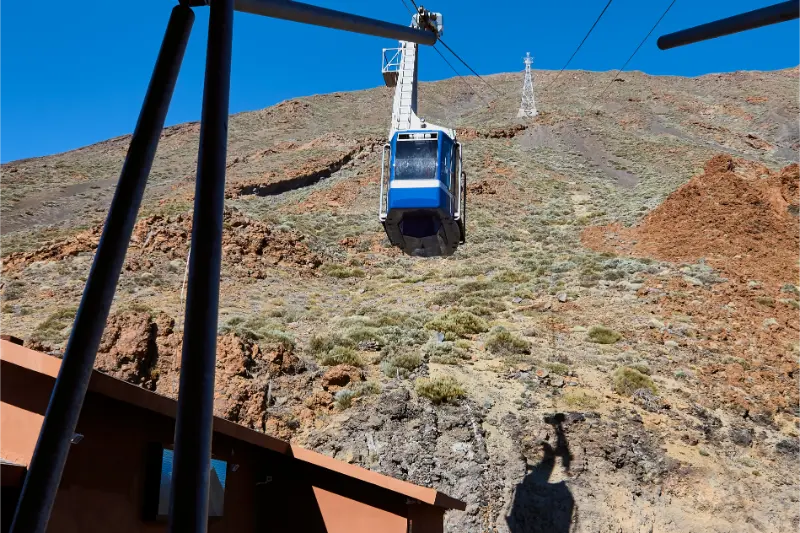
Yes. Public transport and organised excursions can reach the national park, but the best option depends on the exact trail, cable-car plan and season. Timed access should be coordinated with transport before booking.
Is a taxi expensive for sightseeing?
For one long island tour it can be costly, but a short taxi that connects a bus hub to a trailhead may be excellent value. Shared between two or three travellers, taxis can solve the exact gaps where public transport becomes inconvenient.
Should you change hotels to avoid renting a car?
Sometimes. A split stay between a city and a resort can make public transport easier, but every hotel change creates luggage logistics. Change base only when it removes repeated long journeys.
Practical planning notes before you go
Check opening days, transport times and any reservation rules shortly before the trip rather than months in advance. The Canary Islands are easy to organise independently, but protected areas, seasonal services, road works and weather-related access can change. Saving the official page for the activity on your phone is more useful than relying on an old screenshot or a third-party summary.
Build some empty space into the itinerary. A beach may be better on a different day because of wind, a mountain road may sit inside cloud, or a town may be much more enjoyable when you arrive earlier than expected. The strongest travel plans are structured enough to avoid logistical mistakes but flexible enough to respond to the islands as they actually are when you arrive.
Finally, keep distances in perspective. These islands are compact compared with many road-trip destinations, yet steep terrain, winding roads and ferry or bus schedules make travel time more important than kilometres. One well-planned area per day usually creates a richer trip than trying to cross an island repeatedly.