
Roques de García is one of the best short walks in Teide National Park because it delivers an extraordinary amount of volcanic scenery without requiring a summit permit or an all-day mountain expedition. The circular route begins by the Mirador de La Ruleta near the Parador and loops around a chain of sculpted rock formations, including the famous Roque Cinchado. At roughly 3.5 kilometres, it is often described as an easy Teide hike, but altitude, sun, wind and one steeper section mean it still deserves proper footwear and realistic pacing.
At a glance
- Island: Tenerife
- Best for: scenery, photography and a slower look at the island
- Planning: check current access, road and weather conditions before leaving
- Time needed: allow enough time for the journey as well as the main sight
- Official information: check the latest visitor details here
Why this is one of Teide’s best short hikes
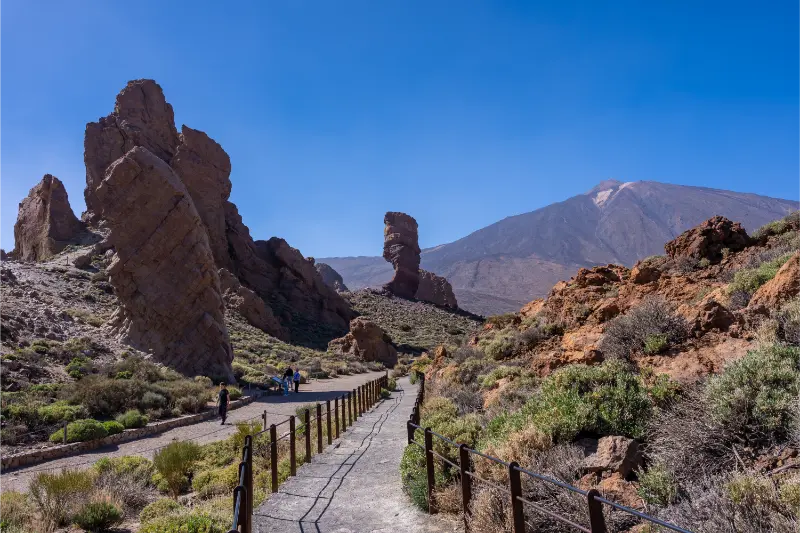
Many visitors see Roque Cinchado from the roadside and return to the car. Walking the full circuit changes the experience completely. The trail moves behind the rock formations, drops toward the Ucanca plain and reveals lava textures that are invisible from the main viewpoint. You are walking at more than 2,000 metres above sea level inside Teide National Park, so the landscape feels wide and austere even though the route is short. It is a particularly good choice for travellers who want a real walk but do not need the physical commitment of climbing toward the summit.
Route facts and difficulty
The official Tenerife hiking information lists the route at about 3.5 km, circular, with approximately two hours suggested and a low difficulty rating. It starts and finishes at Mirador de La Ruleta. The highest point is around 2,187 metres and the lowest just over 2,000 metres. No specific permit is listed for this trail, but conditions and park restrictions can always change. “Low difficulty” should not be confused with “effortless”: altitude can make an ordinary incline feel harder, and volcanic surfaces require attention. Check the official trail page before setting out.
Clockwise or counter-clockwise?
Either direction is possible, but the route’s feel changes depending on where you tackle the steeper section. Many walkers prefer to begin on the more obvious track around the rocks and leave the sharper climb for later; others like to descend that section and finish more gently. There is no universal best direction. Look at the trail on arrival, consider wind and group ability, and follow current signs. If someone in your group is uncomfortable with loose volcanic ground or steep steps, it is perfectly reasonable to walk only the easier viewpoint section and return.
Roque Cinchado and the other formations
Roque Cinchado gets most of the photographs because its narrow base and stacked shape are instantly recognisable, but the surrounding formations are just as important. The trail passes a whole group of eroded volcanic structures with different colours and textures. Changing perspective is the point: a rock that looks flat from the viewpoint becomes a wall or tower once you move around it. Resist the urge to leave the trail for a “cleaner” photograph. The fragile high-altitude environment and volcanic surfaces recover slowly from repeated shortcuts.

Altitude, sun and temperature
Roques de García can feel cool, hot and windy in the same visit. Strong solar radiation is possible even when the air temperature is low, and the thin dry air encourages dehydration. Carry water, sunscreen, a hat and a light insulating or windproof layer. If you arrive from sea level in Costa Adeje or Puerto de la Cruz, give yourself a few minutes before starting. Anyone who develops unusual headache, dizziness or shortness of breath should slow down or stop rather than treating the route as a fitness test.
Parking and timing
The Parador and La Ruleta area is one of Teide National Park’s busiest zones, so parking is often the hardest part of an otherwise straightforward walk. An early start usually gives you more flexibility, but never park outside permitted areas or damage roadside vegetation. If the car parks are full, continue with your wider Teide plan and return later rather than creating a dangerous obstruction. The Tenerife road-trip guide can help you build alternative stops into the day.
Best light for photographs
Early and late light emphasise the shapes of the rocks, but Teide’s high-altitude weather makes rigid photography plans risky. Midday light is harsher yet can produce striking shadows and clean blue skies. A polarising filter can help manage glare, but the most useful “equipment” is time: walk far enough from the main viewpoint to find different alignments between the rocks, Teide and the Ucanca plain. Do not sacrifice safe footing while looking through a camera, especially on the steeper section.
Combining the hike with the cable car
The Roques de García circuit combines naturally with the Teide Cable Car, but do not assume the cable car will run simply because the hiking trail is open. Wind and weather can affect operations. If you have a timed cable-car booking, leave generous margin and walk Roques de García before or after only if the schedule remains comfortable. A short hike should make the Teide day better, not turn it into a race between parking areas and check-in times.
Who should choose another walk
Families with young children, travellers with mobility limitations and people uncomfortable on uneven ground may prefer the main viewpoint and shorter walks around the visitor areas. Strong wind, ice or unusual heat can also make a normally accessible route inappropriate. Tenerife has many alternatives, and our best hikes in Tenerife guide compares easier and harder options. The right decision is the one that matches the day’s actual conditions, not the trail’s reputation on social media.
A practical way to plan the visit
Build the day around one clear priority rather than treating Roques de García Tenerife as a stop you can squeeze between distant attractions. Check the route the evening before, then check again in the morning for weather, road restrictions or temporary closures. Download an offline map, carry more water than you think you will need and keep a light layer in the car. If the place uses controlled access, a timed booking or public transport, save the confirmation and timetable offline. On the Canary Islands, short distances can still involve mountain roads, limited parking and sudden changes in wind or cloud.
If you are travelling with children or anyone with limited mobility, separate the destination’s headline image from the real access conditions. A viewpoint can involve steps, a “short walk” can cross loose volcanic ground, and a coastal stop can be exposed to strong Atlantic swell. The safest plan is the one that can be shortened without ruining the day. Keep one nearby alternative—village, café, sheltered promenade or museum—in mind so a closure does not turn into a long cross-island chase.
Common mistakes to avoid
Common mistakes include arriving in beach clothes, underestimating altitude, parking outside legal areas and assuming “easy” means the trail is paved. Another is scheduling the walk immediately before a cable-car reservation with no margin for parking or weather. Do not shortcut between rocks, and do not let a crowded viewpoint push you onto unstable ground. If wind, ice or poor visibility makes the circuit uncomfortable, enjoy the official viewpoint and save the walk for another day.
Where to stay
Choose accommodation for the wider holiday, not only for this single visit. On Tenerife, the best base depends on whether you value beaches, restaurants within walking distance, hiking access or easier road connections. A property that looks close on a map can still involve steep roads or a long drive around a ravine. Compare exact map positions, parking arrangements and evening food options before booking. If you are moving between islands, avoid adding a hotel change simply to save a small amount of driving on one sightseeing day.
Responsible visiting
Natural and cultural sites in the Canary Islands are under pressure from high visitor numbers, social-media detours and repeated off-trail shortcuts. Stay on signed routes, do not move stones, do not build cairns for photographs and never leave food waste behind. At lived-in places, respect private doors, terraces and residents. At protected landscapes, barriers are part of conservation even when the ground beyond them looks harmless. The most useful rule is simple: leave the site visually and physically unchanged by your visit.
Use official information for the final operational decision. Opening hours, traffic controls, visitor-centre access, trail closures and bus timetables are more likely to change than the landscape itself. This guide is designed to help you understand why Roques de García Tenerife is worth visiting and how to fit it into a trip; the authority linked above should decide whether a road, path or facility is open on your exact date.
Frequently asked questions
Do you need a permit for Roques de García?
The official trail information currently lists no specific permit requirement for the Roques de García circuit. Always check the current park status before departure.
How long is the hike?
The official route is about 3.5 km and roughly two hours is suggested, although many visitors take longer because of photography and altitude.
Is Roques de García suitable for children?
Many active families can manage it, but the path is uneven and includes a steeper section. Assess the child’s walking ability and the day’s wind and temperature.
Can I do it in normal trainers?
Supportive trainers with good grip may be enough in dry conditions, but proper walking shoes are more comfortable on loose volcanic surfaces.
Is it worth walking if I have already seen Roque Cinchado?
Yes. The circuit shows the formations from completely different angles and opens views toward the Ucanca plain that the roadside stop does not provide.
Final advice
Roques de García is a strong example of a short hike that should not be rushed. Treat the altitude seriously, start only in suitable conditions, and use the circuit to see Teide’s volcanic landscape from changing angles rather than collecting one famous photograph.
Best rule: plan the access carefully, then leave enough time to enjoy the landscape without rushing.