
The Teide Cable Car is one of the easiest ways to experience the high-altitude landscape of Teide National Park without committing to a full mountain ascent. The base station sits at about 2,356 metres and the upper station at La Rambleta is around 3,555 metres, so the ride changes the scale of the landscape in only a few minutes. The important detail is that a cable-car ticket is not the same thing as permission to stand on the summit. If you want to reach the crater at 3,718 metres, you need the appropriate authorisation for Trail 10, Telesforo Bravo. For a broader overview of the national park, start with our Teide National Park guide.
Quick planning summary
- Base station: around 2,356 m above sea level
- Upper station: La Rambleta, around 3,555 m
- Summit: 3,718 m and requires separate authorisation
- Two viewpoint trails can normally be enjoyed without the summit permit, subject to current access rules
- Operations can be suspended because of wind, ice or other mountain conditions
Why this attraction is worth adding to your trip
This is not an attraction that every traveller automatically needs. It is most worthwhile when it matches the rhythm of your trip: families may value a structured day, walkers may want direct access to a landscape, and first-time visitors may use it to understand Tenerife beyond a resort or viewpoint. The best approach is to decide what you want from the visit before buying anything, then give it enough time rather than squeezing it into an already overloaded schedule.
A useful way to judge the visit is to compare it with the wider destination. Our things to do in Tenerife guide is relevant for Tenerife attractions, while the corresponding island guides for Gran Canaria, Lanzarote and Fuerteventura help with alternatives elsewhere. The point is not to collect attractions; it is to build a coherent day in which travel time, weather, age, interests and energy all work together.
What to see and what to expect
The ride itself
The short ascent is not just transport. It is a rapid transition from the high volcanic plateau to an alpine-looking landscape of lava, pumice and wide views across Tenerife. On clear days the contrast between the caldera, the coast and neighbouring islands is the main attraction.
La Fortaleza viewpoint
Trail 11 heads toward a viewpoint over the greener north of Tenerife and the Orotava Valley. It is one of the best choices if you have no summit permit but still want to walk after leaving the cabin.

Pico Viejo viewpoint
Trail 12 leads toward views of the broad Pico Viejo crater and, in good visibility, La Gomera, El Hierro and La Palma. The official operator describes the crater as roughly 800 metres across.
The summit option
Trail 10, Telesforo Bravo, climbs from the upper station to the crater. It is short in distance but demanding because of altitude and gradient. Treat the permit, equipment requirements and time slot as part of the trip, not as an optional detail.
Tickets and booking
Book a timed cable-car ticket before travelling if the ride is important to your itinerary. The official timetable changes through the year and capacity is finite. For 2026, the standard day service runs from 09:00, with closing time varying by season: during much of July through September it operates later than in winter. The official operator publishes the exact last ascent and last descent for each date range. Do not copy an old timetable from a travel forum; check it again shortly before your visit.
Save the confirmation somewhere available offline and check the official website again 24–48 hours before travelling. Opening hours, maintenance, weather restrictions, presentation schedules and access procedures can all change. If a visit depends on a specific timed slot, build the rest of the day around that fixed point instead of creating two or three inflexible reservations.
Current rules and practical restrictions
A cable-car ticket alone does not include access to the summit crater. Trail 10 requires the relevant authorisation. Some high-level trails also have authorisation and equipment rules for hikers who intend to descend on foot instead of using the cable car. Closed, grippy footwear and warm layers are sensible even when the coast is hot. The operator also applies health restrictions connected with altitude, so travellers with relevant medical conditions should read the current rules before buying.
Follow the rules displayed on site even when they differ from an older article or video. Canary Islands attractions are often affected by weather, maintenance, conservation requirements or seasonal operation, so the information shown by the operator on the day takes priority. This is particularly important for mountain routes, water attractions and experiences involving animals.
How to get there
Driving is the most flexible option, but the base-station parking area can fill at busy times. The operator says the car park has about 220 spaces. Build extra time into the journey because Teide roads are scenic, slow in places and often tempt you to stop. If you do not want to drive, consider an organised Teide excursion or review our Tenerife public transport guide and 3-day Tenerife itinerary before deciding how the cable car fits into your day.
How long should you allow?
Allow considerably more time than the cabin ride itself. You need time for parking or transfer, check-in, weather delays, the ascent, a short period to adjust to altitude and whichever viewpoint trail you choose. The upper-station stay is generally limited, with longer allowance for travellers holding crater access. A half-day framework is more realistic than squeezing the cable car between two distant attractions.
Best time of day and season
Earlier arrival is usually the safest strategy because it gives you the most usable time if queues, traffic or weather slow the plan. In summer, strong sun can make outdoor sections tiring; in winter, wind and high-altitude temperatures can be much cooler than beach resorts. For indoor attractions, midday can be a smart time to escape heat. Always use the attraction’s live calendar rather than assuming the same schedule applies year-round.
Visiting with children and accessibility considerations
Teide can be memorable for families, but altitude changes the calculation. The official operator applies restrictions for young children on some products and specifically warns about high-altitude health risks. Do not assume that because the ride is mechanically easy it is suitable for every child, pregnant traveller or person with heart or respiratory concerns. Families looking for lower-altitude days can also use our ‘+ilink(‘tenerife-with-kids’,’Tenerife with kids guide’)+’.
Accessibility is not a single yes-or-no label. A site may have adapted entrances but still include steep gradients, natural surfaces, steps or restricted experiences. If mobility is a deciding factor, read the operator’s current accessibility page or contact the attraction before paying. Families should also check height, age and health restrictions for individual experiences rather than relying only on the general entrance policy.
What to bring
- Water and sun protection for outdoor sections
- Comfortable, secure footwear appropriate to the terrain
- A light extra layer for high altitude, caves or air-conditioned interiors when relevant
- Tickets, ID or residency documents required for any discounted rate
- A charged phone with confirmations and offline directions
- Swimwear and a dry change of clothes only for water-based attractions
What to combine with it
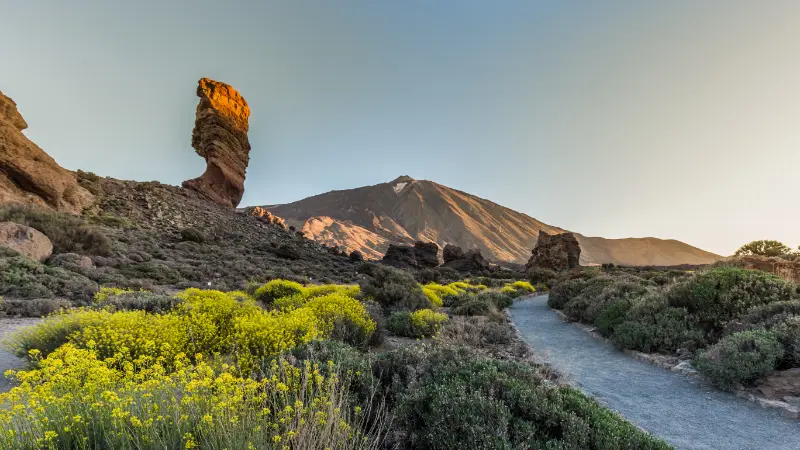
Roques de García, the national-park viewpoints and a slow drive through the caldera combine naturally with the cable car. Avoid planning a long beach drive immediately after a tiring high-altitude walk. If you are staying in the south, a Teide day pairs well with an early return to Costa Adeje or Los Cristianos; from the north, the Orotava Valley is a logical direction.
Where to stay for an easier visit
Choose accommodation based on the wider holiday rather than staying near an attraction for one night unless the location also suits your other plans. A good base reduces repeated cross-island driving and makes early arrival much easier. Compare the island’s main areas in our accommodation guides before booking.
Common planning mistakes
- Relying on an old opening-hours screenshot instead of the live official calendar
- Booking two distant timed attractions on the same day with no margin
- Ignoring height, age, footwear or health restrictions until arrival
- Underestimating driving time because the island looks small on a map
- Trying to “see everything” instead of prioritising the parts that suit your group
- Forgetting that wind, heat and altitude can change how tiring a day feels
FAQ
Should I book in advance?
If the attraction uses timed entry, limited capacity or a seasonal calendar, advance booking is strongly advisable. For flexible or free-entry sites, checking the official schedule may be enough.
Is it worth visiting with children?
It depends on age, height restrictions, walking tolerance and interest. Read the family section above and compare the visit with easier alternatives on the same island.
Can I visit without a car?
Often yes, but convenience varies dramatically by attraction. Use the island public-transport guide and the operator’s directions page before relying on buses.
How much time do I need?
Allow more than the advertised core experience. Transport, check-in, queues, breaks and nearby stops can easily add several hours to the day.
What if the weather changes?
Check the official status before leaving. Mountain and outdoor attractions may close for safety, while water parks can feel very different in strong wind or cooler conditions.
Are prices guaranteed?
No. Prices, resident discounts and online promotions can change. The official booking page for your exact date is the only reliable final price.
Final tips
A good attraction day is not the one with the most stops; it is the one with enough time to enjoy the place without turning the rest of the island into a race.
Before travelling, check the attraction’s official visitor information for the latest opening hours, access rules and temporary changes. Then leave some flexibility around the visit. The Canary Islands reward slow transitions between landscapes, towns and beaches, and even a highly organised attraction fits better when the rest of the day has breathing room.