
The best viewpoints in the Canary Islands are not only places to take photographs; they are where the geography of the archipelago suddenly makes sense. From a high road you can see cloud trapped against a mountain ridge, villages suspended above ravines, lava reaching the sea or a neighbouring island appearing on the horizon. The most rewarding viewpoints are often part of a wider route rather than destinations to rush between.
12 Canary Islands viewpoints worth building into a trip
Teide viewpoints, Tenerife
The high roads through Teide National Park contain several pull-offs and signed viewpoints where lava fields, the caldera wall and the volcanic cone dominate the horizon. The best experience is not necessarily the highest point: cloud inversion can make mid-altitude viewpoints extraordinary. Arrive with a warm layer and never stop on the carriageway for a photograph.
Mirador de Chipeque, Tenerife
Chipeque is famous for views across pine forest toward Teide, often above a sea of cloud. Conditions are highly variable, which is part of the appeal. Sunset can be beautiful, but darkness on mountain roads arrives quickly, so know the return route before staying for the final light.
Mirador del Balcón, Gran Canaria
On the dramatic west side of Gran Canaria, this viewpoint looks across layered cliffs and the Atlantic. The approach itself is part of the experience, with roads that demand concentration. Use designated parking and keep the day simple rather than combining it with too many distant stops.
Tejeda and central viewpoints, Gran Canaria
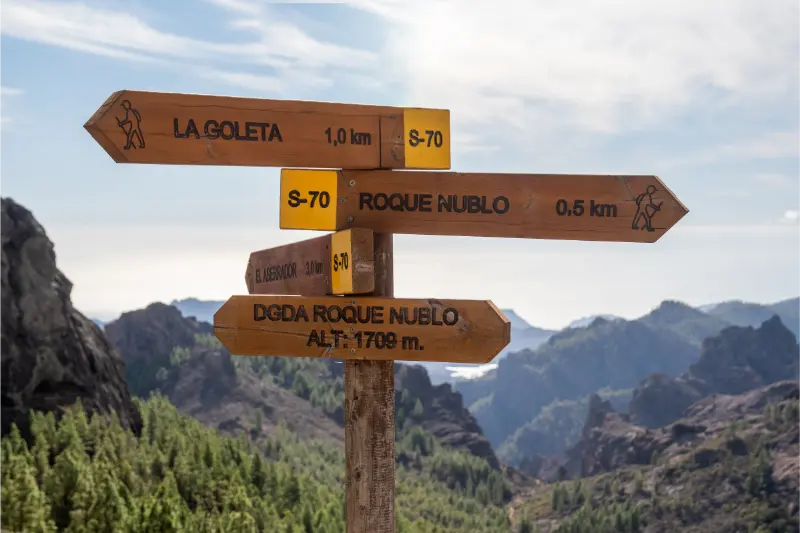
The mountain basin around Tejeda produces repeated views toward Roque Bentayga, Roque Nublo and deep ravines. Instead of chasing one famous lookout, allow time for several short stops and a village lunch. Current access arrangements around Roque Nublo should be checked in advance.
Mirador del Río, Lanzarote
César Manrique’s Mirador del Río turns a strategic cliff-top position into an architectural viewpoint over the Risco de Famara and La Graciosa. It is ticketed and more structured than a roadside lookout, but the design is part of the reason to visit. Clear weather gives the broadest view, while haze can soften the horizon.
Famara cliff viewpoints, Lanzarote
The high ground around the Famara massif offers a very different perspective from the beach below. Wind can be strong and exposed edges are not places for improvised photo positions. Choose signed viewpoints and respect barriers even when other visitors do not.
Morro Velosa and central Fuerteventura
Central Fuerteventura is best understood from above, where rounded volcanic hills, dry valleys and scattered settlements reveal the island’s scale. Pair a viewpoint stop with Betancuria rather than driving into the interior only for a five-minute photograph.
Cofete viewpoint, Fuerteventura
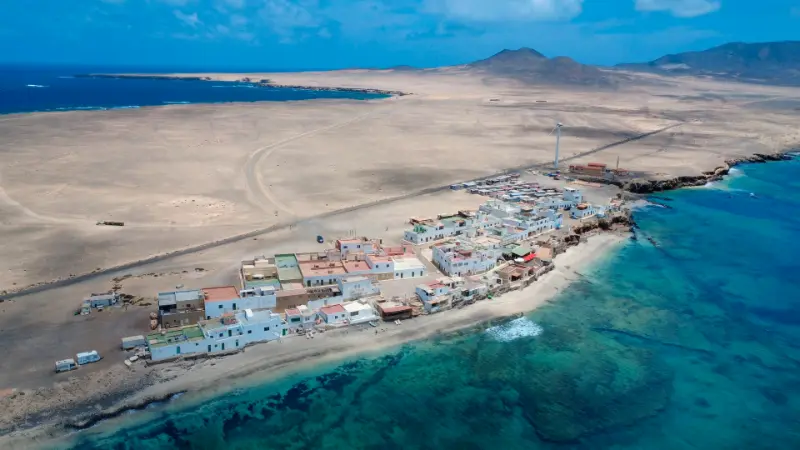
The descent toward Cofete produces one of the archipelago’s most dramatic road-trip panoramas, with the Jandía mountains behind an immense beach. The access road is unpaved and conditions matter. Stop only in designated areas and check rental restrictions before committing to the route.
Roque de los Muchachos, La Palma
At the island’s high astronomical zone, views can extend over Caldera de Taburiente and above the cloud layer. The observatory environment has access rules and weather can change quickly. Plan the visit as a mountain excursion, not simply a scenic drive in beach clothing.
Mirador de la Concepción, La Palma
Above Santa Cruz de La Palma, this viewpoint provides an immediate understanding of the capital, port and volcanic shape of the east side. It is particularly useful near the beginning of a trip because the panorama makes later drives easier to visualise.
Mirador de Abrante, La Gomera
Above Agulo, Abrante is known for a dramatic glass viewing structure and broad views toward the village and, on clear days, Tenerife. The road trip through northern La Gomera is already scenic, so build in time for villages and forest rather than treating the viewpoint as an isolated target.
Mirador de la Peña, El Hierro
Designed by César Manrique, Mirador de la Peña overlooks the El Golfo valley and combines architecture, landscape and a sense of the island’s verticality. It is one of the easiest places to understand how sharply El Hierro rises from the Atlantic.
How to choose viewpoints according to the weather
A clear forecast is not always the only desirable condition. Tenerife and La Palma can produce spectacular cloud inversions, while wind can clear haze on Lanzarote and Fuerteventura. Check mountain-specific conditions instead of using only the beach forecast from your hotel.
If a viewpoint is inside cloud, wait briefly if conditions are moving, but do not build the whole day around forcing a view. Choose a lower-altitude stop or change coasts. The islands offer enough variety to reward a flexible plan.
Sunrise and sunset: when the famous photo is not worth it
Golden-hour light can transform volcanic landscapes, but it also concentrates cars at the same small viewpoints. Arrive before peak time, park legally and carry a layer for the temperature drop. After sunset, mountain roads require more attention than they did in daylight.
Never climb barriers or stand in the road for a photograph. A wide-angle view is not worth creating a hazard for yourself, cyclists or other drivers.
Viewpoints without a rental car
Some major viewpoints can be reached on organised island tours, public buses or guided hiking excursions. This is especially useful if you are uncomfortable with mountain driving. A guided day also gives context that is easy to miss when you simply arrive, take a photo and leave.
For a broader transport strategy, read our guide to visiting the Canary Islands without a car once it is part of your itinerary planning.
What to carry
- A light windproof layer even when the coast is warm.
- Water and sun protection; altitude and wind can hide how strong the sun feels.
- Offline maps for mountain areas.
- Closed shoes if the viewpoint includes a short trail.
- A small torch if you intentionally stay after sunset.
Turn viewpoints into real travel days
Combine the high places with nearby towns and walks. Tejeda works naturally with our Tejeda guide; the Lanzarote north pairs with Haría; and west Tenerife viewpoints can connect with Masca or Los Gigantes. This creates days with rhythm instead of hours spent entering and leaving car parks.
The best panorama is often the one you did not plan: a cloud gap, a village terrace or a safe roadside pull-off that appears between famous names. Leave enough time to notice it.

Use the official Canary Islands viewpoints directory to check additional viewpoints and island-specific information before travelling.
Photography without turning the trip into a photo shoot
Morning and late-afternoon light usually adds texture to volcanic terrain, but midday can be excellent when you want strong colour in the sea. If using a phone, clean the lens before every major viewpoint; salt spray and sunscreen fingerprints ruin more travel photographs than expensive equipment solves.
Take one wide view, one image with a foreground element and one detail. Then put the camera away for a few minutes. The scale of a caldera or ocean cliff is difficult to understand through a screen, and the memory of the place is part of what you travelled for.
Families and travellers with limited mobility
Many signed viewpoints are accessible directly from a car park, but accessibility varies widely. Some have steps, uneven volcanic surfaces or narrow approaches. Check the specific facility before travel rather than assuming the word “viewpoint” means a level platform.
With children, choose fewer stops and add a picnic, short safe walk or village break. A day of ten scenic pull-offs is rarely as enjoyable for a family as three good viewpoints mixed with places where everyone can move around.
A simple two-day viewpoint strategy
If scenic lookouts are a major reason for your trip, divide them by landscape rather than by fame. Spend one day on high volcanic or mountain viewpoints and another on coastal or village panoramas. This gives the light, weather and driving a coherent rhythm and prevents the trip from becoming a race between pins on a map.
Morning is usually best for combining viewpoints with walking because parking is easier and temperatures are cooler. Late afternoon is ideal for one carefully chosen sunset stop. In between, add a village lunch or beach break so the day contains more than windscreen time.
Viewpoint FAQ
Do you need a 4×4 to reach the best viewpoints?
Usually not. Most famous signed viewpoints are reached on normal paved roads, but a few remote routes, especially near wild beaches or rough tracks, can be unsuitable for ordinary rental contracts. Check the exact road rather than assuming every scenic pin is standard access.
Are viewpoints free?
Many roadside and public viewpoints are free, while architect-designed visitor attractions such as Mirador del Río may charge admission. Parking, shuttle systems or regulated access can also affect the practical cost of a visit.
Which island has the best viewpoints?
Tenerife and La Palma are exceptional for altitude and cloud inversions, Gran Canaria for mountain ravines, Lanzarote for volcanic design and La Gomera or El Hierro for dramatic island-scale perspectives. The “best” island depends on the landscape you want.
Practical planning notes before you go
Check opening days, transport times and any reservation rules shortly before the trip rather than months in advance. The Canary Islands are easy to organise independently, but protected areas, seasonal services, road works and weather-related access can change. Saving the official page for the activity on your phone is more useful than relying on an old screenshot or a third-party summary.
Build some empty space into the itinerary. A beach may be better on a different day because of wind, a mountain road may sit inside cloud, or a town may be much more enjoyable when you arrive earlier than expected. The strongest travel plans are structured enough to avoid logistical mistakes but flexible enough to respond to the islands as they actually are when you arrive.
Finally, keep distances in perspective. These islands are compact compared with many road-trip destinations, yet steep terrain, winding roads and ferry or bus schedules make travel time more important than kilometres. One well-planned area per day usually creates a richer trip than trying to cross an island repeatedly.