
The Canary Islands cruise ports are unusually varied: some place you next to a major city, while others make sense as gateways to volcanic parks, beaches or historic inland towns. A good port day is therefore not about following the same formula on every island. The right plan depends on how long the ship is alongside, where it berths and how far your chosen attraction is from the harbour.
This guide compares the four ports most leisure travellers encounter on Tenerife, Gran Canaria, Lanzarote and Fuerteventura. It also explains a planning principle that matters more than any list of attractions: cruise passengers should build the day backwards from the all-aboard time, not forwards from the first place they want to see.
Quick comparison of the main ports
Santa Cruz de Tenerife
Best for combining a real city with optional trips to La Laguna, Las Teresitas, Anaga or—on longer calls—Teide. See the detailed Santa Cruz de Tenerife cruise guide.
Las Palmas de Gran Canaria
Best city port for an easy independent day, with Las Canteras, Santa Catalina, Vegueta and Triana all offering strong alternatives to a long excursion. See the detailed Las Palmas de Gran Canaria cruise guide.
Arrecife, Lanzarote
Best for choosing between a low-stress local day and a carefully organised volcanic excursion to Timanfaya, La Geria or César Manrique sites. See the detailed Arrecife, Lanzarote cruise guide.
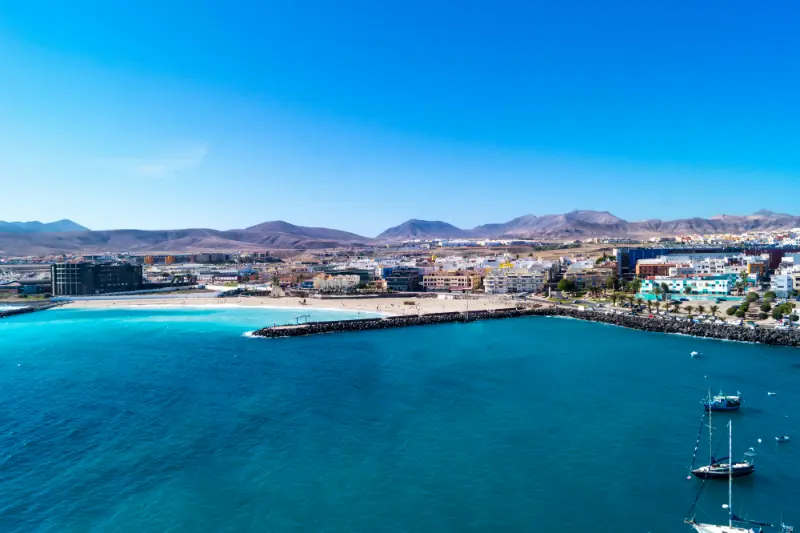
Puerto del Rosario, Fuerteventura
Best for travellers who want either a simple capital stop or a pre-arranged drive to Betancuria, Corralejo dunes or a selected beach area. See the detailed Puerto del Rosario, Fuerteventura cruise guide.
The 2-hour rule: stay close
If you genuinely have only around two useful hours ashore after disembarkation, stay in the port city or immediate urban area. That still works well in Santa Cruz, Las Palmas and Arrecife, and it keeps Puerto del Rosario manageable. Two hours is not enough for a relaxed cross-island tour once taxi collection, traffic and return security are included.
The 4-hour rule: choose one extension
Four hours allows one meaningful extension beyond the immediate port: perhaps La Laguna from Santa Cruz, Vegueta from the northern cruise area of Las Palmas, one César Manrique attraction from Arrecife or Betancuria with a pre-arranged driver from Puerto del Rosario. The keyword is one. Cruise days become stressful when a four-hour window is treated as a miniature road trip.
The 6-hour rule: island excursion, not island conquest
Six hours opens up headline experiences, especially with a ship excursion or private driver. Teide from Tenerife, Timanfaya from Lanzarote or a wider Fuerteventura route become more realistic, but distance still matters. Gran Canaria is particularly tempting to over-plan because the island offers city, dunes and mountains; choose a theme rather than trying to see every landscape in one call.
Which port is easiest without an excursion?
Las Palmas and Santa Cruz are the strongest choices for independent city exploration. Arrecife also works well if you want a calm local day around the waterfront. Puerto del Rosario is smaller and can be explored independently, but many of Fuerteventura’s signature landscapes require transport. Use the individual port guides linked above to decide whether leaving the city materially improves your day.
Ship excursion vs independent tour
A ship excursion trades flexibility for logistical reassurance. An independent tour can be cheaper, smaller and more personalised, but you assume more responsibility for timing. City walks, taxis to a nearby attraction and pre-booked private tours are different risk levels; do not treat them as one category. The farther you travel from port, the more important return logistics become.
Cruise transfers and port shuttles
Do not assume the ship will always dock at the same berth or that you can walk from the gangway to the city in exactly the way described in an older blog post. Port operations change. Check the daily information supplied onboard for shuttle buses, pedestrian exits and meeting points, then adapt the sightseeing plan around the actual location.
When a rental car makes sense
A rental car can work on a long port call, but it is not automatically efficient. Collection queues, fuel policy, parking and vehicle return add fixed tasks to a day with a hard deadline. It is most suitable when the office is convenient, your group already knows the route and you are visiting one region. A taxi or private driver can be better value when you only need a few hours.
What about La Palma, La Gomera and El Hierro?
Smaller Canary Islands also receive cruise calls and can offer excellent short itineraries, but schedules vary more by line and season. The same principles apply: stay close on short calls, choose one region on longer calls and use the official cruise-route planner for current destination ideas. If your itinerary includes one of the smaller islands, pair the cruise information with our island travel guides before deciding whether to go independent.
Weather can be different inland
The Canary Islands are famous for mild conditions, but altitude and exposure change the feel of a day quickly. A warm harbour does not guarantee a warm mountain viewpoint. Bring a light layer, particularly for Teide, Gran Canaria’s interior or exposed Fuerteventura stops. Wind can also change beach and boat plans without making the whole island a bad choice.
Accessibility
Cruise terminals and city centres may be manageable for reduced-mobility travellers, but individual excursions can include uneven paving, coach steps, steep viewpoints or historic streets. Ask about the complete route, not simply whether the coach is described as accessible. Our broader accessible-travel guides can help you compare islands before booking a cruise with multiple Canarian calls.
A practical port-day checklist
- Write down the ship’s all-aboard time and keep it separate from the advertised departure time.
- Confirm the berth or shuttle arrangement onboard.
- Know how you are returning before you travel inland.
- Carry cruise card, required ID, payment method and water.
- Save maps or key addresses offline.
- Keep a conservative time buffer, especially with public transport.
- Avoid a non-refundable attraction time that only works if disembarkation is immediate.
- If conditions change, switch to a city plan rather than forcing the original route.
Useful internal guides
Read our Tenerife guide, Gran Canaria guide, Lanzarote guide and Fuerteventura guide before deciding how far to travel from each port. If your cruise starts or ends in the islands, the ferry guide is also useful for independent extensions.
Pre- and post-cruise stays
If the cruise begins or ends in the Canary Islands, adding one hotel night can transform the experience. It reduces the risk of a same-day flight delay causing embarkation problems and gives you time to see the departure city without compressing sightseeing into luggage day. Check the exact embarkation port before booking a hotel; an attractive resort elsewhere on the island can be inconvenient when you need to reach the terminal with bags.
For a pre-cruise stay, prioritise predictable airport-to-hotel and hotel-to-port transport over a remote scenic location. For a post-cruise stay, you can be more ambitious because the ship deadline has disappeared. This is where an inland hotel, beach resort or second island can make sense.

When a beach day is the smartest shore excursion
Not every port day needs a museum or mountain drive. Las Teresitas from Santa Cruz, Las Canteras in Las Palmas and resort beaches on Fuerteventura can provide a simple low-stress day when the weather is right. The key is to choose a beach with straightforward return transport and to keep valuables secure. If wind or cloud makes the beach unattractive, switch to the city plan rather than chasing sunshine across the island.
Official cruise information
The official tourism portal provides Canary Islands cruise routes grouped by island and by approximate visit duration. Use that planning resource for destination ideas and your cruise line for final berth, shuttle and all-aboard instructions.
The button above is an affiliate link. WelcomeToCanaries may receive a commission if you book after using it, at no extra cost to you.
Frequently asked questions
Which Canary Islands cruise port is easiest to explore independently?
Las Palmas and Santa Cruz are particularly easy to treat as city breaks, while Arrecife also supports a compact local day. Fuerteventura’s major landscapes generally require more transport.
Can I visit Teide on a Tenerife cruise stop?
It can be realistic on a long call with well-organised transport, but it should not be attempted on a tight schedule without a substantial return margin.

Can I visit Timanfaya from Arrecife during a cruise?
Yes on a sufficiently long call, especially through an organised excursion. Traffic, visitor access and transfer time need to be built into the plan.
Do cruise ships always use the same terminal?
No. Berths and operational arrangements can change. Follow the information provided by your ship for the actual day.
Should I stay overnight before a Canary Islands cruise?
If your cruise begins in the islands, arriving at least one day early can reduce the risk created by same-day flight disruption and gives you time to enjoy the embarkation city.
Final verdict
Canary Islands cruise calls reward simple planning. Use short calls for the port city, medium calls for one extension and long calls for one headline island experience. Santa Cruz and Las Palmas are excellent independent ports; Arrecife makes a strong gateway to volcanic Lanzarote; Puerto del Rosario opens Fuerteventura when transport is planned carefully. The best cruise day is the one that ends with time to spare.