
Fuerteventura works best as a yoga destination when you choose the right base and leave enough empty space in the schedule. The island can support everything from a few drop-in classes to a structured retreat, but the experience changes dramatically between a busy resort, a surf village and a quiet rural property. The most useful first decision is therefore not which pose or programme you want—it is how much of the holiday you want yoga to organise.
Fuerteventura is about space: long beaches, dry hills and huge horizons. That simplicity is a major advantage for a trip centred on rest, breathing room and time outdoors. Yoga fits naturally into that landscape, especially when it is combined with walking, swimming, good sleep and unhurried meals rather than treated as another activity to squeeze into an already crowded itinerary.
Is Fuerteventura good for a yoga holiday?
Yes, particularly for travellers who value year-round outdoor time and want a trip that can be as structured or as independent as they choose. You can book a hotel and attend local classes, choose accommodation that runs its own sessions, or commit to a residential retreat. Those options are not interchangeable: a retreat usually controls more of the daily rhythm, while a normal holiday with classes gives you much more freedom to explore.
The Canary Islands climate also makes early-morning and late-afternoon practice realistic for much of the year. That does not mean every day is calm or cloudless. Wind, strong sun and local microclimates matter, so a good venue should have a sheltered or indoor backup rather than depending entirely on an exposed beach platform.
Best areas for yoga in Fuerteventura
Corralejo
The most flexible base for combining yoga with cafés, surf schools, boat trips and the dunes. It is social enough for solo travellers but still gives quick access to quieter natural spaces.
El Cotillo
A slower choice built around lagoons, sunsets and an unhurried village rhythm. It suits travellers who want self-guided practice, small classes and long gaps in the schedule rather than a packed programme.
Costa Calma and La Pared
A strong south-island pairing for retreat-style trips. Costa Calma provides resort convenience, while the west-coast landscape around La Pared feels wilder and more isolated. Wind exposure differs sharply by location, so exact accommodation placement matters.
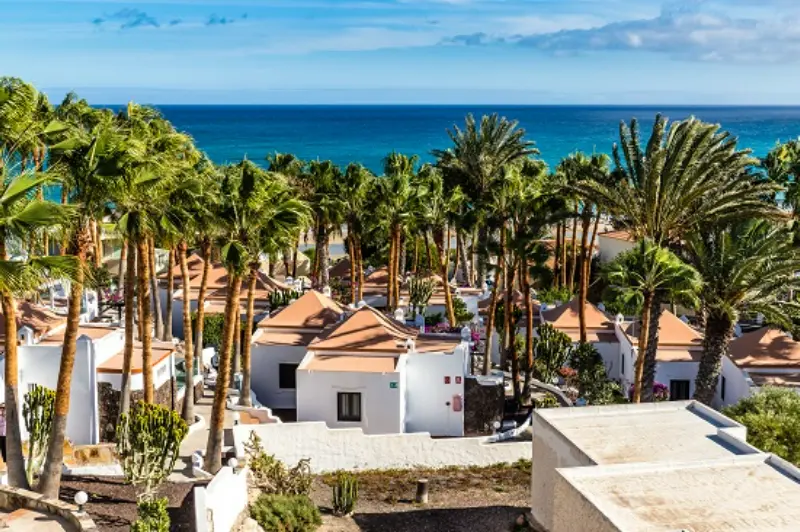
Retreat, drop-in classes or self-guided practice?
A residential retreat is the strongest choice if your main goal is to reset routines. Accommodation, meals and classes are often bundled into one schedule, reducing daily decisions. Before paying a deposit, check exactly what is included, whether participation is optional, how many students attend and whether transfers or excursions cost extra.
Drop-in classes are better for travellers who still want a normal sightseeing holiday. They let you keep the best-weather days free for excursions and use yoga as an anchor in the morning or evening. Ask whether mats are supplied, what language the class uses and whether booking is required; small studios can fill quickly in popular resort periods.
Self-guided practice is the simplest option, but outdoor etiquette matters. Beaches, promenades and viewpoints are shared public spaces, while protected landscapes may have restrictions. Use a normal public area, stay off fragile vegetation and never block paths or viewpoints for photos or group sessions.
How to choose a good yoga retreat or class
- Check the teacher and style: make sure the level, pace and teaching language fit your experience rather than choosing only from attractive photos.
- Read the timetable: two classes a day plus workshops can feel intensive if you also want to explore the island.
- Confirm room details: a “retreat” can range from a private rural hotel to shared rooms in a surf house.
- Ask about food without assumptions: vegetarian or vegan menus are common in wellness travel but should be confirmed, especially for allergies or medical diets.
- Check cancellation terms: small retreats may have stricter deposits than large hotels.
- Verify transport: a remote property can be wonderfully peaceful and inconvenient at the same time if you do not drive.
Best time of year
Fuerteventura can support a yoga trip in every season, but “best” depends on the experience you want. Winter is attractive for escaping colder European weather, spring and autumn often balance warmth with comfortable activity temperatures, and summer suits travellers who prioritise beach time and early starts. Retreat prices and availability can rise around school holidays, Christmas/New Year and other peak travel periods.
For outdoor sessions, wind and direct sun often matter more than the monthly average temperature. A 9:00 class on an exposed terrace can feel completely different from a sheltered 18:00 session only a few kilometres away. If the retreat sells itself on outdoor practice, ask what happens when conditions are unsuitable.
Where to stay for a yoga-focused trip
If yoga is only one part of the holiday, start with our where to stay in Fuerteventura guide. A resort base gives you restaurants and transport; a village or rural stay gives you quiet. Neither is automatically “more authentic” or better for wellness—the right choice is the one that removes friction from the kind of days you actually want.
Beach access can also be useful even if you never practise on the sand. Our guide to the best beaches in Fuerteventura helps you separate easy swimming beaches from wilder shores where wind, surf or access make a relaxed post-class dip less predictable.
A realistic three-day yoga itinerary
Day 1: arrive and reduce the pace
Keep the first day deliberately light. Check in, walk the immediate area and take one gentle class rather than booking a demanding excursion. If you have flown from a colder climate, hydration, sun exposure and sleep can affect how you feel more than expected.
Day 2: practice plus one landscape
Use the morning for yoga, then choose one major landscape rather than racing across the island. Fuerteventura is about space: long beaches, dry hills and huge horizons. That simplicity is a major advantage for a trip centred on rest, breathing room and time outdoors. The point is to return with enough energy for an evening stretch or a quiet dinner, not to turn a wellness trip into a checklist.

Day 3: flexible morning, free afternoon
Take a second class if your body feels good, or replace it with a walk and coffee if it does not. Leaving the afternoon open is valuable: it creates room for weather changes, an extra treatment, a beach stop or simply doing nothing without feeling that the day has failed.
Combining yoga with hiking, surfing and sightseeing
Yoga pairs well with active travel, but recovery needs to stay realistic. If you are planning long walks, use the wider Canary Islands hiking guide for context and avoid placing your hardest hike after a late, intensive class. If surf is part of the plan, treat shoulder and lower-back fatigue seriously rather than assuming yoga automatically “balances” every sport.
The island is famously breezy. Outdoor yoga and post-spa beach time are more comfortable when you choose sheltered locations and keep a light layer in your day bag. This is also why a flexible trip often works better than a rigid seven-day schedule with every morning and evening already booked.
What to pack
- Light, breathable clothing plus one warmer layer for evenings or higher ground.
- A reusable water bottle and strong sun protection.
- Grip socks or a travel mat only if the venue does not provide equipment.
- Comfortable walking shoes even if the trip is not a hiking holiday.
- A small towel and swimwear for beach or pool recovery time.
- Any medication you normally use; yoga retreats are not substitutes for medical care.
Outdoor yoga: safety and responsible travel
Do not assume a dramatic viewpoint is a suitable class venue. Parking areas, cliff edges and protected land can create safety or conservation problems, while beaches may have strong wind, tides or lifeguard instructions. A low-key public space used respectfully is better than chasing a photograph in a fragile or hazardous location.
Avoid amplified music in quiet natural areas, take all waste away and keep group sizes sensible. If a commercial provider runs sessions in a protected setting, it is reasonable to ask whether the activity is authorised. Responsible operators should be comfortable explaining where and how they work.
Useful official information
For current destination information, transport changes and local conditions, check the official tourism website for Fuerteventura. For wider wellbeing ideas across the archipelago, the Hello Canary Islands mindfulness guide is a useful starting point. Always confirm retreat dates, instructors and inclusions directly with the provider before paying.
The button above is an affiliate link. WelcomeToCanaries may receive a commission if you book after using it, at no extra cost to you.
Frequently asked questions
Do I need yoga experience?
No. Many classes are suitable for beginners, but “all levels” can still be demanding. Tell the teacher if you are new, pregnant, recovering from injury or managing a condition that affects movement.
Should I bring my own mat?
Usually not for a retreat or studio class, but confirm in advance. A foldable travel mat is useful only if you plan a lot of independent practice.
Is beach yoga always a good idea?
No. Sand changes balance, wind can be distracting and some beaches are crowded or exposed. A sheltered terrace or studio is often more comfortable and safer.
Can I combine yoga with a normal sightseeing holiday?
Yes, and for many travellers that is the best format. Two or three classes across a week can add rhythm without limiting day trips.
Is a yoga retreat the same as a wellness retreat?
Not necessarily. Some are primarily yoga programmes; others combine meditation, massage, nutrition workshops, surfing or hiking. Read the daily schedule rather than relying on the label.
Final verdict
Fuerteventura is a convincing yoga destination when you plan around location, wind and the amount of structure you genuinely want. Choose a base that makes the rest of the holiday easy, verify what the programme includes and leave space between organised activities. The most restorative version of the trip is rarely the one with the fullest timetable.