
Best sunrise spots in the Canary Islands range from Atlantic beaches and volcanic ridges to high viewpoints where the first light arrives above a sea of clouds. Sunrise is quieter than sunset, but it also demands more planning because you arrive in darkness and the safest access route matters more than the photograph.
If photography is the main goal, combine this guide with our Canary Islands photography guide and best viewpoints in the Canary Islands. Always check access, road conditions and local restrictions before travelling in the dark.
Best sunrise spots at a glance
- Teide highlands, Tenerife: for altitude, volcanic silhouettes and changing cloud layers.
- Anaga, Tenerife: for ridges and dawn light from the northeast.
- Las Canteras, Gran Canaria: for an easy city sunrise walk and reflections.
- Pico de las Nieves area, Gran Canaria: for mountain light when access and cloud conditions cooperate.
- Papagayo/Playa Blanca side, Lanzarote: for clean eastern light over sea and volcanic coast.
- Órzola and northeast Lanzarote: for open horizons and La Graciosa atmosphere.
- Corralejo dunes, Fuerteventura: for low-angle light on sand and volcanic silhouettes.
- East-coast Fuerteventura: for simple ocean-horizon sunrise without a mountain drive.
- Roque de los Muchachos, La Palma: spectacular high-altitude light, but only when road access and observatory-area rules allow it.
- Eastern La Gomera: for dawn over Tenerife and Teide on clear mornings.
Tenerife: Teide and Anaga
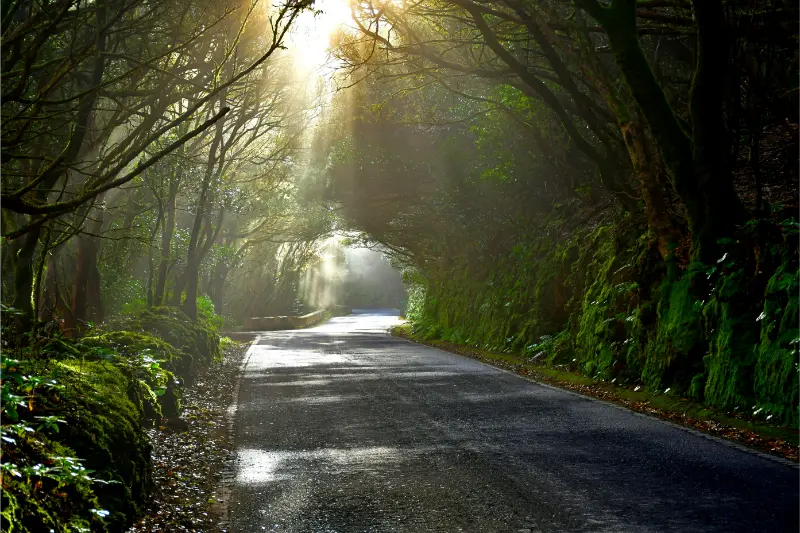
Tenerife gives two completely different sunrise styles. Teide National Park offers altitude, volcanic foregrounds and potential cloud inversion; Anaga offers ridges, laurel forest and a more intimate northeastern landscape. The high plateau is colder and darker before dawn than resort visitors expect.
Never stop on an unlit road simply because the sky begins to change colour. Use established parking or viewpoints and keep headlights on until fully parked. In Anaga, mist can reduce visibility, so a “sunrise mission” should be abandoned if the drive itself becomes uncomfortable.
Gran Canaria: city coast or central mountains
Las Canteras is the easiest sunrise recommendation in the archipelago because you can walk from accommodation, stay on a lit promenade and choose reflections, beach foregrounds or the city waking up. It is not wilderness, but that is exactly why it works so well on a relaxed trip.
The central mountains can be more dramatic. Around high viewpoints near Pico de las Nieves, early light can reveal ravines and distant peaks, but cloud, road access and temperature make the experience less predictable. Arrive only at legal established viewpoints and keep a warm layer in the car.
Lanzarote: volcanic coast and clean horizons
Lanzarote is excellent for sunrise because the low, open terrain lets the sky dominate. Playa Blanca and parts of the southeast give simple sea horizons, while the northeast around Órzola has a more rugged relationship with La Graciosa and the Chinijo landscape.
Volcanic surfaces become especially photogenic in side light. Rather than standing directly on the beach edge, look for a safe path or viewpoint where low light skims across lava, white buildings or dry-stone walls.
Fuerteventura: dunes and the east coast
Corralejo’s dunes are one of the strongest sunrise landscapes in the Canaries. Early light gives shape to sand ripples and can silhouette Lobos and Lanzarote. Use authorised parking and existing paths; do not drive or walk across sensitive vegetation simply to create an untouched foreground.
The east coast offers an easier alternative. A beach near Caleta de Fuste or Puerto del Rosario can deliver a clean ocean sunrise with minimal driving, making it a good choice when you want the experience without a 5 a.m. expedition.
La Palma: high-altitude sunrise with extra responsibility
Roque de los Muchachos and the high ridges of La Palma can produce extraordinary dawn light above cloud, but this is not a place to improvise. Observatory operations, road closures, weather, ice or event restrictions can affect access. Verify current conditions and never block scientific facilities or access roads.
A lower viewpoint can be the smarter choice if high-country conditions are uncertain. La Palma has enough relief that you can still find excellent east-facing dawn landscapes without driving to the island’s highest road before sunrise.
La Gomera and El Hierro
On La Gomera, eastern viewpoints can frame Tenerife and Teide in the morning light when visibility is clear. El Hierro offers quieter coastal and highland options where the main attraction is often absence of crowds rather than a famous named platform.
On smaller islands, respect villages and residents. A viewpoint beside homes is not a photo studio: keep voices low, close car doors gently and do not use bright lamps longer than necessary.
How early should you arrive?
Arrive 25–40 minutes before official sunrise at an easy beach or city viewpoint. For a mountain location, allow more time because parking, walking in darkness and slower roads add uncertainty. The colour often begins well before the sun itself appears.
Sunrise photography settings
A tripod helps at the darkest stage, but modern cameras and phones can handle a great deal handheld. Start with a stable composition and expose for the sky rather than making the foreground unnaturally bright. As light rises, reduce exposure time and watch highlights around the sun.
Use a headlamp with a low or red mode while setting up, then turn it off around other photographers. Never shine powerful lights towards roads, drivers, homes or people trying to experience dawn quietly.
Clouds can improve sunrise
A perfectly clear horizon is not always the most interesting. Broken high cloud can catch colour, while a low cloud sea under a high viewpoint creates depth. The condition to avoid is not “cloud” but weather that makes the access road unsafe or completely blocks visibility.
Best sunrise for families
Choose an easy beach, promenade or viewpoint reached without a dark trail. Las Canteras, resort seafronts and accessible east-coast beaches are better with children than high mountain roads. Bring breakfast, warm layers and accept that a child may care more about the snack than the sky.
Sunrise and wildlife
Dawn is active time for birds and other wildlife. Stay on paths, keep drones grounded unless you have fully checked the rules, and never approach nesting or resting animals for a foreground. Long lenses create better wildlife photographs with less disturbance.
What to bring
- A warm layer, even if the daytime forecast is hot.
- Headlamp or small torch for walking, used carefully.
- Water and a simple breakfast or snack.
- Offline map and exact parking point saved before leaving the hotel.
- Tripod only if you will genuinely use it without blocking paths.
- A fully charged phone and power bank for remote highland drives.
Where to stay for sunrise
The best accommodation is often the one that shortens the dark drive. If a sunrise matters to you, spend the previous night on the correct side of the island instead of crossing a mountain range at 4 or 5 a.m. This is particularly relevant on Tenerife, Gran Canaria and La Palma.
Sunrise vs sunset
Sunrise usually gives fewer people and cooler air; sunset is easier logistically and works better with restaurants and evening plans. Our best sunset spots in the Canary Islands guide helps you choose the opposite end of the day. On a short trip, there is no need to force both every day.
Frequently asked questions
Can I drive to Teide before sunrise?
Road access can vary with weather, closures and maintenance. Check current official road information before leaving, especially in winter or after unusual weather. Never drive past a closure because other vehicles appear to have done so.
Do I need a tripod?
No. A tripod is useful for long exposures before dawn but many sunrise images can be made handheld once the sky brightens. Safety and mobility are more important than equipment.
Which island has the easiest sunrise?
Gran Canaria and Fuerteventura offer very easy coastal sunrise options. Tenerife and La Palma offer more dramatic high-altitude possibilities but require more planning.
Is sunrise worth it in winter?
Yes. Winter sunrise is later, which makes the wake-up easier, but high viewpoints can be much colder than the coast. Wind and cloud should decide the final location.
Final advice
The best Canary Islands sunrise is one you can reach safely, enjoy without disturbing anyone and still remember after the photograph is taken. Pick a legal established location, arrive early enough not to rush and accept that weather may change the plan.
Best rule: never trade safe access for a better angle. Dawn light returns tomorrow; a dangerous road edge or cliff does not become safer because the sky is beautiful.
A three-morning sunrise plan
If sunrise photography is an important part of the trip, do not gamble everything on one morning. Choose three different opportunities: an easy coastal sunrise close to the hotel, one higher viewpoint if the forecast is stable, and a final flexible morning kept for the island or coast that looks clearest. This reduces pressure to drive into bad cloud or wind simply because the alarm has already gone off.
The coastal morning should be the first test. It lets you learn how early the sky brightens, how cold you feel before dawn and how much time you really need to set up. Save the remote mountain location for later in the trip, when you already understand local driving and weather patterns.
Planning the drive the evening before
Save the exact legal parking point, check the final kilometre on a map and estimate the walking distance in darkness. Charge phones and cameras, place warm clothing where it is easy to reach and avoid leaving loose equipment in the car. A calm departure is safer than searching for a viewpoint on an unfamiliar road while half awake.
If the route passes through a national park, protected landscape or observatory zone, check the relevant access information again before bed. Temporary restrictions can appear because of weather, fire risk, maintenance or scientific operations.

Breakfast after sunrise
Build something pleasant after the early start: a bakery in a nearby town, breakfast on the seafront or a short easy walk. This turns sunrise into part of the travel day rather than an isolated photography task and makes the early alarm feel worthwhile even if the sky is less colourful than expected.