
The Canary Islands are one of Europe’s most varied photography destinations because volcanic landscapes, cloud forests, dunes, historic towns, black-sand beaches and high-altitude night skies sit surprisingly close together. The challenge is not finding subjects; it is choosing the right island, light and weather for the kind of images you want. A seven-day trip can produce a stronger portfolio by focusing on one island than by rushing through three.
This guide is about travel photography planning rather than technical camera settings. For specific viewpoints, also use our best viewpoints guide and the island road-trip articles.
Best islands for photography
| Island | Best subjects | Signature look |
|---|---|---|
| Tenerife | Teide, Anaga, Teno, towns, cliffs | High-altitude volcano plus green laurel forest |
| Gran Canaria | Dunes, mountains, Las Palmas, villages | Strong coast-to-mountain contrast |
| Lanzarote | Lava, white villages, Manrique architecture | Minimalist black, white and ochre palette |
| Fuerteventura | Dunes, long beaches, arid hills | Open space and wind-shaped landscapes |
| La Palma | Volcanoes, forests, night sky | Dramatic relief and astrophotography |
| La Gomera | Ravines, laurel forest, villages | Deep green valleys and layered ridges |
| El Hierro | Natural pools, cliffs, junipers | Remote volcanic Atlantic landscapes |
Tenerife: the widest visual range
Tenerife can move from subtropical coast to high mountain in a single day. Teide National Park is strongest around early and late light, when lava forms and distant ridges gain depth. The Anaga peninsula gives a completely different mood: mist, laurel forest, sharp ridges and tiny roads.
For coastal scale, Los Gigantes works well from sea level or boat excursions, while Masca and Teno add deep ravines. Historic architecture in La Laguna and La Orotava provides a useful contrast when cloud covers the mountains.
Gran Canaria: dunes and mountain layers
Maspalomas is the obvious sunrise or late-afternoon subject, but protect the dunes by staying on permitted routes. In the centre, Tejeda and the roads around Roque Nublo produce layered mountain compositions, especially when trade-wind cloud fills lower valleys.
Las Palmas adds street, architecture and beach photography in one base. Use our Gran Canaria road trip—or the general island guide if that slug changes—to plan a route rather than zigzagging between coasts.
Lanzarote: the most graphic island
Lanzarote is excellent for photographers who like strong shapes and controlled colour. Timanfaya and surrounding volcanic areas provide red, black and brown landscapes; La Geria adds geometric vineyard pits; Famara brings huge cliffs and open beach; white villages create clean architectural scenes.
César Manrique’s spaces are also visually distinctive, but respect photography rules inside museums and attractions. Read our guides to Mirador del Río, Jameos del Agua and the César Manrique Foundation before visiting.

Fuerteventura: negative space and coast
Fuerteventura rewards wide compositions and patience. Corralejo dunes, Cofete, Sotavento and the roads through the interior have enormous areas of sky and simple horizons. Wind can make tripod work difficult, so use a stable stance and avoid changing lenses in blowing sand.
Cofete is spectacular but remote; photography should not push you into unsafe driving or swimming decisions. Use the Cofete guide and treat access conditions as part of the plan.
La Palma and night-sky photography
La Palma is one of the strongest islands for astrophotography because of altitude and dark skies, but successful night shooting depends on cloud, moon phase, wind and safe access. The island’s daytime subjects are equally strong: Caldera de Taburiente, volcanic routes, Los Tilos and Fuencaliente.
Use our stargazing guide for location ideas. For serious night sessions, scout the exact site in daylight and never block roads or enter restricted observatory areas.
La Gomera and El Hierro
La Gomera is about texture and depth: Garajonay forest, ravines around Valle Gran Rey, Agulo and viewpoints across to Tenerife. Cloud can be an asset rather than a failure. In the forest, soft light often works better than direct midday sun.
El Hierro offers natural pools, volcanic cliffs, wind-shaped junipers and sparse roads. The Mirador de la Peña gives one of the island’s classic elevated views across El Golfo.
Best light of the day
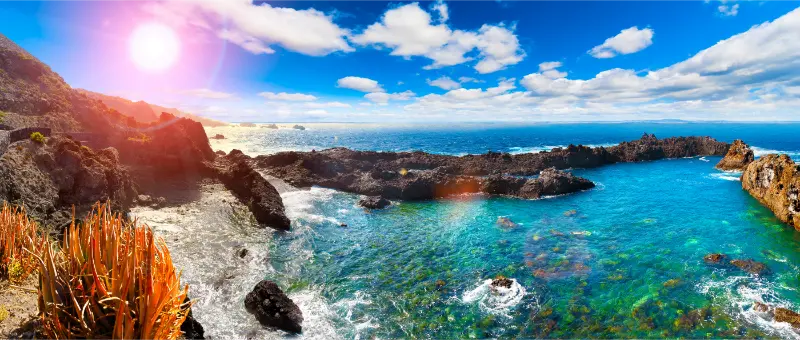
Sunrise and the hour after it are ideal when you want empty beaches, soft light and cooler conditions. Late afternoon works well for west-facing cliffs and dunes. Midday is not useless: strong light suits white villages, graphic architecture and turquoise water, especially when shadows become part of the composition.
Do not build every location around golden hour. Travel time, mountain cloud and protected-area opening hours can make that unrealistic. Choose one priority dawn or sunset each day and let the rest of the schedule remain flexible.
Weather and microclimates
Cloud is not simply ‘bad photography weather’. Trade-wind clouds can create dramatic seas of cloud below Teide, soft light in Anaga and layered mountain scenes on Gran Canaria. The most useful habit is checking conditions at the exact altitude and side of the island you plan to shoot.
Carry a microfiber cloth for sea spray and condensation, a light rain cover and a layer for altitude. Moving from an air-conditioned car into humid coastal air can fog lenses; give equipment a few minutes to acclimatise.
Photography from roads and viewpoints
Never stop in a live lane for a photograph. Use official lay-bys and viewpoints, and walk only where it is safe. The official Canary Islands viewpoint network includes many places designed for scenic stops, and our scenic drives guide can help connect them.
On narrow mountain roads, the passenger should navigate and the driver should focus entirely on driving. If a location has no safe parking, skip it. No photograph is worth creating a road hazard.
Drones
Drone rules can involve airspace restrictions, protected areas, privacy and local no-fly zones. The exact legal situation depends on aircraft category, operator status and location. Check current Spanish aviation authority information and the rules of the protected area before flying.
Do not assume that a remote beach is automatically legal or safe for drone use. National parks, airports, urban areas and wildlife zones can have specific restrictions.
What gear to bring
- A camera or phone you already know well.
- One versatile zoom rather than an overloaded bag for long hiking days.
- A lightweight tripod if night photography is a priority.
- Lens cloths and a simple rain/spray cover.
- Extra battery for cold or long days.
- Polariser only if you understand how it affects skies and water.
- Offline maps and a small headlamp for safe return from sunset locations.
For most travellers, mobility is more valuable than carrying every lens. A lighter bag makes it easier to walk viewpoints and respond to changing light.
Where to stay for photography
Choose location around the first and last light you care about. A cheap hotel two hours from your sunrise subject can cost more in sleep and driving than you save. You can compare places to stay in the Canary Islands on Booking.com; compare parking, early breakfast options and road access as well as room quality.
For a multi-day shoot, one central base is usually better than changing hotels nightly. Move only when the island is large enough that the new base substantially reduces driving.
Common photography mistakes
- Driving to every famous viewpoint at midday because it fits the map.
- Stopping illegally on mountain roads.
- Walking off marked paths for a slightly different angle.
- Changing lenses in blowing sand.
- Planning night photography without scouting the location in daylight.
- Using a drone without checking current restrictions.
Best photography rule: protect the landscape, protect the road and protect your time. One well-planned sunrise is worth more than six rushed viewpoints.
Frequently asked questions
Which Canary Island is best for photography?
Tenerife offers the widest variety, Lanzarote the strongest graphic volcanic style, La Palma excellent night skies, and Fuerteventura exceptional open coastal landscapes.
Do I need a car?
For landscape photography, a car is extremely useful on most islands. Las Palmas and some city subjects are easy without one, but sunrise and remote viewpoints are much simpler with private transport.
Is a tripod essential?
No for general travel photography. It becomes much more useful for night skies, long exposures and carefully planned dawn or dusk work.
Photographing people, markets and local life
Landscape is only half the story. Markets, fishermen’s harbours, old-town balconies, Carnival costumes and everyday street life can add human scale to a Canary Islands photo essay. Be respectful when photographing identifiable people, especially children, workers at close range and religious events. When in doubt, ask.
Early morning is useful in markets and old towns because deliveries, opening routines and softer light create a different atmosphere from midday. In busy tourist streets, wait for small moments rather than trying to remove every person from the frame.
Backing up photographs while travelling
A memory card failure can erase an entire week, so build a simple backup routine. Keep images on the card, copy them to a laptop or portable drive and, when internet allows, maintain a cloud copy of your strongest files. Do not store both physical copies in the same camera bag if theft or loss would remove everything.
For phone photography, check cloud-sync settings before the trip and make sure there is enough storage. Large RAW files can overwhelm hotel Wi-Fi, so prioritise a local physical backup and let cloud uploads run overnight only when the connection is stable.