
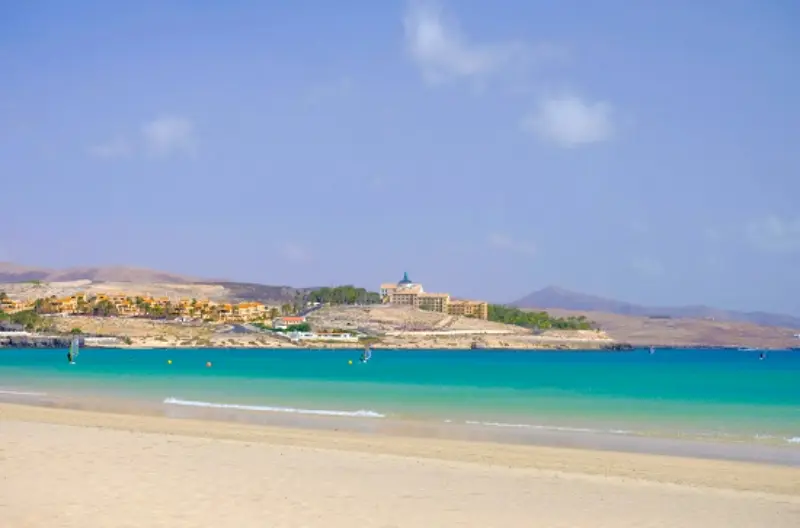
Costa Calma is a long, low-key resort on southern Fuerteventura where accommodation choice is mainly about beach access, walking distance and how close you want to be to the famous Sotavento coastline. It is quieter than Corralejo and more spread out than a compact town, so the location of the property has a direct effect on evenings and daily logistics.
Stay in central Costa Calma for the easiest mix of restaurants, supermarkets and beach access. The southern side is best for Sotavento and water sports, beachfront properties work for pure relaxation, and the northern edge can suit travellers prioritising value or road access.
Best areas to stay in Costa Calma at a glance
| Area | Best for | Why stay here | Watch for |
|---|---|---|---|
| Central Costa Calma | First visits and convenience | Best balance of services, beaches, supermarkets and bus stops within a manageable area. | Still a resort rather than a traditional Canarian town; nightlife is modest. |
| Main beachfront zone | Relaxation and families | Easy routine for travellers who want to move between room, pool and sea with minimal transport. | On-site convenience can reduce the incentive to explore local restaurants. |
| Southern edge toward Sotavento | Windsurfing and long beach days | Excellent positioning for the open coast, lagoon conditions and water-sports areas. | Wind exposure is part of the experience and evenings can feel isolated without transport. |
| Northern Costa Calma | Value and drivers | Can offer practical road access and quieter accommodation away from the central beach bustle. | Check the actual walking route to the beach because roads and gradients can interrupt direct access. |
| Residential inland streets | Apartments and longer stays | Potentially useful for kitchens, space and travellers staying several weeks. | A car becomes more valuable and sea views do not always mean easy beach access. |
Use the table as a shortlist, not as a ranking. The same neighbourhood can be perfect for a couple and frustrating for a family with a pushchair, or excellent for a car-free week but inconvenient for someone leaving on a road trip every morning. The sections below explain those trade-offs in more detail.
The best areas, explained
Central Costa Calma
Best for: First visits and convenience. Best balance of services, beaches, supermarkets and bus stops within a manageable area. Still a resort rather than a traditional Canarian town; nightlife is modest. The practical test is to imagine three ordinary moments: where you will have breakfast, how you reach the beach or first activity, and how you return after dinner. If all three are simple, the location is probably right for your trip.
Main beachfront zone
Best for: Relaxation and families. Easy routine for travellers who want to move between room, pool and sea with minimal transport. On-site convenience can reduce the incentive to explore local restaurants. The practical test is to imagine three ordinary moments: where you will have breakfast, how you reach the beach or first activity, and how you return after dinner. If all three are simple, the location is probably right for your trip.
Southern edge toward Sotavento
Best for: Windsurfing and long beach days. Excellent positioning for the open coast, lagoon conditions and water-sports areas. Wind exposure is part of the experience and evenings can feel isolated without transport. The practical test is to imagine three ordinary moments: where you will have breakfast, how you reach the beach or first activity, and how you return after dinner. If all three are simple, the location is probably right for your trip.
Northern Costa Calma
Best for: Value and drivers. Can offer practical road access and quieter accommodation away from the central beach bustle. Check the actual walking route to the beach because roads and gradients can interrupt direct access. The practical test is to imagine three ordinary moments: where you will have breakfast, how you reach the beach or first activity, and how you return after dinner. If all three are simple, the location is probably right for your trip.

Residential inland streets
Best for: Apartments and longer stays. Potentially useful for kitchens, space and travellers staying several weeks. A car becomes more valuable and sea views do not always mean easy beach access. The practical test is to imagine three ordinary moments: where you will have breakfast, how you reach the beach or first activity, and how you return after dinner. If all three are simple, the location is probably right for your trip.
Where to stay for families
Central or beachfront Costa Calma is best for families that want simple beach days. Always assess the sea on the day: Fuerteventura is exposed to Atlantic wind and conditions vary significantly along the coast.
For family accommodation, look beyond the headline room price. A kitchenette, separate sleeping area, lift, shaded balcony, supermarket within an easy walk and a realistic route to the beach can matter more than an extra hotel star. If you are travelling with a baby or young child, confirm cot availability directly and never assume every “family room” has a door between sleeping spaces.
Where to stay for couples
Couples who want a quiet resort should consider a beachfront property or the southern edge. Those who prefer a stronger restaurant and nightlife scene may be happier in Corralejo or a busier resort.
Couples should decide whether they value privacy or spontaneity more. A secluded property with a terrace may be memorable, but a central base often produces better evenings because you can walk to dinner, have a drink and change plans without driving. For a short stay, location normally beats a larger room; for a week or more, outdoor space and quiet become more important.
Where to stay without a car
Central Costa Calma is the only sensible choice if you want to minimise taxi use. For island-wide sightseeing, a car makes the holiday much more flexible.
A car-free stay in Costa Calma is easiest when the accommodation is not merely “near public transport” but near the places you will use every day. Check the walking route to groceries, restaurants and the beach, then use buses or organised excursions for selected sightseeing days. If several major attractions require two changes of bus, compare the cost of occasional taxis or a short car rental rather than forcing every day into public-transport logistics.
Where to stay if you are renting a car
Costa Calma is well positioned for Jandía, Sotavento and the south. If northern Fuerteventura is also a priority, expect longer driving days.
When driving, ask three questions before booking: Is parking private or simply “available nearby”? Is access straightforward after dark? Can you leave the resort or town without spending twenty minutes in local traffic? Free parking has little value if spaces disappear every evening. On the other hand, paying slightly more for reliable parking can transform a road-trip holiday.
How many nights should you stay?
For a trip focused mainly on Costa Calma, four to seven nights gives enough time to settle into the area and still make day trips around Fuerteventura. Two or three nights work for a short city or resort break, while a longer stay makes sense if you want slow beach days between excursions. If you are planning an island-wide itinerary, consider splitting the stay only when moving base genuinely shortens several days of driving.
The broader Fuerteventura travel guide is useful before deciding how much of the island you want to cover. If your itinerary is already concentrated around this destination, staying put is usually better than changing hotels for a small saving in driving time.
How to choose the right hotel or apartment
- Pin the exact property on a map. Resort and city names can cover surprisingly large areas.
- Read the newest reviews for noise and construction. These details change faster than guidebooks.
- Check air-conditioning, heating or pool-heating details when they matter. Do not infer facilities from the property category.
- Confirm parking wording. “Parking nearby” is not the same as a reserved space.
- Compare cancellation conditions. A slightly higher flexible rate can be valuable when flights or plans change.
- Check the room itself, not just the hotel. Renovation level, view and building position can vary within the same property.
Before booking, compare the exact location on a map rather than relying only on the resort name. In Costa Calma, two properties described as being in the same destination can still produce very different daily routines. Check walking gradients, the route to the beach, the nearest useful bus stop, parking arrangements and whether restaurants or supermarkets are realistically reachable without a car. This matters especially on Fuerteventura, where volcanic terrain can turn a short-looking distance into a steep walk.
Check current accommodation prices
Accommodation prices in Costa Calma vary strongly with school holidays, winter-sun demand, weekends, events and how early you book. Use a live search for your exact dates rather than relying on an “average nightly price” quoted months earlier. Compare the final price including taxes, meal plan and cancellation conditions.
The button above is an affiliate link. If you make a booking after following it, WelcomeToCanaries may receive a commission at no extra cost to you. The recommendation here is about choosing the right area first; the specific property should still be judged on current reviews, final price and the needs of your own trip.
Useful nearby guides
Once you have chosen a base, build the rest of the trip around geographically sensible days. Useful related guides include Costa Calma travel guide, Sotavento Beach guide, 5 days in Fuerteventura, best things to do in Fuerteventura and Morro Jable and Jandía guide. Linking nearby sights into one day reduces backtracking and usually leaves more time for beaches, meals and unplanned stops.

A realistic booking strategy
Start with the neighbourhood, then filter accommodation. This reverses the way many booking engines encourage you to search, but it prevents a common mistake: falling in love with a property first and only later discovering that the location does not match the holiday you imagined. Shortlist two areas, compare a small number of properties in each, and then judge the total trip cost rather than the room price alone.
For example, a cheaper property that requires two taxis every day can cost more than a central hotel. Likewise, a premium beachfront room may be unnecessary if you plan to spend five days hiking or driving. Add estimated parking, transport and breakfast costs to the accommodation rate before deciding which option is genuinely better value.
When to book
For Christmas, New Year, Carnival periods, Easter school holidays and the busiest winter-sun weeks, booking earlier gives you a better choice of location and room type. Outside peak periods, there can be more flexibility, but the most desirable small properties and family apartments may still sell out first. If your dates are fixed, secure the area you want rather than waiting only for a lower headline price.
Flexible cancellation can be useful when flights are not yet final. Recheck the same property occasionally: if the price falls and your rate allows cancellation, you may be able to rebook under better terms. Always read the actual cancellation deadline and payment schedule rather than assuming “free cancellation” applies until arrival.
Common mistakes to avoid
- Choosing the cheapest property before deciding which part of the destination suits the trip.
- Assuming a straight-line distance on the map represents an easy walk in volcanic or hilly terrain.
- Booking a remote resort while expecting to walk to independent restaurants every evening.
- Renting a car for the full stay without checking whether the accommodation has realistic parking.
- Paying for all-inclusive meals when most sightseeing days will keep you away from the hotel.
- Ignoring recent reviews about building works, nightlife noise or temporary road changes.
What makes this destination different
Costa Calma is a good example of why “beachfront” and “best location” are not always the same. A secluded hotel beside a beautiful stretch of sand can be perfect for a restorative week but inconvenient for independent dinners or frequent road trips. Decide whether the hotel is the holiday or simply the base before paying a premium for the seafront.
Frequently asked questions
What is the best area to stay in Costa Calma for a first visit?
For most first-time visitors, choose the area identified as the best all-rounder in this guide rather than the cheapest edge of the destination. It gives you the easiest introduction and lets you learn which parts of Fuerteventura you would prefer on a future trip.
Is it worth paying more to stay near the beach?
Yes if beach time is part of almost every day and you value returning to the room easily. No if the accommodation is mainly a sleeping base for hiking, driving or sightseeing. The value of a beachfront premium depends on your actual itinerary.
Should I choose a hotel or an apartment?
Hotels suit travellers who want reception, breakfast and on-site facilities. Apartments are often better for longer stays, families or anyone who values a kitchen and extra living space. Judge the specific property and location rather than assuming one category is always cheaper.
Do I need a rental car?
Not necessarily for a stay centred on Costa Calma, but a car gives much greater freedom for exploring Fuerteventura. Consider renting only for the sightseeing portion of the trip if the first few days are designed around the beach or town.
How far in advance should I book?
Book earlier for fixed winter dates, Christmas and New Year, school holidays or if you need a specific family room, accessible room or parking arrangement. With flexible dates outside peak periods, you can compare more patiently.
Final recommendation
The best place to stay in Costa Calma is the area that removes friction from the holiday you actually plan to take. Decide what you want to do before breakfast, where you want to spend most evenings and how often you will drive. Then choose the neighbourhood first and the property second. That simple order usually produces a better trip than chasing the lowest room rate across the whole destination.