
Tenerife works extremely well for a family holiday because you can combine simple beach days with nature, short drives and attractions that feel different from a standard resort break. The key is choosing the right base and keeping the itinerary lighter than you would for an adults-only trip. Children rarely need ten sights in a day; they need enough time to swim, eat, rest and become interested in where they are. This guide focuses on practical family decisions: where to stay, which beaches are easiest, what to do beyond the beach, how to handle driving and what kind of weekly rhythm makes the island enjoyable rather than exhausting.
If this is your first visit, read our Tenerife travel guide alongside the general Canary Islands with kids guide. The island-specific approach below is more useful once you know that Tenerife is likely to be your destination.
Is Tenerife good for families?
Yes, but the island suits families best when accommodation location matches the children’s age and the adults’ priorities. The easiest family rhythm is beach day, major outing, easy day, then repeat. Tenerife has enough attractions to tempt overplanning, but children usually enjoy the island more when Teide or a boat trip is followed by an uncomplicated pool afternoon. A toddler-friendly week may revolve around a sheltered beach, an apartment with a kitchen and one major outing every second day. Older children can handle longer scenic drives, volcanic landscapes, boat trips or beginner water sports, but they still benefit from unscheduled afternoons.
Best areas to stay with children
Costa Adeje is the easiest all-round choice for resort services and family beaches; Los Cristianos is highly walkable and convenient for ferries; Playa de las Américas suits families who want entertainment but requires care with nightlife location; Puerto de la Cruz offers a greener north-coast atmosphere; El Médano is ideal for independent families who like a real town and outdoor activity.
When comparing accommodation, look beyond the swimming pool. Check walking gradient, supermarket distance, whether the bedroom can be separated from the living area, air-conditioning or ventilation, laundry access and the real route to the beach. A hotel that looks close on a booking map may sit above a steep hill. An apartment farther from the waterfront may be easier if it has parking directly outside.
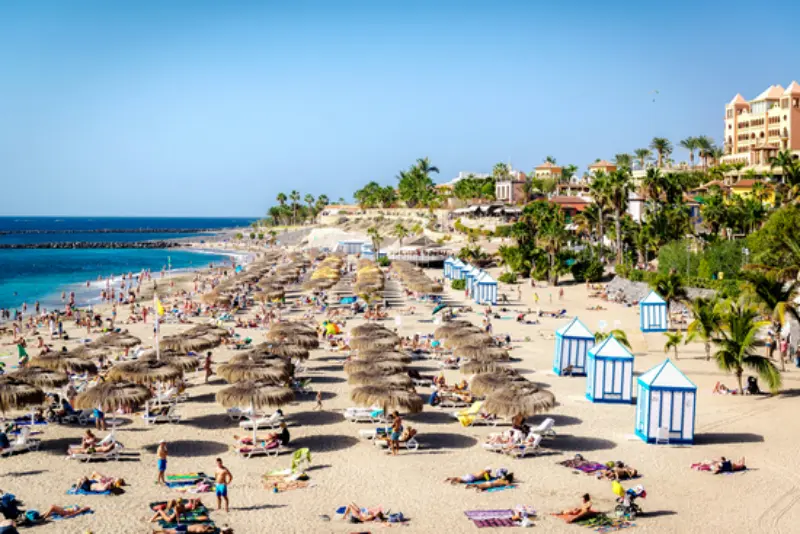
Family-friendly beaches
Las Teresitas
The broad sand, breakwater and services make Las Teresitas one of the island’s easiest family beach days, particularly when combined with Santa Cruz.
Las Vistas
A long, accessible beach between Los Cristianos and Playa de las Américas with a promenade, restaurants and easy walking access from many hotels.
El Camisón
A compact, sheltered-feeling southern beach useful for younger children and for families staying close enough to walk.
Playa del Duque
A polished Costa Adeje beach with excellent services and an easy promenade, though food and accommodation nearby tend to be more expensive.
Things to do with kids beyond the beach
Teide without turning it into an endurance day
Children often remember the volcanic scale of Teide more than a museum. You do not need summit access to make the day special: viewpoints, Roques de García and the caldera already feel otherworldly. Carry warm layers because altitude can make the temperature very different from the beach.
Whale watching from the southwest
Tenerife’s southwest coast is one of the easiest places in the Canaries to organise a family boat trip. Choose an authorised operator, check the vessel size and shade, and bring motion-sickness protection if anyone is sensitive. A shorter trip is often better for younger children than the longest possible cruise.
Water parks and easy entertainment
The south has major water-park attractions and smaller leisure options, which can provide a useful break from sightseeing. Check current height restrictions before promising a particular slide to a child, and consider whether a half-day or full-day visit fits their energy level.
Anaga and La Laguna
Older children who enjoy nature can combine a short laurel-forest walk in Anaga with the historic streets of La Laguna. Choose a trail appropriate to footwear and weather rather than chasing the most dramatic viewpoint. Cloud in Anaga can be atmospheric but also reduces visibility.
Los Gigantes and the west coast
The cliffs give children an immediate sense of scale and can be combined with a boat trip, harbour lunch or short beach stop. The road is easier than the Masca gorge experience and makes a good family outing from the southern resorts.

Getting around as a family
Tenerife is large enough that a car is useful if you want Teide, Anaga and the north, but a family staying in Costa Adeje or Los Cristianos can easily spend several days without one. Consider renting only for two or three exploration days. The motorway is simple; mountain roads are slower and can be tiring for children.
If you rent a car, reserve appropriate child seats in advance rather than assuming every category will be available on arrival. Photograph the seats and vehicle condition before leaving the depot, and keep one bag accessible with water, wipes, snacks, hats and a light layer. Mountain roads can make children carsick, so do not schedule the twistiest route immediately after a large breakfast.
Weather, sun and what to pack
The south is generally drier and sunnier, while the north is greener and can be cloudier. Teide adds altitude, so a beach-temperature forecast tells you little about the mountain. Pack layers even in warm months and keep sun protection serious year-round.
For children, the most important items are high-protection sunscreen, hats, refillable water bottles, a warmer layer for altitude or windy evenings, comfortable shoes and swimwear that dries quickly. Bring less entertainment than you think: beaches, promenades, volcanic landscapes and hotel pools already fill much of the day. A few familiar snacks and a small travel activity kit are more useful than an overpacked suitcase.
Food and eating out with children
Tenerife makes casual family meals easy. Look for restaurants with simple grilled fish or meat, potatoes, rice, pasta, croquettes, tortillas and local cheeses rather than relying only on children’s menus. Earlier dinners are easier in resort areas than in very local towns, where kitchens may follow Spanish meal times. Guachinches and local restaurants can be fun with children if you order simply and share dishes. Potatoes with mojo, grilled meat, fish, cheese and tortilla make it easy to build a familiar meal without defaulting to international fast food. Keeping breakfast and one snack predictable gives children a familiar anchor even when lunch and dinner are more adventurous.
A realistic seven-day family rhythm
- Day 1: arrive, unpack and use the nearest beach or pool.
- Day 2: easy beach morning and local promenade or town.
- Day 3: one major island experience, with an early start.
- Day 4: slow day with swimming, playground time or a short coastal walk.
- Day 5: scenic drive or nature outing with only two main stops.
- Day 6: children choose the main activity; adults choose dinner or sunset.
- Day 7: flexible beach time and an uncomplicated departure plan.
This rhythm works because it alternates stimulation with recovery. If a child is tired, the “slow day” can move. If the weather changes, the major outing can swap with a beach day. The goal is not to complete the island; it is to leave with everyone still enjoying one another.
Safety and small details that matter
Take Atlantic conditions seriously. Choose lifeguarded beaches when possible, keep young children within reach at the waterline, and respect flags even when the sea looks inviting. On volcanic trails, keep children away from unstable edges and do not rely on phone signal for navigation. Save accommodation details and emergency contacts offline. If a child has dietary or medical requirements, carry what you need for a full day rather than assuming a remote village will have an open pharmacy or suitable meal at the exact time you arrive.
Family rule for Tenerife: one memorable outing plus plenty of unstructured beach or pool time usually produces a better holiday than trying to turn every day into a sightseeing marathon.
Planning with enough flexibility
Planning a trip around Tenerife with kids also becomes easier when you leave deliberate margin in the day. Traffic, parking, wind and appetite do not follow an itinerary, and the Canary Islands are best enjoyed when one good stop can last longer than expected. Keep reservations for genuinely capacity-limited experiences, but let beaches, cafés, viewpoints and short walks remain flexible. This approach is particularly useful for families and first-time visitors because it protects the important booking without turning every delay into a problem. Save the location of your accommodation, a fuel station, a supermarket and one alternative beach or activity offline before leaving each morning. If conditions change, switch plans rather than forcing the original idea. The islands reward travellers who respond to weather and geography instead of trying to defeat them.
Planning a trip around Tenerife with kids also becomes easier when you leave deliberate margin in the day. Traffic, parking, wind and appetite do not follow an itinerary, and the Canary Islands are best enjoyed when one good stop can last longer than expected. Keep reservations for genuinely capacity-limited experiences, but let beaches, cafés, viewpoints and short walks remain flexible. This approach is particularly useful for families and first-time visitors because it protects the important booking without turning every delay into a problem. Save the location of your accommodation, a fuel station, a supermarket and one alternative beach or activity offline before leaving each morning. If conditions change, switch plans rather than forcing the original idea. The islands reward travellers who respond to weather and geography instead of trying to defeat them.