
Sustainable Travel in the Canary Islands: Practical Responsible Tourism Guide explains how to make a Canary Islands holiday more responsible without pretending that tourism has no environmental cost. The archipelago is a fragile island destination with protected landscapes, endemic species, limited water, heavy dependence on air travel and a tourism economy that supports a large share of local employment.
The most useful approach is practical rather than moralistic. You can reduce unnecessary driving, stay on marked paths, use water carefully, support local businesses, choose responsible wildlife operators and avoid treating natural objects as souvenirs. Those choices matter more than buying a few products marketed as green.
Quick island comparison for responsible travel
- Tenerife: strongest public-transport options and many protected landscapes; good for mixing car-free days with mountain exploration.
- Gran Canaria: excellent city base in Las Palmas, strong interurban buses and sensitive mountain and dune environments.
- Lanzarote: volcanic landscapes, scarce water and a distinctive relationship between architecture, agriculture and tourism.
- Fuerteventura: open arid landscapes, dunes and long beaches where off-road driving and informal access can cause visible damage.
- La Palma, La Gomera and El Hierro: quieter islands where hiking, local food and longer stays can support smaller communities, but transport requires careful planning.
The Canary Islands are protected for a reason
More than 40% of the territory is protected in some form, and the archipelago includes national parks, biosphere reserves, World Heritage sites and marine protected areas. Protection does not mean every place is closed; it means access is managed so that tourism, residents and ecosystems can coexist.
Stay on designated routes, respect permits and closures, do not make new tracks or stone towers, and never remove sand, shells, rocks or plants. In volcanic and arid landscapes, damage can remain visible for years. In forests, a small fire risk can become a major island emergency.
Choose fewer islands and stay longer
Fast island-hopping looks efficient on a map but often produces more airport transfers, ferry connections, rental cars and check-ins than meaningful travel. If you have one week, one island is usually enough. With ten to fourteen days, two islands can work well. Longer stays reduce the pressure to race through attractions and make public transport or slower local routines more practical.
When you do move between islands, compare ferries and flights by total journey rather than headline travel time. A short flight can still involve airport transfers and waiting; a ferry can sometimes connect town centres more directly. Environmental impact varies by route, vessel and aircraft, so avoid simplistic claims that one mode is always greener.
Transport on the islands
Tenerife and Gran Canaria offer the strongest car-free possibilities, especially around Santa Cruz, La Laguna and Las Palmas. Lanzarote and Fuerteventura have usable bus networks on key routes but a car is more helpful for dispersed attractions. On smaller islands, schedules can be sparse but useful if you build the day around them rather than expecting turn-up-and-go frequency.
If you rent a car, reduce kilometres instead of obsessing over vehicle labels. Pick accommodation near most of your activities, group nearby sights, avoid repeated cross-island drives and walk short distances. An efficient itinerary can save more fuel than choosing a marginally different car and then driving twice as far.
Water is part of the sustainability story
Fresh water is limited across the archipelago and desalination is central on several islands. Visitors can help by taking shorter showers, reusing towels when appropriate, reporting leaks, avoiding unnecessary linen changes and not leaving taps running. Hotels and holiday rentals also influence consumption through pools, landscaping and cleaning practices.
Energy and accommodation choices
Look for specific information: renewable-energy use, efficiency measures, waste separation, water management, local procurement and credible environmental certifications. A hotel should be able to explain what it does. Vague claims about being green without measurable actions are less useful.
Location remains one of the most important factors. A central apartment or hotel that allows walking to dinner, shops and the beach can eliminate many car journeys. Consider the whole stay, not only the building.
Food and local economic impact
Spend some of the holiday budget on businesses rooted in the islands: markets, wineries, cheese producers, local restaurants, rural accommodation and qualified guides. Local products such as Canarian cheese, wine, gofio, bananas, potatoes and fish are part of the islands’ cultural landscape, not just souvenirs.
Supporting local does not require avoiding every chain. The goal is a healthier mix. One market visit, one producer experience and several locally owned meals can make a meaningful difference over a week.
Wildlife and marine tourism
The Canary Islands are one of Europe’s best-known regions for whale and dolphin watching. Choose authorised operators, respect approach distances and avoid tours that promise guaranteed close encounters. On land, do not feed lizards or birds. Underwater, never touch turtles, rays, octopus or other wildlife for photographs.
Beaches, dunes and natural pools
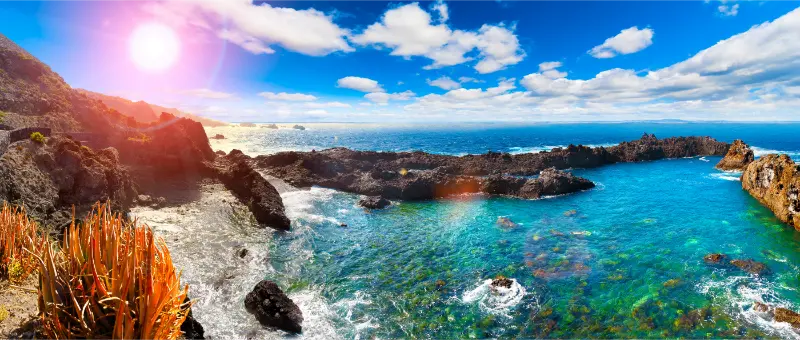
Use designated access points, especially in dune systems. Do not drive onto beaches or park on vegetation. At natural pools, check sea conditions and keep sunscreen, soap and litter out of the water as far as possible. Smoking restrictions and local beach rules can vary, so follow signs rather than assuming every beach operates the same way.
Hiking and fire safety
Check official island alerts before entering forests or mountains. Heat, wind and fire risk can close trails, recreation areas or access roads even when the coast appears calm. Carry enough water, start early and turn back if conditions deteriorate. Responsible hiking includes not needing rescue because a closure or forecast was ignored.
What sustainable travel does not mean
- It does not mean avoiding all popular places.
- It does not mean buying expensive eco-branded products.
- It does not mean travelling without comfort.
- It does not mean treating residents as part of an “authentic experience”.
- It does not mean assuming rural accommodation is automatically lower impact.
- It does mean following rules, consuming resources carefully and making choices that reduce avoidable pressure.
A practical seven-day strategy
Choose one well-connected base, plan two car-free days, two focused exploration days, one outdoor day, one food or cultural day and one flexible day. Keep distances short. Use a market or local restaurant as an anchor rather than adding extra drives simply to tick off attractions. If you are staying in a resort, deliberately spend at least part of the week in nearby towns or locally owned businesses.
Accommodation labels: what to look for
Environmental labels can help, but compare what they actually measure. A useful property should be able to explain energy and water management, waste systems, accessibility to public transport and whether food or services are sourced locally. Certification is stronger when it is independently audited, but even then location matters: an efficient hotel that requires long daily drives may not be the lowest-impact choice for your itinerary.
For holiday rentals, ask simple practical questions rather than demanding a sustainability statement. Is recycling explained? Is there air conditioning in every room or only where needed? Can you walk to shops and restaurants? Is there a bus stop nearby? These details affect the whole week.
Island-by-island sustainable travel guides
Sustainable travel in Tenerife, sustainable travel in Gran Canaria, sustainable travel in Lanzarote, sustainable travel in Fuerteventura.
Useful internal guides
Continue planning with Canary Islands without a car, driving in the Canary Islands, Canary Islands hiking guide, Canary Islands wildlife guide, Canary Islands food guide.

Official responsible-tourism guidance
The Canary Islands tourism board specifically asks visitors to protect nature, respect wildlife, support local development, reduce water and energy use, recycle waste, use public transport when possible and leave natural objects in place. Read the official responsible-tourism guidance.
The button above is an affiliate link. WelcomeToCanaries may receive a commission if you book after using it, at no extra cost to you.
Frequently asked questions
Which Canary Island is easiest without a car?
Gran Canaria and Tenerife generally offer the broadest public-transport options, especially if you stay in Las Palmas, Santa Cruz, La Laguna or established resort areas. The best choice still depends on the attractions you want to reach.
Is island hopping sustainable?
It can be part of a responsible trip, but moving every two or three days increases transport and reduces time spent in each community. Fewer islands and longer stays are usually easier on logistics and often more enjoyable.
Can I take volcanic rocks or shells home?
No. The official responsible-tourism guidance says natural elements such as stones, plants, flowers, sand, shells and animals should not be removed. Leave them where they belong.
How can I support local people without overthinking it?
Eat at some locally owned restaurants, buy local products, use qualified local guides and spend time outside the most self-contained resort environments. Small choices across a week add up.
What should I check before hiking?
Weather, heat and wind alerts, fire restrictions, trail closures and any permit requirement. Official island environment services are more reliable than old blog posts or saved map pins.
Final verdict
A responsible Canary Islands holiday is not about perfection. It is about travelling with enough awareness to avoid preventable damage: fewer unnecessary journeys, legal access, careful water use, respect for wildlife and more local economic value. The result is often a better trip as well as a lighter one.