
The best beaches in La Palma are not all the same kind of beach. La Palma has a varied volcanic coastline where the character of the shore can change quickly from a serviced town beach to an exposed cove or lava-framed bathing place. Some are easy places for a swim and a long lunch, while others are better treated as scenic stops where the Atlantic, wind or access route is part of the experience.
This guide focuses on practical differences: what the setting feels like, who each beach suits, how much effort the visit requires and when you should choose a safer or more sheltered alternative.
Before planning beach days, read our La Palma travel guide and the broader best beaches in the Canary Islands guide. The Atlantic deserves respect everywhere in the archipelago, so also pay attention to local flags, lifeguard instructions and current sea conditions.
Best beaches in La Palma at a glance
| Beach or coastal spot | Best for | Character |
|---|---|---|
| Los Cancajos | easy swimming days and convenient access | black-sand coves near services |
| Puerto de Tazacorte | sunset, facilities and a west-coast beach day | broad urban beach beside the harbour |
| Charco Verde | families and a scenic, compact cove | black sand beneath banana-growing slopes |
| Echentive | volcanic scenery and a quieter coastal stop | dark shore beside young lava landscapes |
| Playa de Nogales | dramatic scenery and photography | wild black sand below high green cliffs |
| Bajamar | a convenient local beach near Santa Cruz | accessible black-sand coast close to the capital |
| Charco Azul and La Fajana | natural-pool alternatives | lava-framed seawater pools |
How to choose the right beach
Start with the purpose of the day. If you want to swim, prioritise shelter, lifeguard information and easy access over dramatic scenery. If you want photography, walking or a picnic, a wild beach can be memorable even when entering the water is a bad idea. With children, proximity to shade, toilets and food is usually more useful than chasing the most famous image on social media.
Wind and swell can change quickly. A beach that was calm yesterday may not be calm today, and conditions can differ between coasts. Build a short list of alternatives rather than committing to one exposed place regardless of the weather.
1. Los Cancajos
Best for: easy swimming days and convenient access. Los Cancajos is one of La Palma’s easiest coastal bases, with dark volcanic sand, protected sections and a promenade close to accommodation and restaurants.
Its location near the airport and Santa Cruz makes it simple to combine with arrival or departure days. Even in a more sheltered setting, check flags and sea conditions before entering the water.
2. Puerto de Tazacorte
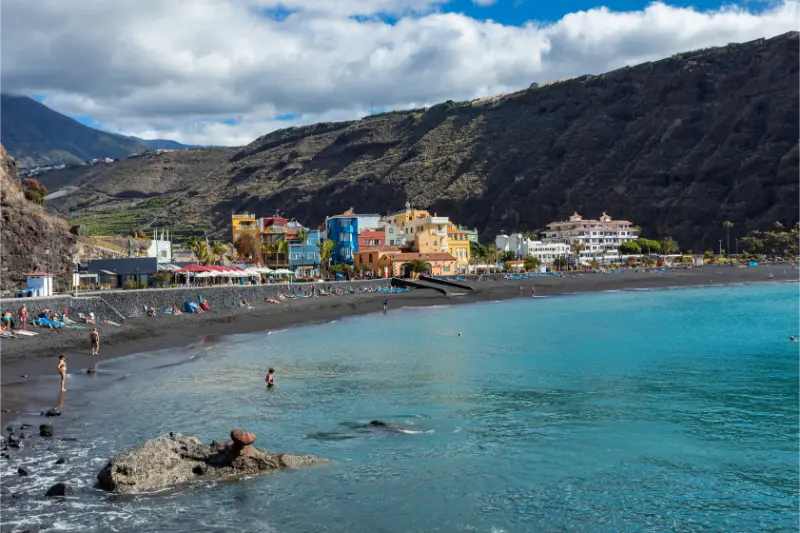
Best for: sunset, facilities and a west-coast beach day. The beach at Puerto de Tazacorte pairs volcanic sand with a walkable waterfront, restaurants and the warm evening light of the west coast.
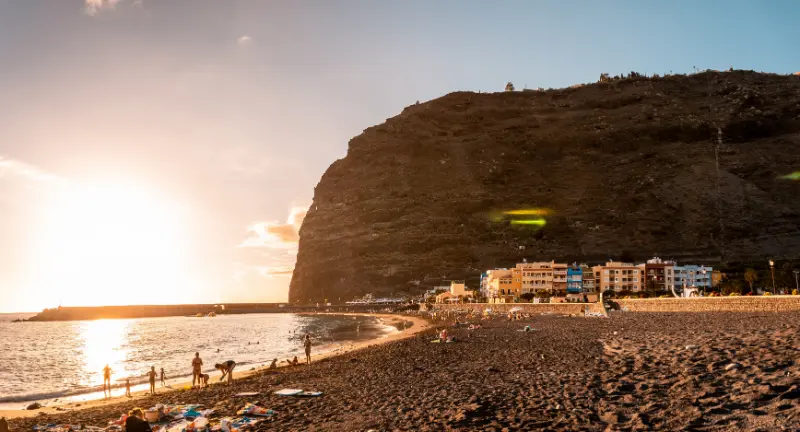
It is a useful family option when the sea is calm and a relaxed finish after exploring the Caldera area. Parking can be busier at peak times.
3. Charco Verde
Best for: families and a scenic, compact cove. Charco Verde is a smaller south-western cove where the surrounding cliffs and plantations give the beach a distinctly La Palma setting.
The official Canary Islands tourism portal highlights it as a family-friendly option, but daily sea conditions still matter. Arrive earlier for easier parking in busy periods.
4. Echentive
Best for: volcanic scenery and a quieter coastal stop. On the Fuencaliente coast, Echentive sits in a powerful volcanic setting where black sand and lava dominate the view.
Combine it with the salt pans, lighthouse area or a south-island drive. Services are more limited than at urban beaches, so carry water and sun protection.
5. Playa de Nogales
Best for: dramatic scenery and photography. Nogales is one of the island’s most striking beaches, reached on foot below the steep north-eastern cliffs.
Treat it as a wild Atlantic beach rather than an automatic swimming stop. The approach path and ocean conditions demand more care than at a town beach.
6. Bajamar
Best for: a convenient local beach near Santa Cruz. Bajamar in Breña Alta is practical for travellers staying near Santa Cruz who want uncomplicated sea time without crossing the island.

It works well as a short stop rather than a full expedition and can be paired with the capital or the eastern side of the island.
7. Charco Azul and La Fajana
Best for: natural-pool alternatives. These famous northern natural pools are not traditional beaches, but they are important parts of La Palma’s coastal experience when conditions allow.
Never assume a natural pool is safe during heavy swell. Respect closures and local warnings, and keep away from edges when waves are overtopping the outer rocks.
Beach safety in the Canary Islands
La Palma’s coastline is steep and exposed in many places, so the difference between a beautiful viewpoint and a safe swimming place can be substantial. Never use another swimmer as your safety test. Read warning signs, respect red flags and do not enter rough water simply because a beach looks beautiful from shore. Natural pools can also be dangerous when waves are breaking over their outer walls.
For families and less confident swimmers, choose places with straightforward entry, visible services and a calm forecast. Shoes can be useful on hot volcanic sand, pebbles or rough lava. Bring drinking water to remote beaches and leave no litter, stones or stacked rock towers behind.
What to pack for a beach day
- High-SPF sunscreen and a hat, even when cloud is present.
- Drinking water, especially for remote coves without services.
- Light footwear for hot sand, pebbles or volcanic rock.
- A wind layer for exposed coasts.
- A dry bag or secure pouch for phones and documents.
- Snorkelling equipment only where conditions and local rules make it appropriate.
Best time of day
Morning is often the easiest time for parking, softer light and a more relaxed arrival. Sunset can be spectacular on west-facing coasts, but do not leave a remote trail or rough access road until full darkness if you do not know the route. In summer, avoid the strongest midday sun when possible; in winter, carry a layer for the moment the sun drops.
How to build beaches into an island itinerary
Group beach stops with nearby villages, viewpoints or short walks rather than driving across the island solely to collect beaches. This reduces time in the car and gives you alternatives if the sea is rough. A good pattern is one major outing in the morning followed by an easy coastal stop later in the day.
For more planning ideas, use our natural pools guide, snorkelling and diving guide and Canary Islands packing list.
FAQ
Which is the best beach in La Palma for swimming?
There is no permanent answer because sea state matters. Choose one of the more sheltered, serviced options in this guide and still check the conditions when you arrive.
Are the beaches in La Palma sandy?
You will find a mix that can include volcanic sand, golden sand, pebbles and lava-framed bathing areas. The volcanic coastline is part of the appeal, but footwear and access expectations should match the specific place.
Can I visit wild beaches with children?
Sometimes, but evaluate the walk, cliff exposure, lack of shade and swimming conditions first. A family beach with services is often the better choice for a relaxed full day.
Do I need a car?
A car is helpful for remote coastal spots, but several town beaches can be reached on foot or by bus. Do not park in a way that blocks residents, emergency access or narrow roads.
A few final planning principles
The smaller Canary Islands reward flexible planning. Keep the itinerary anchored by one or two priorities per day, then use weather, energy and local conditions to decide the rest. This is particularly important around the ocean and on mountain roads, where a rigid schedule can tempt travellers to continue with a plan after conditions have stopped being suitable.
Save maps offline before leaving a reliable connection, keep enough fuel for rural drives, and avoid relying on a single restaurant or shop late in the evening. Respect residents in small settlements: park only where permitted, keep noise low, do not block entrances and never leave rubbish beside a beach or trail. These simple habits make a trip smoother and help protect the landscapes that make the islands worth visiting.
Finally, leave space for ordinary moments. A bakery breakfast, a quiet harbour, a short coastal walk or an unexpected viewpoint often becomes more memorable than a packed checklist. The goal is not to cover every kilometre; it is to understand the rhythm of the island well enough that the trip feels coherent rather than rushed.
A few final planning principles
The smaller Canary Islands reward flexible planning. Keep the itinerary anchored by one or two priorities per day, then use weather, energy and local conditions to decide the rest. This is particularly important around the ocean and on mountain roads, where a rigid schedule can tempt travellers to continue with a plan after conditions have stopped being suitable.
Save maps offline before leaving a reliable connection, keep enough fuel for rural drives, and avoid relying on a single restaurant or shop late in the evening. Respect residents in small settlements: park only where permitted, keep noise low, do not block entrances and never leave rubbish beside a beach or trail. These simple habits make a trip smoother and help protect the landscapes that make the islands worth visiting.
Finally, leave space for ordinary moments. A bakery breakfast, a quiet harbour, a short coastal walk or an unexpected viewpoint often becomes more memorable than a packed checklist. The goal is not to cover every kilometre; it is to understand the rhythm of the island well enough that the trip feels coherent rather than rushed.