
Jardín de Cactus is one of the most elegant places in Lanzarote to understand how César Manrique turned an altered volcanic landscape into something that feels completely at home on the island. The garden occupies a former rofera, a quarry for volcanic material, and uses terraces, stone walls and sculptural planting to display cacti from around the world.
The site is in Guatiza, an area historically linked with prickly pear cultivation and cochineal production. It works particularly well on a day exploring northern and central Lanzarote. For the wider context, see our Lanzarote guide and Teguise travel guide.
At a glance
| Island | Lanzarote |
|---|---|
| Location | Guatiza, municipality of Teguise |
| Typical visit | About 60–90 minutes |
| Current general hours | 10:00–17:00 daily; last admission currently 16:30 |
| Current standard admission | €9; discounts apply |
| Best for | Botany, design, photography and an easy cultural stop |
Why Jardín de Cactus Lanzarote is worth visiting
This is not simply a collection of plants. The appeal comes from the relationship between the quarry, the terraces, the white architectural details and the dark volcanic stone. From the upper levels you can appreciate the entire amphitheatre-like layout, while at ground level the individual cactus forms become the focus.
It is also one of the easiest major Lanzarote attractions to visit at a relaxed pace. There is no difficult walking, although the garden includes steps and changing levels. Visitors who are not normally interested in botany often enjoy it because the visual design is as important as the species collection.
What to see and how to experience it
Start by looking at the garden from above before descending. The overall geometry makes more sense when you first see the terraces as a whole. Once inside, move slowly: the best details are the contrasts between spines, flowers, volcanic gravel and the old quarry walls.
The official centre describes a collection of nearly 500 species. Instead of trying to identify everything, choose a few sections and compare how plants from different dry environments adapt to water scarcity. That turns the visit into a small lesson in ecology rather than a simple photo stop.
How to get there and plan the route
Guatiza lies north of Costa Teguise and south of Haría. By car, Jardín de Cactus fits naturally between Teguise, the north coast and the La Corona attractions. Avoid designing a route that crosses the island several times; group the garden with places on the same side of Lanzarote.
If you are based in Costa Teguise, this is one of the easier cultural attractions to reach. Travellers staying in the far south can still visit comfortably as part of a full-day loop. See our Costa Teguise guide for ideas on organising the area.
Tickets, opening details and what to check
The official CACT page currently lists opening hours of 10:00–17:00 every day, last admission at 16:30, an indicative visit time of about 60 minutes and standard admission of €9. Children aged 0–6 are currently free, with other discounts available.
There are food options inside the centre and CACT may offer bookable experiences such as brunch, but these should be treated as separate products rather than assumed to be part of admission. Check availability directly if a meal is important to your plan.
A realistic visit: how much time to allow
Most travellers do better when they give Jardín de Cactus Lanzarote a clear role in the day rather than treating it as one more pin on a map. Use the typical-visit estimate above as a minimum planning block, then add driving, parking, food and photo time. Canary Islands roads often look short on a map but can be slow when they cross volcanic or mountainous terrain.
If you have a fixed reservation elsewhere, work backwards from that time and leave a generous buffer. A relaxed plan is especially valuable when wind, cloud, tides or road conditions affect the experience. The islands reward flexibility: if one stop is not working, moving to a different altitude or coast can completely change the day.
Best nearby places to combine with the visit
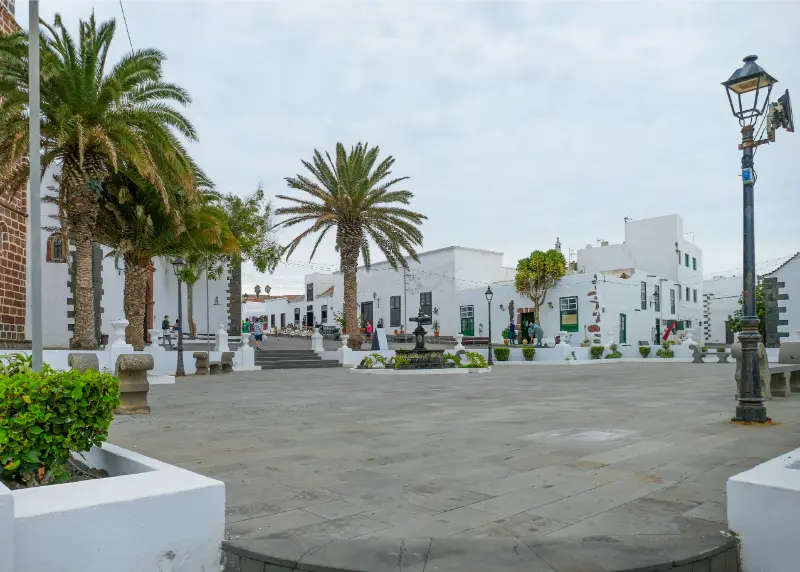
Teguise
Historic former capital with traditional streets and a popular market on Sundays.
Costa Teguise
A practical coastal base with beaches and restaurants.
Haría
A green northern village and gateway to the Mirador del Río area.
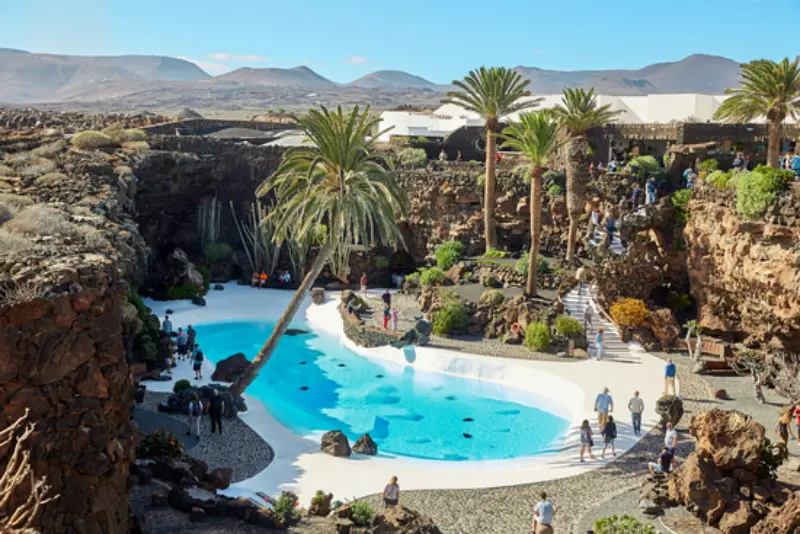
Jameos del Agua
A strong companion visit if you want more Manrique and volcanic geology.

Arrieta
A relaxed coastal village that works well for lunch or a sea-view stop.
Visiting with children
The garden is a good family stop when children need a shorter visit between beaches or longer drives. The main caution is obvious but important: many plants have severe spines. Young children should stay on paths and avoid touching plants or leaning into beds for photographs.
Best time of day and weather considerations
Morning is often the easiest time for softer light and a calmer pace, while late afternoon can produce beautiful shadows across the terraces. Midday is workable because the visit is not long, but shade is limited in parts of the garden. Carry water and sun protection even outside summer.
What to bring
- Water: even short stops become dehydrating in wind and sun.
- Sun protection: sunscreen, sunglasses and a secure hat are useful year-round.
- A light layer: viewpoints and northern areas can feel much cooler than resort beaches.
- Suitable footwear: choose shoes for the actual surface, not just the temperature.
- Offline directions: save the route and key confirmations before leaving reliable mobile coverage.
Responsible visiting and safety
The Canary Islands are visually robust but ecologically fragile. Stay on authorised paths, use established access points, take all rubbish away and never build stone stacks or remove volcanic material, shells or plants. In protected areas, a barrier or closure is part of the conservation system rather than an inconvenience to work around.
For beaches and natural pools, make the decision to enter the water from the conditions in front of you, not from photographs taken on another day. Respect lifeguard flags, warning signs and local advice. For mountain and forest routes, check official trail status after rain, wind, fire-risk periods or maintenance closures.
How this stop fits into a first trip
If this is your first visit to the archipelago, use our Canary Islands travel guide to decide how much of your holiday should be beaches, towns, nature and driving. A good itinerary normally has one major objective per half-day, with smaller nearby stops added only when they are genuinely on the route.
That approach is especially useful on the smaller islands, where a day can look empty on paper but feel full once scenic roads, viewpoints and local meals are included. It also gives you space to return to a favourite place rather than turning the holiday into a race.
Frequently asked questions
How long should you spend at Jardín de Cactus?
About an hour is enough for a normal visit; 75–90 minutes is better if you enjoy photography or want a drink or meal.
Is it only for plant lovers?
No. The architecture, quarry setting and Manrique design make it interesting even if you know little about cacti.
Can you combine it with Jameos del Agua?
Yes. The two sites fit well into the same north-Lanzarote day, especially if you are travelling by car.
Do opening hours change?
They can. Use the official CACT page for the final check before travelling.
Final advice
Jardín de Cactus Lanzarote is most rewarding when you plan for the real conditions of the place rather than the ideal version seen in photographs. Check the official information before you leave, give yourself enough time, and keep one flexible alternative nearby. That small amount of planning usually makes the difference between a rushed stop and one of the days you remember from the trip.
Planning mistakes to avoid
The most common mistake at Jardín de Cactus Lanzarote is underestimating the difference between arrival time and experience time. Parking, walking from the car, checking conditions and orienting yourself can easily add 20–40 minutes before the visit really begins. Build that margin into the day instead of cutting the final stop short.
A second mistake is following an old itinerary without checking live access information. The Canary Islands increasingly manage busy natural sites with permits, timed tickets, parking rules or temporary closures. Save the official page before travel and check it again when the visit depends on a specific trail, road or attraction.
A third mistake is planning every meal and stop at the exact same latitude or altitude. Weather on the islands is highly local. If cloud covers a viewpoint, the coast may be sunny; if strong wind makes a beach unpleasant, a village or museum inland may be comfortable. Keep your route modular so you can switch the order without losing the day.
Finally, avoid judging value only by how many attractions you fit in. One long beach walk, a slow museum visit or an hour watching changing cloud over a volcanic valley can be more memorable than five rushed photo stops. The best Canary Islands itineraries are selective, not exhaustive.
A simple half-day plan
For a low-stress half day at Jardín de Cactus Lanzarote, start by arriving before the busiest middle part of the day and spend the first 15 minutes orienting yourself rather than immediately following the crowd. Identify the main viewpoint, trail, beach section or indoor route, then decide what deserves most of your time. This prevents you from spending the visit moving constantly without actually experiencing the place.
After the main experience, leave at least 30–45 minutes for the less obvious part of the site: a secondary viewpoint, a slower walk, a café, a short stretch of coast or a nearby village. That buffer also absorbs parking delays and weather changes. If conditions are poor, reverse the plan and use the nearby stop first, then return when visibility, tide or wind improves.
For lunch, choose somewhere naturally on the onward route rather than driving back to a resort simply because it has more restaurants. One of the pleasures of exploring the islands is connecting landscapes with local settlements. A simple meal in a nearby village often makes the day feel more coherent and reduces unnecessary driving.
If you are travelling in peak holiday periods, keep the final part of the half day flexible. Popular parking areas and ticketed attractions can take longer than expected, and a rigid schedule creates pressure to speed through the very place you came to see. One major stop plus one nearby extra is usually the right rhythm.