
Hiking with children in the Canary Islands works best when the goal is a memorable landscape rather than a certain number of kilometres. A crater, a misty forest or a beach at the end of the path gives children a reason to keep moving. The archipelago offers many short walks with a strong sense of adventure, but heat, wind and steep drops require adult judgement.
Start with our Canary Islands with kids guide for the broader family picture. The walks below favour shorter distances, clear objectives and the ability to turn back easily. Age, confidence and experience matter more than an online difficulty label.
Best planning rule: choose the route after checking the local forecast and current trail status, not weeks in advance simply because it is famous.
The best routes at a glance
- Volcán del Cuervo, Lanzarote — The official Canary Islands tourism portal describes Volcán del Cuervo as a low-difficulty route suitable for the whole family.
- La Llanía, El Hierro — La Llanía’s forest and crater scenery creates variety without the huge ascent of El Hierro’s historic cliff paths.
- Playa Francesa, La Graciosa — Walking from Caleta de Sebo to Playa Francesa gives children a simple reward: beach time at the destination.
- Papagayo coast, Lanzarote — A short cove-to-cove walk around Papagayo can be adjusted to the family’s mood.
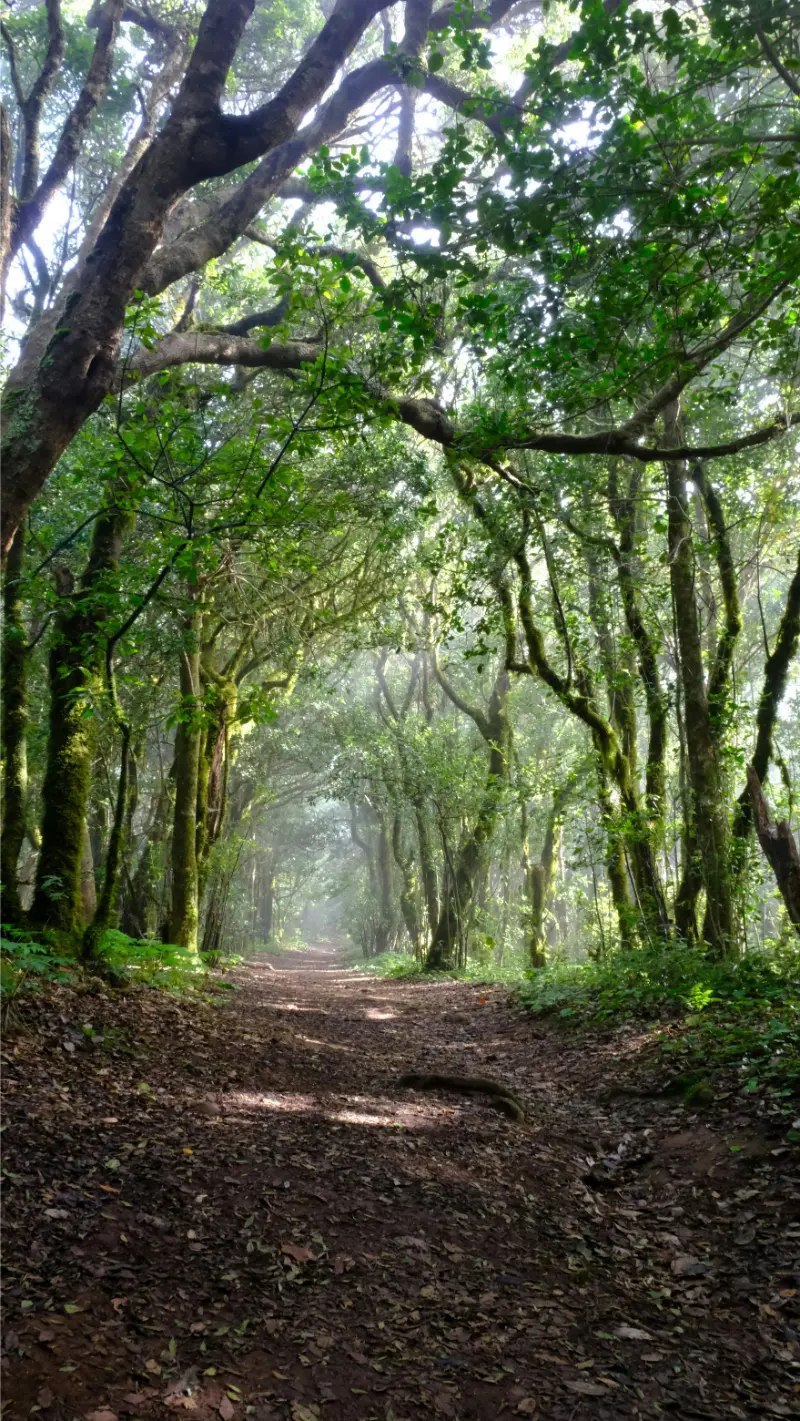
- Garajonay short forest trails, La Gomera — Short signed walks in Garajonay introduce children to laurel forest, moss and mist without exposing them to the island’s steeper ravines.
- Cubo de la Galga, La Palma — For families comfortable with woodland paths, a shorter option at Cubo de la Galga provides shade, lush vegetation and a feeling of exploration.
- Maspalomas dunes edge, Gran Canaria — The protected dune landscape gives children something visually different without a mountain climb.
- Calderón Hondo, Fuerteventura — Older children who already enjoy hiking may find Calderón Hondo an excellent first volcano climb.
Best hikes and walks to consider
Volcán del Cuervo, Lanzarote
The official Canary Islands tourism portal describes Volcán del Cuervo as a low-difficulty route suitable for the whole family. Children often respond well to the clear objective of reaching a real volcanic crater. The route is open and sunny, so go early, carry water and explain before starting that volcanic rocks stay on the ground rather than coming home as souvenirs.
La Llanía, El Hierro
La Llanía’s forest and crater scenery creates variety without the huge ascent of El Hierro’s historic cliff paths. The roughly seven-kilometre circuit may still be too long for younger children, but families can choose shorter signed variants. Damp ground means shoes with grip are important, and fog can make the forest feel like an adventure while also reducing visibility.
Playa Francesa, La Graciosa
Walking from Caleta de Sebo to Playa Francesa gives children a simple reward: beach time at the destination. The route is flat and easy to understand, but there is virtually no shade. Parents should carry more water than usual and keep enough energy in reserve for the return to the ferry or accommodation.
Papagayo coast, Lanzarote
A short cove-to-cove walk around Papagayo can be adjusted to the family’s mood. Instead of committing to a fixed circuit, choose one or two beaches and turn back when the group has had enough. The combination of walking and swimming is more appealing to many children than a pure hiking objective.
Garajonay short forest trails, La Gomera
Short signed walks in Garajonay introduce children to laurel forest, moss and mist without exposing them to the island’s steeper ravines. The forest can be cool even when the coast is warm, so bring a light layer. Wet roots and stones are the main practical hazard; slow walking is more important than distance.
Cubo de la Galga, La Palma
For families comfortable with woodland paths, a shorter option at Cubo de la Galga provides shade, lush vegetation and a feeling of exploration. Choose the route length conservatively and check conditions after rain. This is a good alternative when volcanic trails feel too exposed or hot.
Maspalomas dunes edge, Gran Canaria
The protected dune landscape gives children something visually different without a mountain climb. Stick to the permitted routes, avoid the hottest hours and remember that walking in sand requires more effort than the same distance on firm ground. Combine it with the lighthouse or beach for an easy half-day.

Calderón Hondo, Fuerteventura
Older children who already enjoy hiking may find Calderón Hondo an excellent first volcano climb. The path is more exposed than a forest walk but the objective is obvious and the views build gradually. Strong wind near the crater rim is the reason to keep children close and stay well within the established viewpoint area.
La Orotava walking day, Tenerife
Not every family hike needs to be a wilderness trail. Walking La Orotava’s historic centre and selected valley viewpoints combines movement, architecture and regular breaks for food or toilets. It is especially useful for families with children who enjoy exploring but do not want a long mountain route.
Easy coastal walks near resorts
Many resorts have promenades or signed coastal paths that can become a first hiking experience for small children. Los Cristianos, Costa Adeje, Las Canteras, Playa Blanca and Puerto del Carmen all allow families to test how far children enjoy walking before planning a more remote trail. The ability to stop for food, shade or transport removes much of the pressure.
How to choose the right hike
Start with the experience you want rather than the number of kilometres. Volcanic routes are usually exposed and visually dramatic; laurel-forest walks can be cooler and slippery; coastal paths offer flexible distances but may be windy; summit routes add altitude, temperature changes and greater commitment. Two routes with the same distance can therefore feel completely different.
Look at total ascent, surface, exposure and whether the route is circular or linear. Linear trails create a transport problem that should be solved before departure. If anyone in the group is uncomfortable with heights, steep loose descents or strong sun, choose the route for that person rather than for the strongest walker.
Weather and the best time to walk
For children, heat management matters more than ambitious route planning. Start early, use hats and sunscreen, schedule snack stops and carry water yourself rather than relying on a child to manage their own supply. Wind can unsettle younger children on exposed ridges, while cloud and damp surfaces can make forest routes slippery.
Check the forecast again on the morning of the hike. Strong wind, intense heat, recent rain, wildfire restrictions, rockfall or maintenance can change a sensible plan. The Canary Islands are excellent for flexible itineraries because another coast or altitude often has very different conditions. Keep one shorter alternative saved offline.
Getting to the trailhead
Choose a base that reduces time in the car. If the family is not renting one, Tenerife and Gran Canaria provide the easiest range of bus-accessible activities, while the smaller islands reward careful planning. Use our no-car guide and the island transport articles to match a route with a realistic return journey.
Download the route or map before leaving reliable coverage, confirm where legal parking is available and never block tracks used by residents, farmers or emergency vehicles. If using a taxi for a linear route, agree the pickup point carefully; rural trailheads can be difficult to describe once mobile coverage becomes weak.
What to pack for hiking in the Canary Islands
- Water: carry enough for the full route and an unexpected delay; do not rely on springs.
- Sun protection: high-SPF sunscreen, sunglasses and a hat are useful even in winter.
- Footwear with grip: volcanic gravel, cobbles and wet forest surfaces punish smooth soles.
- Windproof or light waterproof layer: especially for ridges, cloud forest and high ground.
- Offline map and charged phone: mobile coverage can be intermittent on remote routes.
- Food and a small emergency margin: many trailheads have no shops or cafés.
- Simple first-aid kit: blisters and minor cuts are much easier to manage early.
Safety and responsible hiking
Stay on signed or clearly established trails, obey closures and barriers, and never create cairns or shortcuts across lava, dunes or fragile vegetation. Do not remove stones, plants or other natural material. These rules are not cosmetic: volcanic soils and pioneer plants can take years to recover from repeated trampling.
Tell someone where you are going on remote routes, especially if walking alone. Turn around when conditions deteriorate rather than treating the planned endpoint as mandatory. In an emergency in Spain, call 112. A conservative decision early in the day is almost always easier than solving a problem after dark.
Where to stay for a hiking holiday
The best base is not automatically the closest hotel to one famous trail. Choose a place that gives access to several landscapes, food after a long day and a realistic road or bus connection. If you plan four or five serious hikes, splitting the stay between two bases can reduce driving and give you better weather options.
FAQ
Are family hikes Canary Islands suitable for beginners?
Some are, but difficulty varies widely. Choose a route with manageable distance and elevation, then factor in heat, wind, surface and exposure. A short volcanic or forest walk is usually a better first choice than a famous summit simply because it appears on a must-do list.
Do I need hiking boots?
For easy dry paths, supportive walking shoes may be enough, but grippy hiking footwear is the safer choice on loose lava, damp forest paths and steep descents. Sandals and smooth-soled trainers are poor choices for most mountain routes.

Can I hike year-round?
Yes, but not every route is ideal every day. Summer heat can make exposed lava routes uncomfortable, while winter weather can be cold and windy at altitude. Use the forecast for the exact trail area and keep a lower or shorter backup option.
Do I need a car?
Not always. Some walks start near towns, beaches or bus stops, while remote trailheads are much easier by car. Linear hikes may actually work better with a taxi or public transport so you do not have to return to a parked vehicle.
Should I book anything in advance?
Some protected areas, summit routes, visitor attractions or regulated paths may require permits, timed access or reservations. Rules can change, so check the official authority shortly before the hike rather than relying on an old screenshot or third-party blog.
Final planning advice
Choose fewer walks and enjoy them properly. A good hiking holiday leaves time for a slow lunch, a swim, a village stop or simply an earlier finish when the weather changes. The Canary Islands reward that flexibility because landscape changes quickly with altitude and orientation.
For current trail information, protected-area notices and route inspiration, check the official tourism hiking information before setting out.