
Tenerife in January can be an excellent winter escape, but it works best when you plan for real island conditions rather than assuming permanent summer. January is classic winter-sun season. The first week can still be busy because the Spanish festive period runs through Three Kings on 6 January, while later January often feels calmer even though northern-European demand remains strong.
This guide focuses on what a traveller actually needs to decide: how warm the coast normally feels, whether beach days are realistic, where to stay, what works well in winter, what to pack and how to keep a one-week itinerary flexible. It complements our broader Canary Islands in January guide and the main Tenerife travel guide.
Tenerife in January: quick verdict
- Weather: mild on the coast, with a long-term airport-station average of 18.4°C and an average daily maximum of 21.7°C.
- Rain: the AEMET reference normal is 17 mm for the month, but island microclimates mean the figure should never be applied equally to every coast.
- Best approach: choose a base that matches your main priority and leave at least one day flexible for mountain, wind or sea conditions.
- Swimming: possible for many travellers on suitable beaches, but winter sea state and wind are more important than sunshine alone.
- Booking: compare the full cost of location, transfers and car hire rather than choosing the cheapest room without checking the map.
Weather in Tenerife in January
For a consistent reference, this guide uses the official 1981-2010 climate normals published by AEMET for Tenerife Sur Airport. These are historical climate averages, not a forecast for a specific future trip. The station records a January mean temperature of 18.4°C, an average daily maximum of 21.7°C, an average daily minimum of 15.2°C, average monthly rainfall of 17 mm and about 193 hours of sunshine. See the AEMET climate normals for Tenerife Sur Airport for the official table.
| Measure | January normal |
| Mean temperature | 18.4°C |
| Average daily maximum | 21.7°C |
| Average daily minimum | 15.2°C |
| Average rainfall | 17 mm |
| Average sunshine | 193 hours |
Tenerife has some of the strongest winter microclimate contrasts in the archipelago. The south can be bright and mild while the north is cloudier, and Teide can be genuinely cold even when people are swimming near Costa Adeje. This is why a useful weather plan starts with the exact coast and altitude, then checks the short-range forecast a few days before the activity. A monthly normal is excellent for packing and choosing a general travel style; it is not a promise for Tuesday afternoon.
Can you swim in Tenerife in January?
Many visitors still swim in January, particularly on sheltered resort beaches, but comfort depends on wind and sea state as much as air temperature. A sunny 21°C afternoon can feel excellent on a protected beach and much cooler on an exposed one. For long water-sport sessions, a wetsuit is often more comfortable.
For families and cautious swimmers, prioritise protected bays, beaches with lifeguards and easy access rather than the most photogenic exposed shore. Winter swell can affect natural pools and rocky entries even on a bright day. If the red flag is flying, treat it as a safety instruction, not a suggestion.
Where to stay in Tenerife in January
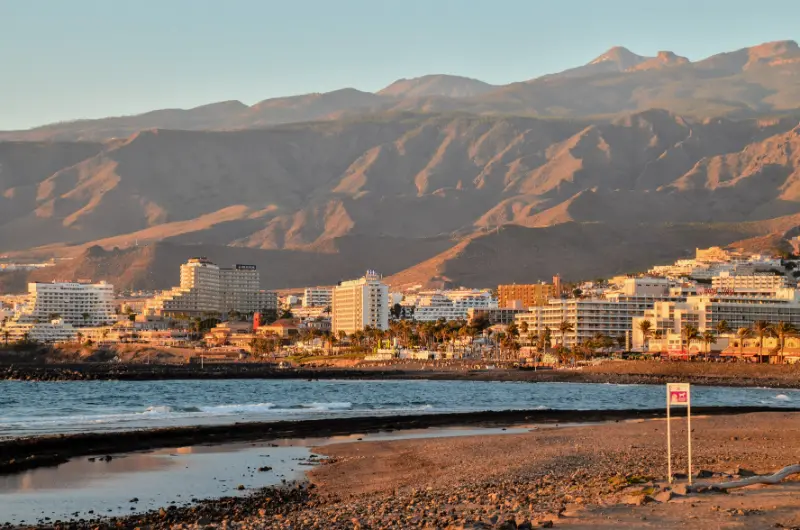
Costa Adeje and Los Cristianos
Best for reliable resort infrastructure, walkable promenades, beaches and easy excursions from the south. In winter, look at walking distance to restaurants, evening shelter from wind, parking if you have a car and how many of your planned days start nearby.
Puerto de la Cruz
A better fit for a greener north-coast atmosphere, historic streets and access to the orotava valley. In winter, look at walking distance to restaurants, evening shelter from wind, parking if you have a car and how many of your planned days start nearby.
La Laguna or Santa Cruz
Useful for culture, anaga and a more urban trip, although they are not the obvious choice for a beach-first winter holiday. In winter, look at walking distance to restaurants, evening shelter from wind, parking if you have a car and how many of your planned days start nearby.
For a broader area-by-area comparison, use our where to stay in Tenerife guide. Before paying, check the exact map location and recent room conditions rather than relying on a resort name alone.
If you are ready to compare live availability, check current accommodation in Tenerife on Booking.com.
Best things to do in Tenerife in January
January rewards a mixed itinerary: keep the most weather-sensitive day movable and use towns, food, museums or a sheltered coast as alternatives. Our best things to do in Tenerife article has the full list; these are especially useful in winter:
- Teide National Park and high-altitude viewpoints. Check the local weather, opening rules and driving time before fixing the day.
- Anaga Rural Park and the northeast. Check the local weather, opening rules and driving time before fixing the day.
- La Laguna and Santa Cruz. Check the local weather, opening rules and driving time before fixing the day.
- Los Gigantes and the west coast. Check the local weather, opening rules and driving time before fixing the day.
- south-coast beach and promenade time. Check the local weather, opening rules and driving time before fixing the day.
Hiking and outdoor activities in January
Winter can be excellent for walking because the coast is usually more comfortable than in the hottest months, but mountain conditions deserve respect. Start with official trail information, check wind and rain, carry water and turn around if visibility or footing deteriorates. On volcanic islands, wet rock and loose material can become slippery quickly.
Do not use a beach-resort temperature to choose mountain clothing. The difference between sea level and a high viewpoint can be dramatic. Start early enough to finish before dark, especially on unfamiliar trails, and keep a lower-altitude alternative for any day when cloud or wind makes the original plan a poor choice.

Crowds, prices and holiday opening hours
The first week of January overlaps with New Year and Three Kings travel, so prices and occupancy can remain high. After that, some destinations feel less intense than Christmas week, but winter-sun resorts are still in season. Flexible midweek flights and accommodation dates can make a meaningful difference to total cost.
6 January, Día de Reyes or Three Kings Day, is a public holiday in Spain. Festive events often happen the evening before, while shops and local services may change hours on the holiday itself. If a museum, market, car-rental desk or inter-island connection is essential, verify its exact timetable instead of relying on a normal weekday schedule.
When comparing prices, include the hidden geography cost. A room that is €15 cheaper per night may be poor value if it adds two hours of driving every day, expensive taxis or repeated parking charges. Winter is a good time to pay slightly more for the right base rather than treating accommodation as an isolated line item.
Getting around Tenerife in January
A rental car gives the greatest flexibility for microclimates, rural viewpoints and last-minute changes, but not every visitor needs one. If you plan a resort-focused week, city stay or organised excursions, public transport and transfers can be enough. If you do rent, check parking at the accommodation and avoid planning several long mountain or cross-island drives on consecutive days.
Winter daylight is shorter than in summer, so judge drives by time rather than kilometres. A mountain road can be slow after sunset even when the map distance looks small. Download offline maps, keep some fuel margin and check the next day’s route the evening before.
What to pack for Tenerife in January
Bring layers. T-shirts and swimwear still make sense for sunny coast days, but add a sweater or fleece, long trousers and a windproof layer for evenings. Mountain routes, dawn viewpoints and stargazing can require substantially warmer clothing than the coast.
- Swimwear and a light cover-up for sunny coastal afternoons.
- High-SPF sunscreen, sunglasses and a hat; winter UV can still be strong.
- A light sweater or fleece for evenings and breezy viewpoints.
- A windproof or light waterproof outer layer.
- Comfortable walking shoes with grip for volcanic paths and old-town streets.
- A reusable water bottle, small daypack and any essential medication.
- A warmer layer if you plan high altitude, stargazing or an early-morning viewpoint.
A practical 7-day Tenerife itinerary for January
Treat this as a framework, not a fixed schedule. Move the mountain, boat, beach and hiking days after checking the short-range forecast:
- Day 1: Arrive and settle into the south or your chosen base.
- Day 2: Teide National Park with a warm layer and a weather check.
- Day 3: La Laguna plus a short Anaga drive or walk.
- Day 4: Los Gigantes, Garachico or the west coast.
- Day 5: A flexible beach or boat day in the south.
- Day 6: Puerto de la Cruz and the Orotava Valley.
- Day 7: Reserve day for the clearest weather, shopping or an easy departure.
The flexible day is intentional. It protects the trip from wind, cloud or a cancelled boat and also gives you space to repeat the experience you liked most. Winter itineraries work better when one day can move than when every hour is pre-booked weeks in advance.
Who should visit Tenerife in January?
- Good fit: travellers escaping colder northern-European weather who are happy with mild rather than tropical heat.
- Good fit: couples and independent travellers who want to mix coast, scenery, food and towns.
- Good fit: walkers who prefer cooler daytime conditions and can adapt routes to weather.
- Think twice: anyone who needs guaranteed hot beach weather every day.
- Think twice: travellers who dislike wind, changing plans or carrying an extra layer.
Food, reservations and evening planning
Winter evenings are one reason to choose a walkable base. If you enjoy trying local restaurants, avoid booking accommodation that forces you to drive every night. In popular resort areas, reserve special dinners or highly rated small restaurants during peak holiday weeks, while leaving ordinary meals flexible.
For self-catering, check supermarket hours around public holidays and do not assume every small shop stays open late. A simple breakfast setup in the apartment can also make early hiking or driving days much easier.
Common planning mistakes to avoid
- Choosing accommodation from the hotel photos without checking the exact neighbourhood and elevation.
- Assuming one weather app reading describes the whole island.
- Booking every outdoor day in advance with no flexible alternative.
- Packing only beach clothes and then being uncomfortable at altitude or after sunset.
- Underestimating holiday opening-hour changes, parking time or mountain-road driving.
- Treating a sunny sky as proof that sea conditions are safe.
Frequently asked questions about Tenerife in January
Is January a good month for Tenerife?
Yes for many travellers. January is particularly attractive if you want winter sun, sightseeing and outdoor activity without peak-summer heat. The main trade-off is that winter weather is more variable, so base choice and flexibility matter.
Is Tenerife hot in January?
The AEMET reference station has an average daily maximum of 21.7°C in January. Sunny sheltered spots can feel warmer, while wind, cloud, elevation and evenings can feel noticeably cooler. It is better to think “mild to warm coast” than “guaranteed hot summer”.
Does it rain a lot in Tenerife in January?
The reference station normal is 17 mm for the month, but rainfall distribution is uneven. A wet mountain slope or northern sector can coexist with a dry resort coast. Check the exact area and short-range forecast rather than cancelling a day from an island-wide icon.
Do I need a car?
Not necessarily. Resort stays and organised excursions can work without one. A car is most valuable when your priorities are remote viewpoints, rural villages, several beaches in one day or rapid changes of plan between microclimates.
Should I book everything before travelling?
Book scarce experiences, accommodation and anything essential during holiday periods, but keep some daily sequencing flexible. Winter trips are more resilient when you can move the exposed or mountain day to the clearest forecast.
Final verdict
Tenerife in January is a strong choice if you want a mild winter trip with more variety than a pure beach holiday. Use the climate normals for packing, the short-range forecast for the exact day, and the island’s microclimates to your advantage. Choose the right base first, leave one day flexible and you can combine coast, scenery, towns and outdoor activities without expecting summer conditions.
The Booking.com button is an affiliate link. If you book after following it, WelcomeToCanaries may receive a commission at no extra cost to you.