
Sustainable Travel in Fuerteventura: Beaches, Dunes, Water Use and Responsible Tourism is a practical guide to reducing the avoidable impact of a holiday without pretending that travel can be impact-free. Fuerteventura’s open horizons can create the false impression that there is unlimited space for vehicles, footpaths and beach access. In reality, dunes, arid habitats, bird areas and volcanic landscapes are sensitive to repeated pressure. Sustainable travel here means resisting the temptation to drive or walk wherever the ground looks empty.
The useful question is not whether a trip can be labelled perfectly sustainable. It is whether you can make the same holiday more responsible: fewer unnecessary car kilometres, less water and energy waste, better behaviour in natural spaces, more spending with local businesses, and more respect for residents who share the island with visitors.
Quick verdict: how to travel more responsibly in Fuerteventura
- Do less, better: choose fewer places per day and spend more time in each one.
- Use public transport when it is practical: especially for city, resort and airport journeys that do not require a car.
- Stay on legal access routes: beaches, dunes, volcanic ground and mountain habitats can be damaged by informal shortcuts.
- Buy local: markets, local food, qualified guides and island businesses keep more value in the destination.
- Save water and energy: island resources are finite and desalination is energy-intensive.
- Check alerts: fire risk, heat, wind and trail closures can change access quickly.
- Leave natural objects where they are: sand, shells, rocks and plants are part of the ecosystem, not free souvenirs.
Why responsible travel matters here
Corralejo’s dunes, the Jandía peninsula, Cofete, volcanic cones and coastal habitats all need visitors to use established access routes. Do not drive onto dunes or beaches, remove sand or stones, or create new parking areas beside tracks. Wind can spread litter quickly, so carrying a small reusable bag for waste is especially useful.
Tourism pressure is not distributed evenly. A quiet-looking beach or trail may still receive thousands of visits over a season, and small actions accumulate. Parking on vegetation, stepping around barriers, feeding wildlife or leaving biodegradable food waste all seem minor in isolation but become significant when repeated by many people.
Transport: where you can reduce car use
Fuerteventura’s bus network can work for resort-to-town travel, but distances and sparse services make a car practical for many exploration days. Plan routes efficiently: group nearby places, avoid backtracking, and do not use a rental car as a reason to chase dozens of remote beaches in one day.
If you do rent a car, efficiency matters more than symbolic gestures. Combine nearby sights, avoid repeated cross-island journeys, choose the smallest practical vehicle, and return to the same base rather than changing hotels every night unless the itinerary genuinely benefits. Walking to dinner or the beach from a well-chosen base can remove dozens of short drives over a week.
Protected landscapes: practical behaviour
- Use signed trails, official viewpoints and designated parking areas.
- Do not climb over barriers for a photograph or build stone cairns where they are not part of trail marking.
- Carry all waste out of natural areas, including fruit peel and tissues.
- Respect temporary closures, fire restrictions and wildlife breeding areas.
- Keep drones, amplified music and bright lights away from places where they disturb wildlife or other visitors.
- Never remove volcanic rocks, sand, shells, flowers or other natural material.
- If a route requires a reservation or permit, treat that capacity limit as part of conservation rather than an inconvenience.
Water and energy: the part travellers often overlook
Fresh water is a strategic resource across the Canary Islands. Much of the archipelago relies heavily on desalination, pumping and energy-intensive distribution. You do not need to make a holiday uncomfortable, but shorter showers, sensible towel and linen changes, turning taps off fully and avoiding unnecessary air-conditioning are meaningful choices when multiplied across millions of visitor nights.
Accommodation sustainability claims can be difficult to compare. Look for concrete measures rather than broad green language: water-saving systems, energy efficiency, waste separation, local procurement, reduced single-use plastics, public-transport information and transparent environmental certification. None of these makes a hotel impact-free, but specific actions are more useful than slogans.
Spend locally without turning it into a performance
Majorero cheese, local goat farming, fish restaurants and small inland towns provide ways to spend beyond the resort belt. A visit to Betancuria, Antigua, La Oliva or a producer can add cultural context to a beach-focused holiday while supporting businesses that are less dependent on the biggest tourism centres.
Supporting the local economy does not require avoiding every chain or resort. A balanced trip can include a hotel, a supermarket and mainstream attractions while still choosing local restaurants, markets, guides and producers for part of the stay. The goal is to make local spending normal rather than treating it as a one-off ethical excursion.
Wildlife and marine experiences
Water scarcity and wind are defining parts of Fuerteventura. Use water carefully, choose refillable bottles where safe refilling is available, and secure lightweight rubbish. Wildlife areas and the islet of Lobos have specific access and conservation rules, so check permits and current restrictions before setting out.
Do not feed wild animals, touch marine life or crowd resting birds for photographs. In the water, maintain distance from turtles, rays and cetaceans, and choose operators that explain conservation rules before the activity begins. Responsible wildlife tourism sometimes means seeing less because the operator refuses to push an encounter.
Food, shopping and waste
Local food can reduce some transport while also supporting island agriculture, but the strongest reason to buy it is cultural and economic. Choose seasonal produce when available, refill water bottles where safe and practical, carry a reusable shopping bag, and avoid buying natural objects sold without clear legal provenance. Packaged local foods and crafts made by identifiable producers are better souvenirs than shells or volcanic stones.
Where to stay if you want fewer daily journeys
Corralejo is practical for a mixed holiday with walking, restaurants and access to Lobos. Caleta de Fuste is convenient and compact, while Costa Calma and Morro Jable suit south-coast beach trips. Choosing a base that matches most of your planned activities reduces unnecessary cross-island driving.
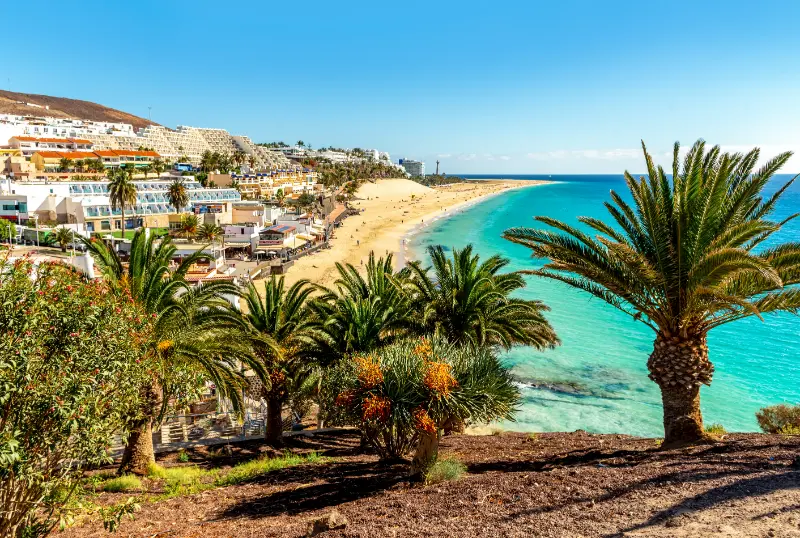
Location often matters more than the hotel’s marketing. A modest accommodation five minutes from bus stops, restaurants and the beach may allow a lower-impact week than a highly certified property that requires a car for every meal and activity. Before booking, map the places you actually expect to visit and count how many trips can be made on foot or by public transport.
A realistic low-impact itinerary strategy
Build each day around one main area. For example, combine a town, nearby beach and local meal instead of connecting three corners of the island. On mountain days, start early, check weather and alerts, and stop for lunch in a village rather than driving back to the resort. On beach days, walk or use a bus when practical and stay long enough to make the journey worthwhile.
For a seven-night trip, one or two car-free days can be an easy target even if you rent a vehicle. A city day, resort day or organised excursion can replace driving. If you are staying longer, consider splitting the trip into two bases only when that genuinely reduces repeated kilometres rather than increasing hotel changes.
Common mistakes to avoid
- Assuming an empty dirt track is legal to drive.
- Choosing a distant accommodation because it looks isolated, then driving several hours every day.
- Treating public transport as impossible without checking the actual routes first.
- Taking sand, shells or volcanic stones home.
- Booking wildlife activities solely by price without checking operator standards.
- Ignoring drought, fire or wind alerts because the coast looks calm.
- Using the word sustainable as a reason to buy more products rather than simply consuming less.
- Trying to visit every famous place in one short holiday.
Useful internal guides
Start with the broader sustainable travel in the Canary Islands guide if you are comparing several islands.
Continue planning with Fuerteventura public transport guide, Fuerteventura food guide, Fuerteventura road trip, where to stay in Fuerteventura.
Official responsible-tourism guidance
The Canary Islands tourism board asks visitors to stay on designated paths, use authorised parking, respect wildlife, avoid removing natural material, reduce water and energy use, recycle properly and support local businesses. Read the official responsible-tourism guidance before travelling, and check island-specific alerts when visiting protected areas.
The button above is an affiliate link. WelcomeToCanaries may receive a commission if you book after using it, at no extra cost to you.
Frequently asked questions
Do I need a car for sustainable travel in Fuerteventura?
Not necessarily for the whole trip. A car can be useful for remote areas, but a well-located base can reduce daily driving. Consider mixing public transport and walking with a shorter car-rental period rather than renting automatically from arrival to departure.

Is taking a flight to the Canary Islands compatible with responsible travel?
Flying has a significant climate impact. A more responsible approach is to travel less frequently, stay longer when possible, avoid unnecessary island-hopping flights, use lower-impact transport on the ground and make the trip economically useful to local communities.
Are biodegradable products enough to protect nature?
No. Biodegradable does not mean harmless in every ecosystem. The best approach is to keep soaps, food waste and chemicals out of natural areas entirely and use designated facilities.
Should I avoid popular attractions?
Not automatically. Many major attractions manage visitors better than informal sites. Go at quieter times, follow capacity controls, use official access and combine famous places with local towns and businesses.
What is the simplest change with the biggest practical effect?
Choose a base that reduces transport. Being able to walk to food, shops, the beach and a bus stop removes repeated journeys every day without making the holiday feel restrictive.
Final verdict
Responsible travel in Fuerteventura is mostly about ordinary decisions made consistently. Use legal access, stay longer in fewer places, save water, respect wildlife, support local businesses and choose transport deliberately. You do not need a perfect eco-itinerary; you need a trip that leaves less avoidable pressure on the island while giving you a deeper experience of it.