
Whale watching in the Canary Islands is one of the rare activities that can be worthwhile in every season. The archipelago sits beside deep Atlantic water and supports a rich variety of marine life. The southwest coast of Tenerife is the best-known base because resident short-finned pilot whales and bottlenose dolphins can be found in the area throughout the year.
The experience is most rewarding when you treat it as wildlife observation, not a guaranteed performance. A responsible trip keeps distance, limits disturbance and allows the animals to choose whether they approach. The official Canary Islands tourism information highlights Tenerife’s authorised “Barco Azul” vessels as operators that comply with cetacean-watching rules.
Where is the best whale watching?
Tenerife has the largest choice of regular excursions. Boats commonly depart from Los Cristianos, Puerto Colón and Los Gigantes, covering the southwest channel between Tenerife and La Gomera. The combination of deep water close to shore and established operators makes this the simplest choice for most first-time visitors.
Other islands also offer marine excursions and cetacean sightings, particularly around La Gomera and Gran Canaria, but schedules and trip style vary. If whale watching is a top priority, Tenerife gives you the best ability to choose departure time, vessel size and trip length.
What can you see?
Short-finned pilot whales and common bottlenose dolphins are the species most closely associated with the Tenerife-La Gomera channel. Other dolphins and migratory whales can appear depending on season and conditions. The official tourism site notes that many different cetacean species have been recorded in Canary waters.
Never book because a seller promises a specific rare species. Wildlife does not follow a timetable, and a responsible operator should be clear about the difference between resident animals, occasional visitors and possible sightings.
Best time of year
There is no single “whale season” comparable to destinations where one migratory species appears only for a few months. Resident populations make Tenerife excursions possible all year. The more important variables for comfort are wind, swell and visibility.
Morning departures are often attractive because the day may be cooler and schedules leave time for other activities, but sea state can vary. If someone in your group is sensitive to motion, prioritise a larger, stable vessel and a calm forecast over the theoretically perfect hour.
How to choose a responsible operator
In Tenerife, look for authorised vessels and clear information about wildlife-watching rules. The “Barco Azul” identification is specifically associated with legal operators authorised for cetacean observation. You can read the official overview at Hello Canary Islands whale and dolphin watching.
A good operator should explain that boats maintain regulated distances, avoid surrounding animals and reduce speed near cetaceans. Avoid marketing that focuses on touching, feeding or chasing wildlife.
- Choose a licensed wildlife-watching company.
- Prefer guides who explain species and behaviour.
- Avoid guarantees of close contact.
- Ask about vessel capacity if crowds matter to you.
- Check cancellation and rescheduling policy for rough seas.
Small boat or larger catamaran?
Small boats can feel more intimate and often carry fewer passengers, but they also move more in swell and may offer less shade. Larger catamarans usually provide more space, toilets and a more stable ride, though the wildlife experience can feel less personal.
There is no universal winner. Families and motion-sensitive travellers often value stability and shade; photographers may prefer a lower, less crowded boat if conditions are calm.
Los Gigantes vs Costa Adeje and Los Cristianos
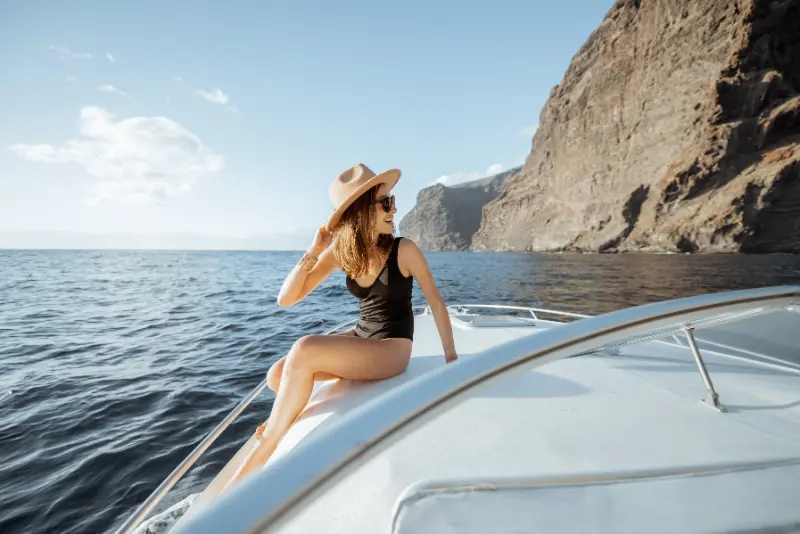
Los Gigantes adds spectacular cliffs to the scenery and is a natural choice if you are staying in the west. Puerto Colón in Costa Adeje is convenient for the major southern resort areas, while Los Cristianos is practical if you are staying nearby or combining the day with a ferry journey.

Do not cross half of Tenerife simply because one port sounds more famous. Choose the best reputable operator within a sensible transfer from your hotel.
What to bring on the boat
Bring a light windproof layer even on a warm day, because the temperature feels cooler once the boat is moving. Use high-factor sun protection, a hat that will not blow away and a secure strap for your phone or camera.
If you get seasick, prepare before boarding rather than after symptoms begin. Sit where the vessel moves least, keep your eyes on the horizon and avoid a heavy meal immediately before departure.
Photography without missing the experience
A zoom lens helps, but do not spend the whole trip staring at a screen. Cetaceans can surface in different directions and the most memorable moment may be the one you never photograph.
Use a fast shutter speed and be ready rather than trying to predict an exact surfacing point. Never encourage the captain to move closer for a photograph.
Whale watching with children
Children often enjoy the trip, especially on larger boats with shade and toilets. The main questions are duration, motion sickness and whether the child can stay seated safely when the vessel moves.
For younger children, a shorter excursion may be better than a long cruise with swimming stops. Check minimum-age rules directly with the operator.
Can you swim with whales or dolphins?
Responsible wildlife tourism is based on observation rather than entering the water with wild cetaceans. Do not choose an operator that implies you can routinely jump in beside whales or dolphins.
If you want a marine activity where swimming is the main point, choose snorkelling in an appropriate bay or a guided dive instead. Our snorkelling and diving guide gives better options.
Combine whale watching with a Tenerife itinerary
A boat trip fits naturally into a south or west Tenerife day. From Costa Adeje or Los Cristianos, keep the rest of the day easy with a beach or promenade. From Los Gigantes, combine the excursion with a viewpoint or relaxed lunch rather than a demanding mountain drive.
If you are staying elsewhere on the island, see our Tenerife travel guide for realistic drive times and bases.
Common mistakes
- Choosing only by the cheapest price without checking authorisation.
- Expecting the sea to be flat because the beach is calm.
- Promising children they will definitely see a specific animal.
- Booking a long cruise if someone is very prone to seasickness.
- Trying to fit Teide or a major hike immediately after the boat trip.
- Assuming “eco” marketing automatically means the operator is licensed.
Practical tip: Judge the trip by the quality of observation and guiding, not by how close the boat gets to the animals.
Final advice
Whale watching is one of the best Canary Islands experiences because it adds a completely different perspective to a beach-and-volcano holiday. Tenerife is the easiest base, but the real value comes from seeing wild animals without disturbing them.
For more ocean-focused ideas, read our best things to do guide and the best beaches in the Canary Islands.
Frequently asked questions
How long is a whale-watching trip?
Short excursions commonly last a few hours, while longer cruises may add swimming or coastline stops. Choose duration based on your tolerance for boats, not simply the number of advertised extras.
Should you book in advance?
In busy periods, yes, especially if you want a particular vessel size or morning departure. Keep the cancellation policy in mind because sea conditions can change.
One more planning note
Keep this activity flexible until close to the day whenever weather or sea conditions matter. The Canary Islands have strong microclimates, and a short drive can move you from cloud to sun or from sheltered water to heavy swell. Confirm official notices, opening hours and access rules shortly before leaving your accommodation.
If you are travelling in a group, choose the option that works for the least confident person. A slightly easier trail, calmer bay or shorter boat trip often produces a better shared experience than pushing everyone towards the most famous version of an activity.
How this fits into a wider Canary Islands trip
Try to place this experience on a day when the surrounding geography also makes sense. Combining nearby villages, beaches, viewpoints or restaurants reduces driving and gives you alternatives if weather or access changes. The islands reward regional planning much more than lists of unrelated highlights.
Avoid booking every day at a fixed hour. Reserve genuinely capacity-limited activities, then leave ordinary beaches, road trips and short walks flexible. That balance gives you enough structure without turning a holiday into a timetable.
Before you go: a few practical details
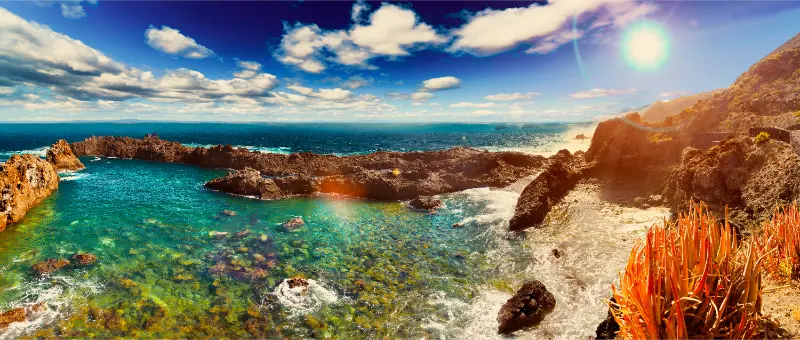
Check the exact conditions that matter for this experience on the same day whenever possible. Wind, cloud, swell and local access restrictions can vary significantly between islands and even between opposite coasts of the same island. A forecast for the airport or your hotel is not always enough for a mountain, reef, natural pool or exposed beach.
Leave some margin in your schedule for parking, slower mountain roads and spontaneous stops. Many of the most enjoyable Canary Islands moments happen between the major attractions: a village café, a viewpoint with no queue, a quiet promenade or an unexpectedly calm beach. A realistic itinerary gives those moments room to happen.
For bookings, prioritise activities with limited capacity or regulated access and leave ordinary sightseeing flexible. This is especially useful during school holidays, carnival periods and the busiest winter weeks. Keep confirmation emails available offline, carry water and sun protection, and check whether your chosen activity needs specific footwear, identification or equipment before leaving your accommodation.