
Five days in Lanzarote lets you slow down enough to understand the island’s design and geology instead of moving from ticket desk to ticket desk. You can separate Timanfaya from the northern volcanic tube attractions, give the historic towns a day, enjoy the southern beaches and still make a day trip to La Graciosa.
Lanzarote feels coherent in a way few islands do: black lava, white villages, low architecture, vineyards planted into volcanic ash and César Manrique’s art-and-landscape spaces all reinforce the same visual identity. For a short trip, the objective is not maximum coverage but a route that leaves enough time to experience each landscape at the pace it deserves.
Is 5 days enough for Lanzarote?
Yes. 5 days is enough for a first visit if you accept that some places will remain for another trip. The itinerary below prioritises contrast and sensible geography. It also assumes that weather and access can change, so the order is intentionally flexible rather than built like a chain of non-refundable appointments.
If you have more time, compare this plan with our Lanzarote road trip and the broader Lanzarote travel guide. Those pages are better for a longer stay; this article is designed for travellers who need to make decisions quickly and still want the trip to feel like a holiday.
Where to stay for this Lanzarote itinerary
Puerto del Carmen is the easiest all-round base for five days. Costa Teguise shortens the drive north and has a quieter feel, while Playa Blanca is strongest for beaches and the south. If you split the stay, do it only once; Lanzarote is small enough that frequent hotel changes rarely pay off.
Before booking, compare neighbourhoods in where to stay in Lanzarote. On a short trip, location matters more than a marginally better room: an extra forty minutes of driving at the beginning and end of every day can erase much of the advantage of a cheaper hotel.
5-day Lanzarote itinerary at a glance
- Day 1: Timanfaya and La Geria
- Day 2: Cueva de los Verdes, Jameos del Agua and Haría
- Day 3: Teguise, the César Manrique story and Arrecife
- Day 4: Papagayo and Playa Blanca
- Day 5: La Graciosa day trip
Day 1: Timanfaya and La Geria
Start with the landscape that explains modern Lanzarote. Timanfaya’s core visit is regulated, so organise the timed entry before building the rest of the day. Arrive early enough that traffic or parking does not turn the booking into a stressful deadline.
After the park, follow the volcanic road through La Geria. Stop at one or two bodegas or viewpoints and learn how vines are protected in pits cut into the ash. This is one of the best examples of agriculture adapting to extreme landscape.
Finish in Yaiza or El Golfo. Both make sense geographically, and either is better than driving to the opposite side of the island simply to “use” the evening.
Day 2: Cueva de los Verdes, Jameos del Agua and Haría
Make the north a full day. Book Cueva de los Verdes at a time that leaves breathing room and visit Jameos del Agua before or after. The two experiences are close but not interchangeable: one is an underground guided route, the other an art-and-nature space shaped by César Manrique.

Have lunch around Haría and walk through the palm-filled valley. Add a northern mirador only if the sky is clear enough to make the view worthwhile.
The practical rule is simple: two major attractions plus a village is enough. A third ticketed site often reduces the day to parking, queues and clock-watching.
Day 3: Teguise, the César Manrique story and Arrecife
Spend the morning in Teguise, especially if you can experience the town outside its busiest market hours. White façades, courtyards and small squares give you a sense of Lanzarote before the coastal resorts.
Continue toward a César Manrique site that you have not already visited. The foundation is the obvious choice for travellers who want to understand his house, art and influence on the island. Do not try to fit every site associated with him into one day; the ideas matter more than the count.
Finish in Arrecife around Charco de San Ginés. The capital is useful precisely because it feels less like a resort. Have dinner there and let the day end with ordinary city life.
Day 4: Papagayo and Playa Blanca
Make this the beach day. Start early toward the Papagayo area or choose the easier resort beaches around Playa Blanca if you want facilities and minimal logistics. Wind and sea conditions should decide which shore is best.
Have lunch in Playa Blanca and spend the afternoon on the promenade, at Playa Dorada or at another sheltered beach. If you have children, the Lanzarote with kids guide helps match beaches and attractions to energy levels.
Keep the evening free. After three sightseeing-heavy days, a slow beach day prevents the holiday from feeling like a road rally.
Day 5: La Graciosa day trip
Use the final full day for La Graciosa. Travel to Órzola with enough time for the ferry and remember that the island’s appeal is simplicity: sandy tracks, low houses and beaches rather than a dense list of attractions.
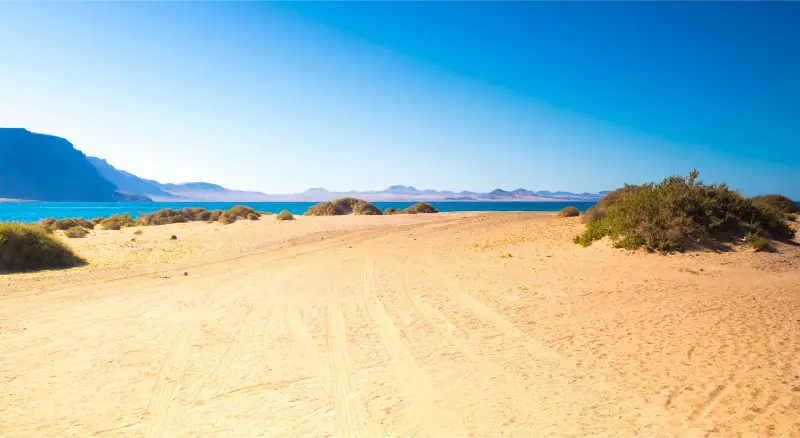
Do not overestimate how much ground you can cover on foot in heat and wind. Choose a bike, authorised local transport or a focused walking plan, and carry water. Las Conchas is spectacular but exposed; swimming conditions can be dangerous, so treat the beach as scenery when the sea is rough.
Read the La Graciosa guide and the La Graciosa beaches guide before deciding whether your priority is Caleta de Sebo, a beach, cycling or simply a quiet island day.
How to adapt the itinerary to weather and energy
If ferry weather is poor, move La Graciosa to another day and use Teguise/Arrecife or the beach day instead. If a Timanfaya slot is only available later in the trip, reserve it first and rearrange everything else around that booking.
The most useful rule is to protect the hardest-to-change element first. If you have a timed ticket, ferry, permit, guided tour or regulated access, build that day around it. Beaches, viewpoints and town walks are usually easier to move. This keeps a cloudy morning or delayed lunch from damaging the entire trip.
Driving and transport: plan by time, not distance
A rental car is the easiest way to connect Timanfaya, La Geria, the northern attractions and beaches. Driving distances are manageable, but popular sites can be limited by timed tickets or queues, so one major reserved attraction per half-day is a sensible rhythm.
Download an offline map before setting out and save parking areas, ferry terminals and trailheads rather than just attraction names. In the Canary Islands, the final few kilometres can be the slowest part of a journey. Mountain bends, one-way streets, protected-area access and finding legal parking often matter more than the main road.
If you are not comfortable with narrow mountain roads, do not force yourself to drive them simply because a rental car is recommended online. An organised excursion, local taxi or bus can be a better use of a short holiday. The goal is to see the island, not to prove something behind the wheel.
Weather, clothing and the value of a backup plan
Wind matters as much as temperature. A bright day can feel cool on an exposed coast and much warmer in a sheltered cove. Carry a light wind layer and avoid assuming that every beach will have the same conditions.
Carry sun protection even on cloudy days. For mountain or forest routes, add a light insulating layer and footwear with reliable grip. For beach-heavy days, a wind layer can be more useful than a heavy jacket. Keep water in the car but never rely on it as your only supply for a hike.
A backup plan should be genuinely easier, not simply a second ambitious day. Good alternatives include a historic town, a sheltered beach, a market, a museum, a short promenade or a food-focused afternoon. The best itineraries are resilient: a change in weather should alter the day, not ruin the trip.
Booking attractions and regulated natural areas
Some of the Canary Islands’ most popular natural areas and attractions use timed tickets, permits, capacity limits or route-specific reservations. Systems can change. Check the official operator or authority shortly before travel, especially for national parks, summit access, protected islets and popular trailheads. A blog itinerary should help you organise the day, but it should never be treated as a live access permit.
Keep booking confirmations and QR codes available offline. Take a screenshot of the exact time and meeting point, because mobile reception can be weaker in ravines, lava tubes and mountain areas. Arrive early enough to absorb parking or traffic delays without driving aggressively.
Where to eat without losing half the day
Plan at least one meal around the island rather than the resort: fish in a coastal village, goat cheese, wrinkled potatoes with mojo, and a tasting or lunch in the La Geria wine landscape all add context to the volcanic scenery.
For a short itinerary, reserve only the meals that genuinely matter to you. A fixed lunch can be useful on a driving day if it gives the route a natural midpoint, but too many reservations make the schedule brittle. Keep at least one meal each day spontaneous so you can stop where the atmosphere feels right.
Beach time: choose conditions, not reputation
If beaches are a priority, use the Lanzarote beaches guide to compare easy resort shores with more exposed or remote options. The Atlantic is dynamic: wind, swell, currents and flags can make yesterday’s perfect swimming beach a poor choice today. With children, stay conservative and choose lifeguarded, sheltered water when possible.
Do not build a beach day around photographs alone. Access, shade, parking, toilets and the walk back uphill can matter more than colour of the sand. Remote beaches are often most rewarding when you arrive prepared and are happy to enjoy the scenery even if swimming is not safe.
A practical packing list for a short island itinerary
- Comfortable walking shoes with grip
- Swimwear and a quick-drying towel
- High-SPF sunscreen, hat and sunglasses
- Reusable water bottle
- Light windproof or insulating layer
- Offline maps and screenshots of bookings
- Small daypack for trail or town days
- Phone charger or compact power bank
Pack for transitions rather than individual activities. A day can move from warm coast to cool forest or mountain and back again. A small backpack with one extra layer, water and sun protection prevents unnecessary returns to the hotel.
Common mistakes on a short Canary Islands trip
- Scheduling every hour and leaving no weather flexibility
- Trusting map distance without considering mountain roads
- Adding a remote beach at the end of a long sightseeing day
- Assuming a famous trail or attraction has unlimited walk-up access
- Changing hotels too often
- Leaving luggage visible in a rental car
- Ignoring red flags, strong swell or local swimming advice
- Driving back after dark on unfamiliar mountain roads when tired
The recurring mistake is trying to extract more value from the trip by adding more stops. In practice, value comes from better timing: arriving before crowds, staying long enough for a place to become memorable and having enough margin that a missed turn or slow lunch does not create stress.
Frequently asked questions
Do I need a car for 5 days in Lanzarote?
A car gives the greatest flexibility for this itinerary, especially for natural areas and villages. It is not essential if you choose a well-connected base and replace the most remote driving days with organised excursions, buses or taxis.
Should I book attractions before arriving?
Book anything with a fixed capacity, permit, ferry or timed entry as soon as your dates are firm. Leave beaches, ordinary viewpoints and town walks flexible so the itinerary can adapt to weather.
Can I follow the days in a different order?
Yes. In fact, you should. Put mountain, forest and boat days on the best weather window and use the coast or towns when conditions are less favourable.
Is it worth changing hotels during a short trip?
Usually only if the island is long or you strongly value different evening bases. One well-located hotel often saves more time than a split stay, especially on a three-day itinerary.
How early should I start each day?
Early enough to protect the main activity without turning the holiday into a 6 a.m. endurance test. Mountain, ferry and popular-attraction days benefit most from an early start; a beach or city day can be slower.
What should I remove if the itinerary feels too busy?
Remove the stop with the least contrast. Keep the volcano or forest, one town and one coast experience; drop duplicate viewpoints, second-choice beaches and attractions that require a detour.
Final advice
A good 5-day trip to Lanzarote should leave you wanting to return, not feeling relieved that the schedule is over. Protect the major landscape days, keep the order flexible and leave room for an unexpected café, viewpoint or swim. That balance is what turns a short Canary Islands break into a trip that feels much longer than the calendar suggests.
Best planning rule: one main objective per day, one flexible secondary stop, and enough spare time to enjoy the part you did not plan.