
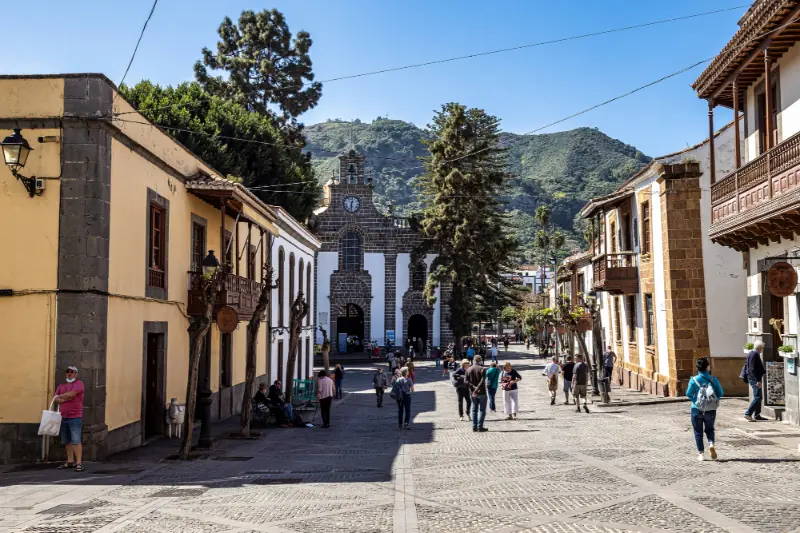
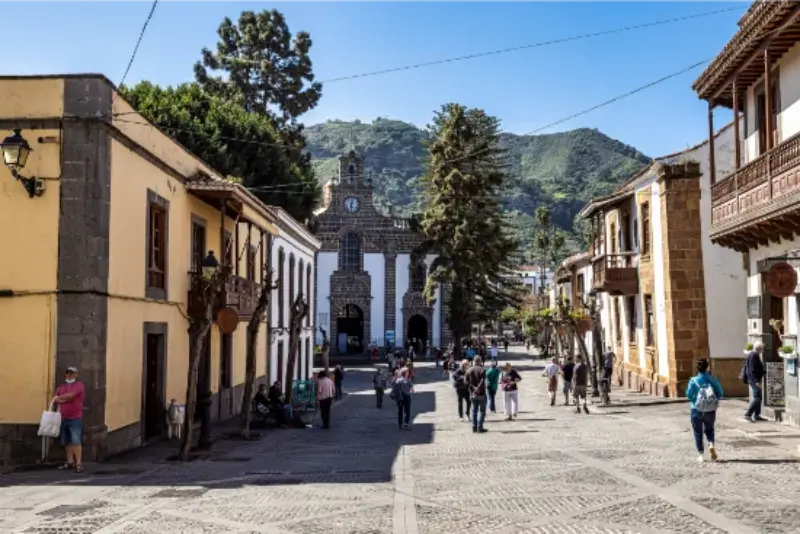
Teror is one of Gran Canaria’s most important historic and religious towns, known for its basilica, traditional wooden balconies and strong connection with the Virgen del Pino. Only around 20 kilometres from Las Palmas, it feels much more rural and traditional than the capital, especially along Calle Real and the streets around the main square.
Teror is ideal as a half-day from Las Palmas or as part of a north-and-mountains road trip. Sunday is lively because of the market and local visitors, while weekdays are better for appreciating architecture and a slower village atmosphere.
Why visit Teror?
Teror adds a different dimension to a Gran Canaria holiday because it works best when you slow down enough to notice how local life, landscape and history fit together. It can be visited as a day trip, but travellers who stay longer often discover that mornings and evenings are more rewarding than the busiest middle of the day.
If this is your first trip to Gran Canaria, use our Gran Canaria travel guide to see how Teror fits into the island as a whole. The right amount of time depends on whether you are using it as a base or simply adding it to a larger road trip.
Best things to do in Teror
Walk Calle Real to the basilica
Calle Real leads through the most recognisable part of Teror, lined with houses whose projecting wooden balconies are classic examples of Canarian architecture. The street opens into Plaza del Pino and the basilica.
Walk the route in both directions. Architectural details are easier to notice on the return when you are no longer focused on reaching the church.
Visit the Basílica de Nuestra Señora del Pino
The basilica is the spiritual centre of Teror and one of Gran Canaria’s most important pilgrimage sites. The town becomes especially busy around major religious celebrations, when normal traffic and parking patterns can change completely.
Dress respectfully if entering and avoid planning a quiet architectural visit during a major feast unless the celebration itself is what you want to experience.
Experience the Sunday market
Teror’s Sunday market is a long-standing local tradition with food products and stalls around the historic centre. It adds energy but also attracts more traffic.
Arrive early if driving. For a first visit focused on architecture, a weekday may be calmer; for food and atmosphere, Sunday is worth the extra logistics.
Taste local specialties
Teror is strongly associated with local food products, including chorizo de Teror and traditional sweets. A market snack or simple local lunch makes the visit feel much more rooted in the town than a quick photo of the balconies.
If you are buying products to take home, check storage requirements before leaving them in a hot car for the rest of the day.
Where to stay in Teror
Accommodation choice matters because Teror has a different rhythm from the major beach resorts. Decide first whether you want to walk to restaurants and sights, prioritise easy parking, or use the area mainly as a base for driving around Gran Canaria.
Before booking, read the most recent guest reviews for noise, parking and access rather than relying only on the hotel description. On the Canary Islands, a property that looks very close on a map can still involve steep streets, stairs or a difficult drive.
- Historic centre: best for a quiet village night after day visitors leave.
- Las Palmas: easiest for a short day trip without changing accommodation.
- Rural north Gran Canaria: useful if Teror is part of a wider mountain itinerary.
Getting around and parking
Buses connect Teror with Las Palmas and other towns, so a rental car is not essential for a straightforward visit. A car becomes more useful if you want to continue to Firgas, Arucas, Valleseco or mountain viewpoints on the same day.
Parking demand rises sharply on Sunday and during religious events. Follow designated parking signs and be prepared to walk into the centre. On quieter weekdays, arriving before lunch usually makes the visit much easier.
If you rent a car, do not treat driving time on Gran Canaria as a simple distance calculation. Mountain roads, village streets, viewpoints and occasional roadworks can make a short route take much longer than expected. Leave margin in the day instead of planning back-to-back timed attractions.
What and where to eat
Try chorizo de Teror, local cheeses, pastries and traditional Canarian dishes. The market is useful for tasting small items, while a sit-down lunch gives you a reason to remain after the busiest sightseeing hour.
One useful rule is to eat at least one meal away from the busiest tourist-facing street. Look for a short menu, local products and dishes that make sense for the island rather than trying to find an invented list of “must-eat” restaurants. Recent opening days matter, particularly in smaller towns where kitchens may close one or two days per week.
For a broader introduction to island flavours, see our Canary Islands food guide. It explains papas arrugadas, mojo, island cheeses, fish, wines and regional specialties without turning every meal into a checklist.
Best time to visit Teror
Teror’s mid-altitude location is cooler and greener than the south coast. Winter can be damp and fresh, while spring brings particularly pleasant countryside. Take a light layer even if you left Maspalomas in beach weather.
The most useful forecast is the local one for the exact altitude and coast you plan to visit. Canary Island microclimates are real: sunshine at the hotel does not guarantee the same conditions in the mountains, and cloud inland does not mean the beach will be grey. Keep one flexible half-day whenever weather matters to the experience.
Best day trips from Teror
Arucas, Firgas and Valleseco fit naturally into a northern circuit. Tejeda is possible but the mountain roads make it a longer day; if Tejeda and Roque Nublo are priorities, give the central mountains their own itinerary.
Avoid measuring a successful Gran Canaria trip by the number of pins you collect. Two well-chosen stops, a proper lunch and one unplanned viewpoint usually produce a better day than six hurried attractions linked by constant driving.
A practical one-day itinerary for Teror
Start in Teror early enough to walk the main streets or waterfront before the busiest period. Spend the morning on the two sights that matter most to you rather than trying to see everything. Around lunchtime, choose a local restaurant and give yourself enough time to sit down rather than eating in the car.
Use the afternoon for one complementary experience: a viewpoint, beach, garden, short walk or nearby village. If you are staying overnight, return to the centre in the early evening. This is often when day visitors have left and the destination feels most personal.
If your visit includes a timed ticket, regulated trail or boat departure, build the itinerary around that fixed element and keep the rest loose. Transport delays and weather are much easier to handle when every hour is not pre-booked.
Useful travel tips
- Start early: parking and popular sights are easier before the main day-trip period.
- Carry layers: altitude, trade winds and Atlantic exposure can change how the temperature feels.
- Use proper footwear: volcanic surfaces, cobbles and steep streets are harder than resort promenades.
- Check official information: trail rules, opening hours and transport schedules can change.
- Keep valuables out of sight: use the same normal precautions you would in any visitor area.
- Respect local streets: do not block driveways or narrow lanes while searching for the closest parking place.
Common mistakes to avoid
The first mistake is trying to combine Teror with too many distant attractions. Canary Island maps can make routes look deceptively short, especially where mountain roads are involved. The second is assuming every important experience requires a ticket: often the historic streets, viewpoints, local food and evening atmosphere are what make the visit memorable.
Another mistake is using old travel information for access rules. Protected areas across the Canaries increasingly use reservations, controlled visitor numbers or transport changes. If a hike or natural site is central to your trip, verify it shortly before departure on the official tourism or local-authority website.
Frequently asked questions about Teror
How long do you need in Teror?
Allow at least half a day for the core sights. A full day is better if you want a long lunch, a nearby walk or another village. Staying two or three nights makes sense when Teror is also a base for exploring this part of Gran Canaria.
Do you need a car for Teror?
Not always. You can enjoy the centre without one, and public transport may be enough for a simple visit. A car becomes more useful when your plan includes rural viewpoints, mountain routes or several stops across Gran Canaria.
Is Teror worth staying overnight?
Yes if you value quiet mornings and evenings, local restaurants and less driving. If your main priority is a beach resort elsewhere on Gran Canaria, a day trip may be more efficient.
Should you book attractions in advance?
Book anything with limited capacity, permits or fixed guided departures. For ordinary streets, viewpoints and local meals, flexibility is often more valuable than advance reservations.
Final planning advice
Teror is most rewarding when it is allowed to feel like a real place rather than another stop on a Canary Islands checklist. Build the day around one or two strong experiences, then leave room for a café, a side street, a view or a conversation that you did not plan.
For the rest of your trip, continue with Las Palmas guide and Tejeda guide. Linking nearby destinations this way helps you create a route that is geographically sensible and much more enjoyable.
For current local information, opening details and access updates, consult the official Gran Canaria tourism guide to Teror before travelling.