
La Geria is one of Lanzarote’s defining landscapes: vines growing in black volcanic ash, often set into individual hollows and protected by low semicircular stone walls. The wine is important, but the landscape is the reason the route feels unlike a conventional vineyard region. Driving through La Geria explains how island farmers adapted after volcanic eruptions and created a distinctive method of cultivation around Malvasía Volcánica and other grapes. A good visit balances scenery, one or two winery stops and responsible transport rather than trying to taste at every bodega along the road.
At a glance
- Island: Lanzarote
- Best for: scenery, photography and a slower look at the island
- Planning: check current access, road and weather conditions before leaving
- Time needed: allow enough time for the journey as well as the main sight
- Official information: check the latest visitor details here
Why the vineyards look like this
Lanzarote receives little rainfall, and the volcanic lapilli that covers parts of the island helps trap moisture and reduce evaporation. Vines are often planted lower than the surrounding surface, with stone walls providing shelter from persistent wind. The result is a patterned landscape of black ground, green vines and curved walls. Understanding that adaptation makes La Geria more interesting than simply seeing a list of wineries. The protected landscape is an agricultural system created by generations of practical response to a difficult environment.
Malvasía Volcánica and what to taste
Malvasía Volcánica is the grape most visitors associate with Lanzarote, though wineries produce several styles and varieties. Rather than trying to memorise tasting notes, compare a dry wine with a sweeter expression and ask how the vineyard location changes the fruit. The island’s volcanic soils, wind and low yields shape the wine culture. Our Lanzarote food guide gives broader context for pairing local wine with cheese, fish and traditional dishes.
How to plan a winery visit
Some bodegas accept walk-ins for tastings, while tours of production areas may require booking and operate at set times. Opening hours vary and can change with harvest work, private events or seasonal demand. Choose one winery where you want a fuller visit and a second only if it fits naturally. This avoids spending the entire day moving from counter to counter. For current visitor information, use the official Canary Islands tourism overview plus the individual winery’s own website before travelling.
The designated-driver rule that makes the day better
If you are driving, decide who is not drinking before the first stop. “Only small tastings” is not a safe transport plan. The same winding roads that make La Geria scenic also demand attention, and enforcement standards are strict. A taxi, private tour or organised wine excursion is the better choice when everyone wants to taste. Responsible planning also removes the pressure to finish samples simply because they were included in a tour.
Best scenic sections
The landscape changes as you move between Uga, Yaiza, Masdache and the central volcanic zone. Pull into legitimate parking areas and winery entrances rather than stopping on the road shoulder for photographs. The most effective views usually include several vineyard hollows with volcanic cones behind them. Morning gives cleaner light on some slopes, while late afternoon can turn the black soil warm and coppery. Harvest season adds activity, but the exact timing varies each year.
La Geria and Timanfaya
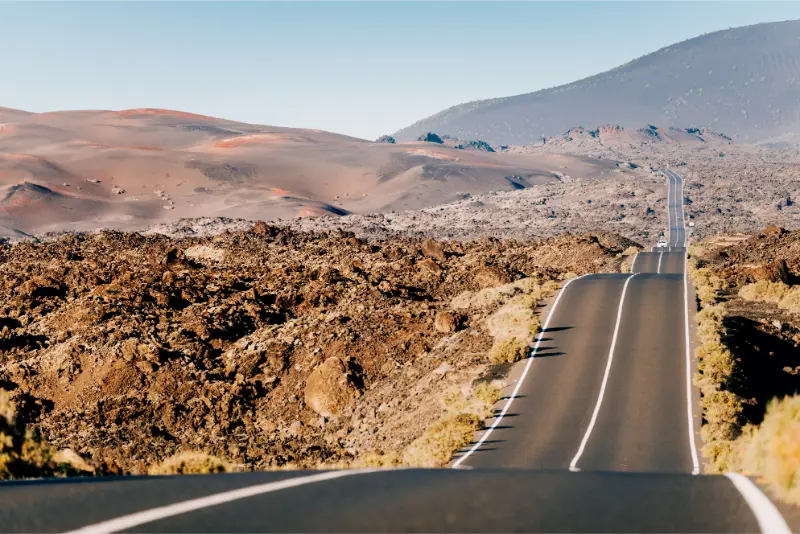
La Geria pairs naturally with Timanfaya National Park because both landscapes were shaped by volcanic activity, but they should not be rushed together. Timanfaya has timed-entry logistics that can dominate the schedule, while a winery tour may also have a fixed start. Put only one fixed booking in each half of the day and leave time for the road between them. If your Timanfaya slot is early, lunch and La Geria in the afternoon often create a comfortable sequence.
Walking and cycling
La Geria is not only a driving route. Trails and cycling routes cross parts of the protected landscape, but sun exposure, wind and volcanic surfaces matter. Cyclists share roads with tourist traffic, and walkers must stay on appropriate routes rather than cutting through cultivated plots. A vineyard is agricultural land, not open-access scenery. If you want a substantial hike, combine the wine landscape with our Lanzarote hiking guide and choose an established route.
What to buy
Buying a bottle directly from a winery is a useful way to support local production, but think about luggage rules before stocking up. Checked and hand-luggage alcohol restrictions depend on airline and security rules, and bottles are heavy. If you are continuing around Spain or Europe by air, ask whether the winery offers shipping rather than assuming you can carry a case home. Cheese, mojo and other food products may also have destination-specific import rules outside the EU.
Where to stay for a La Geria visit
Yaiza, Puerto del Carmen, Playa Blanca and Costa Teguise all work as bases depending on the rest of the holiday. Rural accommodation closer to the wine landscape can be atmospheric, but the trade-off is fewer restaurants within walking distance. If wine tasting is a priority, staying somewhere with easy taxi access is more useful than shaving ten minutes from the daytime drive. Compare areas in our where to stay in Lanzarote guide.
A practical way to plan the visit
Build the day around one clear priority rather than treating La Geria Lanzarote as a stop you can squeeze between distant attractions. Check the route the evening before, then check again in the morning for weather, road restrictions or temporary closures. Download an offline map, carry more water than you think you will need and keep a light layer in the car. If the place uses controlled access, a timed booking or public transport, save the confirmation and timetable offline. On the Canary Islands, short distances can still involve mountain roads, limited parking and sudden changes in wind or cloud.
If you are travelling with children or anyone with limited mobility, separate the destination’s headline image from the real access conditions. A viewpoint can involve steps, a “short walk” can cross loose volcanic ground, and a coastal stop can be exposed to strong Atlantic swell. The safest plan is the one that can be shortened without ruining the day. Keep one nearby alternative—village, café, sheltered promenade or museum—in mind so a closure does not turn into a long cross-island chase.
Common mistakes to avoid
The obvious mistake is mixing wine tasting and driving. Choose a designated driver or use a tour, taxi or transfer if everyone wants to drink. Do not stop in the carriageway for vineyard photographs or walk into cultivated plots. Another error is booking several winery tours back-to-back; they begin to feel repetitive and leave no time for the landscape. One thoughtful visit, one optional tasting and a proper meal usually create a more enjoyable wine day than a checklist of bodegas.
Where to stay
Choose accommodation for the wider holiday, not only for this single visit. On Lanzarote, the best base depends on whether you value beaches, restaurants within walking distance, hiking access or easier road connections. A property that looks close on a map can still involve steep roads or a long drive around a ravine. Compare exact map positions, parking arrangements and evening food options before booking. If you are moving between islands, avoid adding a hotel change simply to save a small amount of driving on one sightseeing day.
Responsible visiting
Natural and cultural sites in the Canary Islands are under pressure from high visitor numbers, social-media detours and repeated off-trail shortcuts. Stay on signed routes, do not move stones, do not build cairns for photographs and never leave food waste behind. At lived-in places, respect private doors, terraces and residents. At protected landscapes, barriers are part of conservation even when the ground beyond them looks harmless. The most useful rule is simple: leave the site visually and physically unchanged by your visit.
Use official information for the final operational decision. Opening hours, traffic controls, visitor-centre access, trail closures and bus timetables are more likely to change than the landscape itself. This guide is designed to help you understand why La Geria Lanzarote is worth visiting and how to fit it into a trip; the authority linked above should decide whether a road, path or facility is open on your exact date.
Frequently asked questions
Can you visit La Geria without booking?
You can drive through the landscape without a tour, but individual winery tours and tastings may require reservations. Check each winery directly.
Is La Geria only for wine drinkers?
No. The agricultural landscape is worth seeing even if you do not drink, and many visitors come for photography, geology and the contrast between vines and volcanic ash.
How many wineries should you visit?
One detailed winery visit and perhaps one shorter tasting is enough for most travellers. More can make the day repetitive and creates transport concerns.
Can I drive after a tasting?
The safest plan is a designated driver who does not drink, or a taxi/organised tour. Do not build a driving plan around estimating alcohol limits.
What should I combine with La Geria?
Timanfaya, Yaiza, Los Volcanes Natural Park and the south-west coast fit geographically, but avoid stacking several timed attractions in one day.
Final advice
La Geria is strongest when you look beyond the glass. The curved stone walls, volcanic ash and green vines tell a story of adaptation that is visible from the road. Taste selectively, travel responsibly and leave enough time to understand the landscape between wineries.
Best rule: plan the access carefully, then leave enough time to enjoy the landscape without rushing.