
Gran Canaria vs Lanzarote is not a question with one universal answer. The islands can share the same mild Atlantic setting and still produce very different holidays once you compare beaches, road distances, resort style, hiking, evening atmosphere and how much planning you want to do each day. The best choice is the island whose ordinary days match your travel style, not the one with the longest list of attractions.
Before deciding, open our Gran Canaria travel guide and Lanzarote travel guide. They give the full destination context behind this head-to-head comparison.
Quick verdict: Choose Gran Canaria for city life, mountain villages, varied resorts and strong public transport. Choose Lanzarote for a compact volcanic landscape, César Manrique, wine country and an easy self-drive week.
Gran Canaria vs Lanzarote: the short answer
| Question | Verdict |
|---|---|
| Beaches | Gran Canaria |
| Hiking & scenery | Gran Canaria |
| Towns & culture | Gran Canaria |
| Nightlife | Gran Canaria |
| Families | Gran Canaria |
| Couples | Tie — choose by style |
| Without a car | Gran Canaria |
| Road trips | Tie — choose by style |
| Quiet escape | Lanzarote |
| Water sports / sea activities | Lanzarote |
The table is a decision shortcut, not a quality ranking. A “win” means the island is usually easier for that particular travel style. A strong hiker can still love a beach-focused island, and a family can have a brilliant holiday on a quieter nature island if the children enjoy walking and road trips. Use the detailed sections below to see whether the apparent winner actually matches the way you travel.
Overall atmosphere and holiday style
Gran Canaria
a very complete island that combines a real city break in Las Palmas with major southern resorts, dunes, mountain villages and a compact but dramatic interior
Lanzarote
a compact, highly distinctive volcanic island where art, architecture and landscape are unusually integrated, making sightseeing easy to combine with resort time
Which is better? Gran Canaria suits travellers drawn to travellers who want city life plus beaches, families, food-focused visitors, people who prefer strong public transport and anyone who wants mountain scenery without sacrificing resort choice. Lanzarote suits travellers drawn to couples, design and landscape lovers, first-time road trippers, travellers who want distinctive sightseeing and people who prefer a compact island over a huge resort-and-city menu. The deciding question is whether you want a broader menu of activities or a more focused island identity.
Beaches and swimming
Gran Canaria
Las Canteras is one of the archipelago’s strongest urban beaches, while Maspalomas, Playa del Inglés, Amadores and the south-west resort bays offer very different holiday routines.
Lanzarote
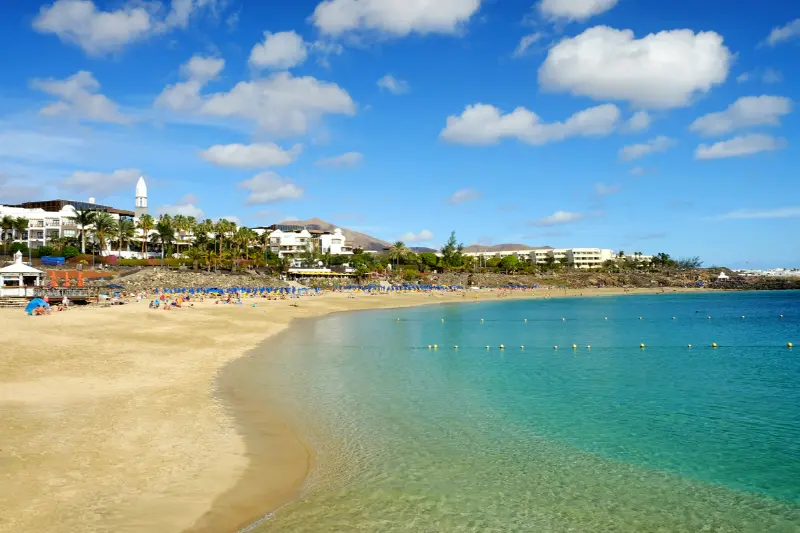
Papagayo provides sheltered coves, Famara brings a huge surf beach and dramatic cliffs, while Playa Blanca, Puerto del Carmen and Costa Teguise offer practical resort beaches.
Which is better? Gran Canaria has the edge for a beach-first trip. Check wind, swell and local flags on the day rather than assuming a sunny forecast means every beach is safe for swimming.
Landscapes, hiking and viewpoints
Gran Canaria
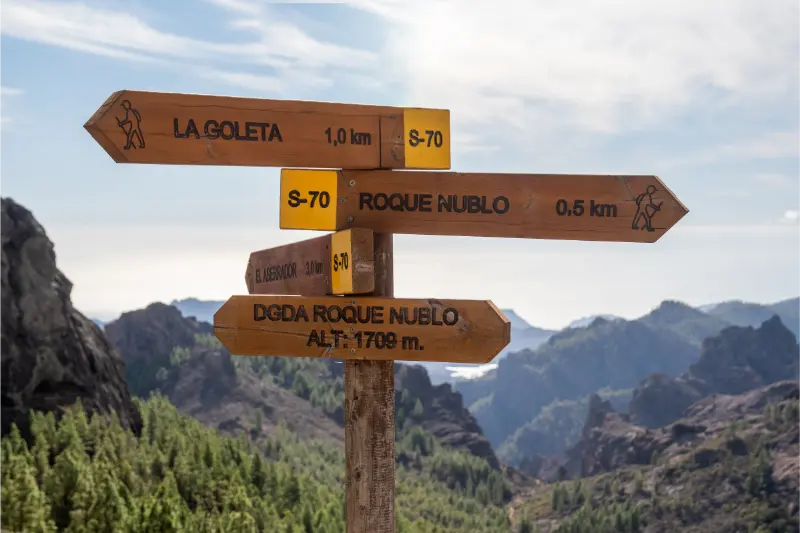
The central mountains around Tejeda, Artenara and Roque Nublo create a surprisingly rugged interior. The transition from dry south to greener north makes short road trips feel varied.
Lanzarote
Timanfaya, La Geria and the north’s lava formations give Lanzarote an immediately recognisable volcanic identity. The scenery is open, dry and graphic rather than high and forested.
Which is better? Gran Canaria is the stronger choice if walking and landscapes will dominate the itinerary. Difficulty, altitude, wind and road access matter more than the number of trails listed on a map.
Towns, culture and food
Gran Canaria
Las Palmas is the strongest city-break base in the islands, with Vegueta, Triana, museums, markets and Las Canteras. Arucas, Teror and Agaete add smaller-town character.
Lanzarote
Teguise has historic character, Arrecife offers local city life and César Manrique sites add cultural depth that feels inseparable from the landscape.
Which is better? Gran Canaria offers the broader town-and-culture component. Food is strongest when you leave the hotel zone for at least a few meals and use markets, old towns or village restaurants as part of the route.
Resorts, nightlife and evenings
Gran Canaria
Very broad: Las Palmas has year-round city nightlife, while Playa del Inglés and the southern resort belt offer a more classic holiday scene. Meloneras is calmer and more polished.
Lanzarote
Puerto del Carmen has the broadest evening scene; Playa Blanca is more relaxed and Costa Teguise sits between the two. Overall nightlife is easier to avoid than on Tenerife or Gran Canaria.
Which is better? Gran Canaria is easier if nightlife and a wide choice of evening venues matter. If you prefer quiet evenings, the “weaker” nightlife island may actually be the better fit.
Which is better for families?
Gran Canaria
Excellent for families thanks to beach choice, resort infrastructure, water attractions, walkable promenades and the ability to combine city and mountain days.
Lanzarote
Strong for families who like easy road trips, beaches and attractions without very long driving days. Wind exposure and beach conditions still vary by coast.
Which is better? Gran Canaria is generally simpler for a mainstream family holiday. With toddlers, minimise daily driving; with older children, hiking, snorkelling and road-trip variety become much more important.
Which is better for couples?
Gran Canaria
Very strong for couples who want restaurants and urban life as well as beaches. Puerto de Mogán, Meloneras, Agaete and the mountain villages offer quieter alternatives.
Lanzarote
Excellent for couples who value design, wine, scenic drives and a calmer evening rhythm. Boutique accommodation and Playa Blanca work well for slower trips.
Which is better? This is effectively a tie for couples, but the romantic style is different. Decide whether your ideal evening is a busy promenade with many restaurants or a quieter sunset, village meal and early start the next day.
Can you travel without a car?
Gran Canaria: Probably the easiest island in this group for a varied car-free holiday if you stay in Las Palmas or a major southern resort. Buses connect the main tourist zones well.
Lanzarote: A resort-only stay is easy without a car, but Lanzarote becomes much more rewarding with a rental car or organised tours because its highlights are distributed around the island.
Verdict: Gran Canaria is the easier option for a varied car-free holiday. A car-free trip is most successful when you choose the base around the activities you will repeat most often, then use organised excursions for the awkward days rather than trying to reproduce a rental-car itinerary by bus.
Road trips and driving
Gran Canaria: Excellent. The interior is compact enough for mountain loops, but roads are winding and a short map distance can take longer than expected.
Lanzarote: One of the easiest islands for road trips: distances are manageable and north, centre and south can be explored in logical day loops.
Verdict: both reward driving, but in different ways. The useful comparison is not kilometres on Google Maps but how many mountain roads, parking bottlenecks and backtracking days your plan creates. Build itineraries by geographic zones and keep one flexible day.
Weather, wind and microclimates
Gran Canaria: The south and south-west are usually sunnier and drier than the north and high interior. Cloud and cooler air in the mountains can coexist with beach weather below.
Lanzarote: Generally dry and sunny, with wind playing a major role in how warm a beach feels. Exposed Famara and the north can feel much cooler than sheltered southern coves.
No Canary Island offers identical weather in every town, and a single app icon is especially misleading on mountainous islands. For a beach-focused trip, compare the exact coast where you plan to stay. For hiking, check elevation, wind and trail status separately from the resort forecast. This matters more than small differences in island-wide monthly averages.
Accommodation and budget
Gran Canaria: Las Palmas can offer strong city-apartment value outside peak events, while the south ranges from budget complexes to high-end resorts. Car-free travellers can save by choosing the right base.
Lanzarote: Accommodation varies widely by resort. A car can be good value because it unlocks many attractions without multiple tours, but travellers staying mainly in one resort can avoid that cost.
Use our where to stay in Gran Canaria and where to stay in Lanzarote guides before comparing room rates. A cheaper property can become the more expensive holiday if it adds daily taxis, parking, long drives or meals in a zone with few alternatives.
Compare the total trip rather than the nightly rate: flight times, airport transfer, breakfast, self-catering potential, rental car, fuel, parking, activity transport and how often you will eat in the resort. Smaller islands may have fewer rooms and cars, so limited supply can matter more than headline hotel prices.
Signature experiences: what would you regret missing?
Gran Canaria: Las Canteras, Maspalomas dunes, Vegueta, Tejeda, Roque Nublo, Puerto de Mogán and the contrast between city life and mountain scenery.
Lanzarote: Timanfaya, La Geria, César Manrique architecture, Jameos del Agua, Cueva de los Verdes, Papagayo and the contrast between black lava and white villages.

This is often the best tie-breaker. Imagine you return home having skipped one island entirely. Which set of experiences would you regret missing more? A traveller who dreams about giant sandy beaches should not choose a mountain island because a hotel is slightly cheaper; a keen hiker should not trade the island’s best trail network for a bigger resort pool.
Which is better for a first Canary Islands trip?
Gran Canaria is the easier default for a first visit because it combines more of the classic requirements — straightforward bases, varied day trips, beaches and a broader choice of services. That does not make it “better” in absolute terms. If the other island’s signature experiences match your priorities more closely, choosing the more specialised island is often the more memorable decision.
How many days do you need?
Gran Canaria: Seven days work well; 9–10 days allow a slower split between Las Palmas, the mountains and the south without rushing.
Lanzarote: Five to seven days are enough for a strong first trip; a week allows sightseeing and beach time without turning every day into a driving day.
Do not confuse “possible” with “comfortable”. You can sample an island in three or four days, but every weather change or delayed flight then has a much bigger impact. If hiking, boat trips or mountain viewpoints are priorities, a spare day is valuable. For a seven-night holiday, choosing one island is usually more relaxing than splitting the trip unless the connection is particularly convenient.
Can you combine Gran Canaria and Lanzarote in one trip?
Yes, but a split stay should solve a real travel goal rather than simply add another hotel. The official tourism portal maintains an inter-island transport overview covering flights and ferries. Routes and timetables change, so verify the exact connection for your dates before booking non-refundable accommodation.
As a rule, split two islands only when you have enough nights to protect full days on each side. Add the real transfer cost: checkout, travel to the port or airport, waiting time, the crossing or flight, baggage handling, onward transfer and a second check-in. A one-hour flight can still consume half a day door to door.
Choose Gran Canaria if…
- You want a very complete island that combines a real city break in Las Palmas with major southern resorts, dunes, mountain villages and a compact but dramatic interior.
- Your priority matches this island’s strongest experiences: Las Canteras, Maspalomas dunes, Vegueta, Tejeda, Roque Nublo, Puerto de Mogán and the contrast between city life and mountain scenery..
- You are comfortable planning around this transport reality: Probably the easiest island in this group for a varied car-free holiday if you stay in Las Palmas or a major southern resort. Buses connect the main tourist zones well.
- You have enough time for the island at a comfortable pace: Seven days work well; 9–10 days allow a slower split between Las Palmas, the mountains and the south without rushing.
- You broadly fit the traveller profile it serves best: travellers who want city life plus beaches, families, food-focused visitors, people who prefer strong public transport and anyone who wants mountain scenery without sacrificing resort choice.
Choose Lanzarote if…
- You want a compact, highly distinctive volcanic island where art, architecture and landscape are unusually integrated, making sightseeing easy to combine with resort time.
- Your priority matches this island’s strongest experiences: Timanfaya, La Geria, César Manrique architecture, Jameos del Agua, Cueva de los Verdes, Papagayo and the contrast between black lava and white villages..
- You are comfortable planning around this transport reality: A resort-only stay is easy without a car, but Lanzarote becomes much more rewarding with a rental car or organised tours because its highlights are distributed around the island.
- You have enough time for the island at a comfortable pace: Five to seven days are enough for a strong first trip; a week allows sightseeing and beach time without turning every day into a driving day.
- You broadly fit the traveller profile it serves best: couples, design and landscape lovers, first-time road trippers, travellers who want distinctive sightseeing and people who prefer a compact island over a huge resort-and-city menu.
Frequently asked questions about Gran Canaria vs Lanzarote
Which is better for beaches, Gran Canaria or Lanzarote?
Gran Canaria has the stronger beach score for most travellers in this comparison. Las Canteras is one of the archipelago’s strongest urban beaches, while Maspalomas, Playa del Inglés, Amadores and the south-west resort bays offer very different holiday routines. Papagayo provides sheltered coves, Famara brings a huge surf beach and dramatic cliffs, while Playa Blanca, Puerto del Carmen and Costa Teguise offer practical resort beaches.
Which is better for hiking?
Gran Canaria is the stronger hiking choice overall. The right answer still depends on whether you prefer high volcanic terrain, forest, ravines, coastal walking or easier scenic routes.
Which is better without a rental car?
Gran Canaria is generally easier without a car. Choose a walkable base first, then check the exact bus routes to the activities you care about rather than assuming island-wide public transport coverage.
Which is better for a quiet holiday?
Lanzarote is the quieter default. Even on a busy island, a small town or rural base can completely change the trip, so compare neighbourhoods as carefully as islands.
Which is better for a one-week trip?
Both can work in a week. Gran Canaria is best approached with this pace: Seven days work well; 9–10 days allow a slower split between Las Palmas, the mountains and the south without rushing. Lanzarote works best with this pace: Five to seven days are enough for a strong first trip; a week allows sightseeing and beach time without turning every day into a driving day. If you only have seven nights, one well-chosen island usually produces a better holiday than two rushed islands.
Final verdict
Gran Canaria vs Lanzarote comes down to holiday style. Choose Gran Canaria for city life, mountain villages, varied resorts and strong public transport. Choose Lanzarote for a compact volcanic landscape, César Manrique, wine country and an easy self-drive week. If your priorities are still evenly split, choose from the ordinary routine you want: the beach you will walk to most mornings, the kind of evening you enjoy, how much driving you tolerate and the one or two experiences you would be disappointed to miss. That produces a more reliable decision than trying to crown one Canary Island as universally better.
The Booking.com buttons are affiliate links. If you book after following one, WelcomeToCanaries may receive a commission at no extra cost to you.