
Gran Canaria compresses an exceptional range of coast into one island, from one of Europe’s great urban beaches to resort coves, dune-backed sand, surf towns and remote western shores. A beach holiday on Gran Canaria is more rewarding when you choose beaches by mood rather than by fame alone. The island mixes easy resort shores with local town beaches, surf coast, volcanic coves and stretches where the landscape matters as much as the swim. This guide focuses on the beaches that are genuinely useful when planning a trip: where the water is usually gentler, where parking can become the limiting factor, which places suit families, and which beaches deserve a stop even if you are not spending the whole day on the sand.
Conditions on Atlantic beaches can change quickly. Wind, swell, currents and seasonal lifeguard coverage matter more than a beach’s appearance in photographs. Treat flags and local instructions seriously, especially on exposed coasts. For the broader island picture, start with Gran Canaria travel guide; if you are driving between several beaches, our Gran Canaria road trip helps turn the coast into a realistic route rather than a collection of pins.
How to choose the right beach in Gran Canaria
The most useful question is not “which is the prettiest beach?” but “which beach fits today?” A family with a pushchair needs easy access, services and predictable entry to the water. A surfer wants exposure and swell. A couple may value a long sunset walk more than a row of facilities. Travellers on a road trip often need parking and a beach that works for two or three hours without turning the entire day into logistics. Families should prioritise Las Canteras, Amadores, Puerto Rico, Playa de Mogán and serviced sections of the southern resort coast, always checking flags on the day.
The motorway makes north-south travel easier than the mountainous interior suggests, but the west coast and highland roads are slow. Do not judge drive times from distance alone. On busy holiday weeks, arriving before late morning can change the experience completely. It also gives you a better chance of finding legal parking and choosing a safe position on the beach. Never leave valuables visible in a rental car, and avoid stopping on unprotected road shoulders simply because a beach looks close on the map.
The best beaches in Gran Canaria
1. Las Canteras
Las Canteras is the beach that makes Las Palmas unusual as a city break. The long promenade, restaurants and urban services mean you can swim in the morning, explore Vegueta later and return for sunset without touching a car. Sections protected by the natural reef are calmer, while other areas attract surfers. It is one of the strongest choices for a car-free holiday.
2. Maspalomas
Maspalomas is as much landscape as beach. The sand stretches beside the famous dune system and toward the lighthouse, creating long walks and huge open views. The sea can be more energetic than sheltered resort coves, so choose swimming spots according to flags and conditions. Early morning and late afternoon are especially pleasant in the dunes.
3. Playa del Inglés
Playa del Inglés connects naturally with Maspalomas but has a more resort-oriented feel, with easy access to accommodation, restaurants and nightlife. It is ideal if you want to walk from hotel to sand and still have plenty to do after dark. Wind and waves vary along the long shoreline, so families should choose the calmer supervised sections.
4. Amadores
Amadores is one of the easiest family beaches in the south-west. Its curved bay, pale sand and services create a highly managed beach day with restaurants immediately behind the waterfront. It can become busy, especially at peak times, but that popularity reflects how straightforward it is for families and less confident swimmers when conditions are calm.
5. Puerto Rico Beach
Puerto Rico’s beach is smaller and more enclosed than the big open beaches, with a resort and marina directly around it. This is not a wilderness experience, but it is practical with children and for travellers staying nearby. It works well when the priority is convenience, boat trips and short walking distances.
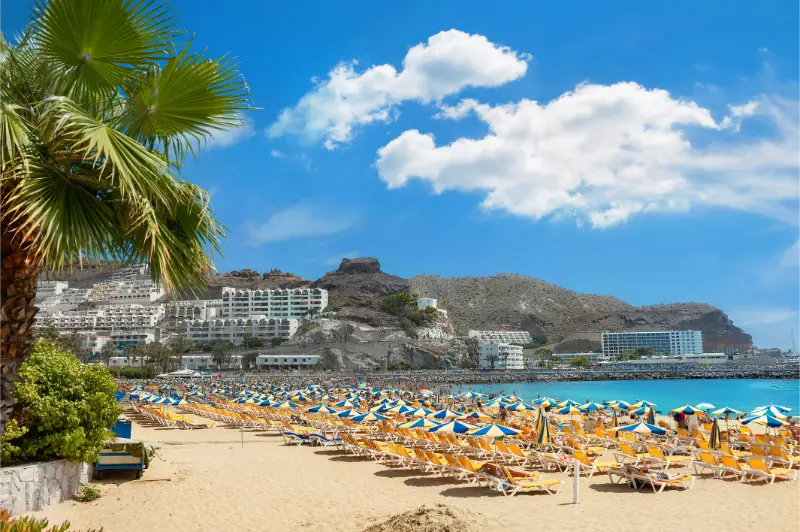
6. Playa de Mogán
The compact beach at Puerto de Mogán pairs perfectly with the marina and pedestrian lanes of the resort. It is a good half-day choice rather than a place that demands a long beach expedition. Families appreciate the easy services, while couples can combine a swim with lunch and a slow walk around the harbour.
7. Anfi del Mar
Anfi del Mar is known for pale imported sand and calm-looking turquoise water in a developed resort setting. It is a visually striking and very convenient beach, but parking and access can be less simple than the shoreline suggests. It suits travellers looking for a polished beach day rather than a natural landscape.
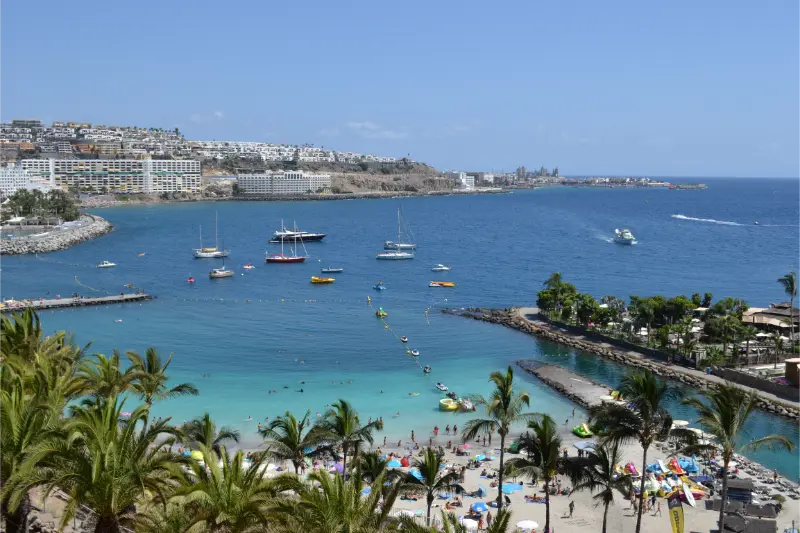
8. San Agustín
San Agustín offers a quieter alternative to Playa del Inglés while keeping the convenience of the south coast. The dark sand and established promenade make it popular with repeat visitors who want restaurants and services without the busiest nightlife. It is a practical base beach for couples and families.
9. Meloneras
Meloneras has a sophisticated promenade and a beach that works well with an evening meal around the lighthouse area. The appeal is as much the setting and walkability as the sand itself. It is a good option for travellers staying in the western end of the southern resort zone.
10. El Confital
Just beyond Las Canteras, El Confital feels remarkably wild for a beach beside a capital city. The coast is rocky and exposed, and surfers value its waves. This is more a place for walking, views and experienced water users than a default family-swimming beach.
11. Sardina del Norte
On the north-west coast, Sardina del Norte combines a small beach, harbour atmosphere and good underwater visibility on suitable days. It provides a local contrast to the southern resorts and works well as part of an Agaete or Gáldar road trip.
12. Agaete and Las Nieves waterfront
Puerto de las Nieves is not about a huge sandy beach; it is about swimming areas, volcanic coast, seafood lunches and the dramatic cliffs of the north-west. It is one of the best places to build a full coastal day around food and scenery rather than sunbathing alone.
13. Tufia
Tufia is a tiny east-coast cove below a compact settlement, valued for clear water and a local atmosphere. Space is limited and parking should be approached respectfully. It works best as a short stop for travellers who are already exploring the east rather than a mass-market beach day.
14. Güigüi
Güigüi represents the wild side of Gran Canaria. Reaching it traditionally involves a serious hike or boat access, and conditions make planning essential. This is not a casual flip-flop excursion. For prepared hikers, the isolation and cliffs are unforgettable; for most visitors, admiring the west coast from easier viewpoints is the safer choice.
15. Melenara
Melenara on the east coast has a broad local feel, a promenade and places to eat, making it useful for travellers who want to see a side of Gran Canaria beyond the classic resort circuit. It is easy to combine with Telde or an airport-day itinerary.
Best beaches for families
Families should prioritise Las Canteras, Amadores, Puerto Rico, Playa de Mogán and serviced sections of the southern resort coast, always checking flags on the day. Families should still assess the sea on the day rather than assuming a beach labelled “family-friendly” is automatically calm. Choose serviced beaches when you want lifeguards, toilets, food nearby and easy exits from the water. A short walk back to the accommodation is often more valuable with children than driving to the island’s most photogenic cove.
Best beaches for wild scenery and quieter days
For wilder scenery, El Confital and the north-west coast are easy to sample; Güigüi is a serious outing that requires proper planning rather than an improvised beach stop. Remote beaches are where preparation matters most: carry water, sun protection and footwear, and check whether the access road is suitable for your rental agreement. On beaches without lifeguards, be conservative about swimming. A beautiful Atlantic shoreline can remain worthwhile even when the safest choice is to enjoy it from land.
Where to stay for a beach-focused Gran Canaria holiday
Las Palmas is unbeatable if you want an urban beach and no car. Maspalomas, Meloneras and Playa del Inglés offer the widest resort choice in the south. Puerto Rico and Amadores are excellent for easy family beach days, while Puerto de Mogán suits travellers who prefer a smaller, attractive marina base. See where to stay in Gran Canaria for a full comparison.

A practical beach-day strategy
Pack lighter than you think, but never omit sun protection and water. A compact layer is useful if wind picks up, and water shoes can be valuable on volcanic or pebble entries. If you are combining a beach with a town, hike or attraction, put the time-sensitive activity first and leave the beach flexible. That way a delayed lunch or parking search does not make you miss a reservation.
Avoid trying to visit four or five beaches in one day simply to say you have seen them. Two contrasting beaches usually make a better day: for example, a sheltered morning swim followed by a sunset on an exposed west-facing coast. You will remember the light, the water and the atmosphere far more than the number of names checked off a list.
Swimming safety and ocean conditions
The Canary Islands are Atlantic islands, not a protected inland sea. Even on bright, windless days, swell and currents can be stronger than expected. Swim where other people are swimming, respect red flags, and keep children within immediate reach. If local swimmers stay out of the water, treat that as useful information. Natural pools can also become dangerous when waves break over their outer walls; never assume a pool is safe simply because it is separated from the open ocean.
How many beach days do you need in Gran Canaria?
For a first trip, three or four beach sessions are enough to understand the variety of Gran Canaria without sacrificing the interior. Mix a resort beach, a local or urban beach and one scenic or wild shore. If beaches are the main reason for travelling, choose one base with several options nearby and rent a car only for selected exploration days. This usually feels more relaxing than changing accommodation every two nights.
Best approach: choose your Gran Canaria beach according to wind, swell, driving time and the people you are travelling with. The “best” beach can change from one day to the next.