
Best Viewpoints in Fuerteventura is not just a list of photo stops. Fuerteventura is often described through its beaches, but its viewpoints reveal a much bigger island. The interior is sculpted by rounded volcanic mountains, dry valleys and historic villages, while the west coast feels raw and exposed. Scenic stops help connect these landscapes and make a road trip far more rewarding than simply moving between resorts.
If you are planning a wider trip, start with our Fuerteventura travel guide and then use this page to build one or two scenic days rather than trying to collect every viewpoint in a single drive.
Quick advice: the best viewpoint is the one you can reach safely in good visibility. Mountain cloud, strong wind, road closures and limited parking can change the plan, so keep the route flexible.
Best viewpoints in Fuerteventura: quick comparison
| Viewpoint or area | Best for | Planning note |
|---|---|---|
| Mirador Morro Velosa area | Central mountains | Easy to combine with a wider route; allow extra time for weather and parking. |
| Guise and Ayose viewpoint | Betancuria road | Best treated as a scenic stop rather than a rushed photo break. |
| Las Peñitas and Vega de Río Palmas approaches | Central-west | Easy to combine with a wider route; allow extra time for weather and parking. |
| Mirador del Salmo | Jandía | Best treated as a scenic stop rather than a rushed photo break. |
| Cofete viewpoints | Jandía west coast | Easy to combine with a wider route; allow extra time for weather and parking. |
| Corralejo dunes viewpoints | North-east | Best treated as a scenic stop rather than a rushed photo break. |
| Calderón Hondo area | North | Easy to combine with a wider route; allow extra time for weather and parking. |
| Ajuy and west-coast cliffs | West | Best treated as a scenic stop rather than a rushed photo break. |
The viewpoints worth planning around
Mirador Morro Velosa area
Best for: Central mountains. The central highlands above Betancuria offer some of the island’s broadest inland views. Even when specific facilities are closed, nearby official viewpoints and roads reveal the island’s ochre ridges and open valleys.
Give yourself enough time to look in more than one direction. The most rewarding stops are often not about a single postcard angle but about seeing how coast, ravines, villages and volcanic terrain connect. If the car park is full, continue to the next legal stopping point rather than improvising on a bend or blocking access.
Guise and Ayose viewpoint
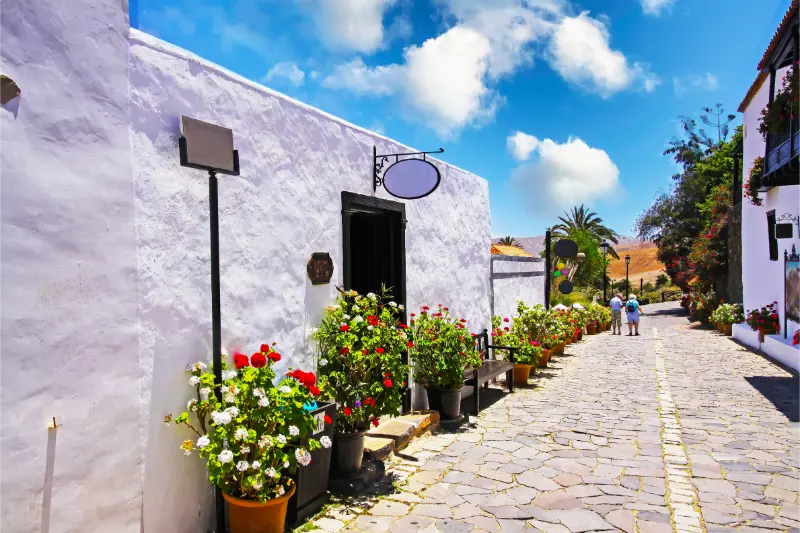
Best for: Betancuria road. A popular mountain-road stop with statues and wide views over the old island capital area. It is easy to combine with Betancuria, but parking can be busy at peak times.
Give yourself enough time to look in more than one direction. The most rewarding stops are often not about a single postcard angle but about seeing how coast, ravines, villages and volcanic terrain connect. If the car park is full, continue to the next legal stopping point rather than improvising on a bend or blocking access.
Las Peñitas and Vega de Río Palmas approaches
Best for: Central-west. The valley scenery here is more intimate, with palms, ravines and rock formations. It works well for travellers who prefer landscape detail to huge coastal panoramas.
Give yourself enough time to look in more than one direction. The most rewarding stops are often not about a single postcard angle but about seeing how coast, ravines, villages and volcanic terrain connect. If the car park is full, continue to the next legal stopping point rather than improvising on a bend or blocking access.
Mirador del Salmo
Best for: Jandía. A high viewpoint associated with the road toward Cofete, offering a sense of the scale and isolation of the Jandía peninsula. Conditions can be windy and the surrounding routes require careful driving.
Give yourself enough time to look in more than one direction. The most rewarding stops are often not about a single postcard angle but about seeing how coast, ravines, villages and volcanic terrain connect. If the car park is full, continue to the next legal stopping point rather than improvising on a bend or blocking access.
Cofete viewpoints
Best for: Jandía west coast. The descent toward Cofete is one of Fuerteventura’s most dramatic landscape experiences. The beach and mountain wall look enormous from above, but road surfaces and weather should be considered before setting out.
Give yourself enough time to look in more than one direction. The most rewarding stops are often not about a single postcard angle but about seeing how coast, ravines, villages and volcanic terrain connect. If the car park is full, continue to the next legal stopping point rather than improvising on a bend or blocking access.
Corralejo dunes viewpoints
Best for: North-east. The FV-1A corridor through the dunes gives broad views across sand, ocean and the silhouettes of Lobos and Lanzarote. Use official stopping areas and avoid damaging dune vegetation.
Give yourself enough time to look in more than one direction. The most rewarding stops are often not about a single postcard angle but about seeing how coast, ravines, villages and volcanic terrain connect. If the car park is full, continue to the next legal stopping point rather than improvising on a bend or blocking access.
Calderón Hondo area
Best for: North. The volcanic cone near Lajares is better treated as a short hike than a drive-up viewpoint. It rewards walkers with a broad perspective over northern Fuerteventura.
Give yourself enough time to look in more than one direction. The most rewarding stops are often not about a single postcard angle but about seeing how coast, ravines, villages and volcanic terrain connect. If the car park is full, continue to the next legal stopping point rather than improvising on a bend or blocking access.
Ajuy and west-coast cliffs
Best for: West. Low coastal viewpoints around Ajuy reveal caves, cliffs and Atlantic power. The landscape is compelling, but waves and slippery surfaces deserve respect.
Give yourself enough time to look in more than one direction. The most rewarding stops are often not about a single postcard angle but about seeing how coast, ravines, villages and volcanic terrain connect. If the car park is full, continue to the next legal stopping point rather than improvising on a bend or blocking access.
How to plan a scenic driving day
A strong central day links Antigua or the east coast with Betancuria, mountain viewpoints, Vega de Río Palmas and Ajuy. Keep Cofete for a separate day because the Jandía route is slower and more weather-dependent than ordinary resort driving.
Do not judge driving time from distance alone. Island roads can include hairpins, steep gradients, cyclists, fog and slow local traffic. Add generous margins, especially if you want to stop for lunch or walk short trails. A route with four well-chosen viewpoints is usually better than one with ten rushed stops.
Best time of day for viewpoints
Morning often gives cleaner visibility, lighter traffic and more comfortable temperatures. Late afternoon can produce warmer light and stronger texture on cliffs and volcanic slopes. Midday is not automatically bad: high sun can make the sea intensely blue and is useful when valleys are still in shadow earlier in the day.
For sunset, choose a viewpoint where you already understand the parking and return route. Do not arrive at an unfamiliar mountain road at the last minute, and carry a light layer because high elevations can feel much cooler than the resort coast.
Weather and visibility
The Canary Islands have strong local microclimates. A cloudy coast does not always mean a cloudy summit, and a clear resort morning does not guarantee visibility in the mountains. Wind can also be the decisive factor at exposed balconies. Check official weather information and road conditions before leaving, then be willing to swap days.
Photography without turning the day into a photo hunt
- Clean the phone or camera lens before high-contrast landscape shots.
- Use people, walls or vegetation for scale instead of photographing only empty horizons.
- Avoid climbing barriers or stepping onto unstable volcanic ground for a different angle.
- Take one wide image, one medium composition and one detail at each major stop.
- Respect other visitors: do not occupy the main railing for long periods.
- If using a drone, check current Spanish aviation and protected-area rules rather than assuming scenic open space means flying is permitted.
Viewpoint safety
Railings, barriers and marked paths are there for a reason. Atlantic wind can arrive in strong gusts, cliff edges can be unstable and volcanic surfaces can be sharp. Children need close supervision, and loose hats or lightweight objects can disappear quickly at exposed stops.
For mountain routes, carry water, a warm layer, sun protection and footwear with grip even if you do not plan a real hike. If a road or trail is closed, treat the closure as part of the day’s conditions rather than something to work around.
Where to stay for a scenic-road trip
A resort can be perfect for beach days but inefficient for repeated mountain drives. If landscapes are a priority, compare the location of your accommodation with the roads you actually plan to use. Staying centrally for part of the trip can reduce backtracking, while a coastal base is usually better if viewpoints are only one or two days of a longer holiday.

Frequently asked questions
Do I need a car to see the best viewpoints in Fuerteventura?
A car gives the most flexibility, but some viewpoints are reachable by public transport, organised tours or walks. The practical choice depends on your base and whether you are comfortable with mountain roads.
Are viewpoints free?
Many public viewpoints are free, while some formal attractions or visitor centres may charge admission. Facilities and access arrangements can change, so check official information for any stop that is central to your day.
Can I visit viewpoints with children?
Yes, but choose stops with secure parking, clear barriers and short walking distances. Avoid exposed cliff locations in strong wind and keep children close around roads and edges.
What if the mountains are cloudy?
Move the scenic day if you can. If not, choose lower coastal viewpoints, historic towns or another part of the island where conditions are clearer. Cloud can sometimes create excellent atmosphere, but dense fog is not worth forcing.
Final advice
The best viewpoints in Fuerteventura work when they are part of the journey rather than boxes to tick. Choose a coherent route, stop legally, respect the landscape and leave enough time for the unplanned places that catch your eye.
Best rule: build a scenic day around three or four major stops and let the island fill in the spaces between them.