
The best hiking base in Gran Canaria depends on the trails you actually want to walk. Staying in the most famous resort can add hours of driving across a week, while staying in a tiny mountain village can leave you with limited food and no useful backup when cloud, wind or a closure changes the plan. The ideal base balances trail access with the practical things you still need after a long day outside.
Gran Canaria’s central mountains are far more dramatic than many beach-focused visitors expect. Ravines, pine forest, high viewpoints and old caminos make it one of the best hiking islands, with huge contrasts between the dry south and greener north. This guide compares the best places to stay for hikers, the advantages of splitting your trip between two bases, transport, weather, food logistics and how to build a flexible week. For a wider overview, use our hiking in Gran Canaria guide and where to stay in Gran Canaria guide.
Quick answer: best hiking bases in Gran Canaria
| Base | Why hikers choose it | Best for |
|---|---|---|
| Tejeda | The classic mountain hiking base | All-round hiking week |
| Agaete | Excellent for north-west hiking, Tamadaba access and combining mountain days with the coast | Specific landscape zone |
| Las Palmas de Gran Canaria | Best for hikers who want city comfort and occasional trail days rather than a pure walking holiday | Quiet specialist base |
| San Mateo / central-north villages | A smart compromise for travellers who want local atmosphere and quicker access to inland paths without staying in the smallest mountain villages | Hiking plus resort comfort |
If hiking is the main purpose of the holiday, choose location before hotel amenities. A simple guesthouse 20 minutes from the trail zone can be more valuable than a luxury resort that forces a 90-minute mountain drive before breakfast. Conversely, if you only plan two hikes, a comfortable coastal base may be the smarter choice.
Best hiking bases in detail
Tejeda
The classic mountain hiking base. Staying in the centre of the island cuts early-morning driving and places you close to dramatic ridges, viewpoints and routes around the central highlands. The trade-off is fewer restaurants and less evening variety.
The key question before choosing Tejeda is how many of your planned routes sit in the same geographic sector. If at least three major days start nearby, the base saves meaningful time. If not, use it for two or three nights rather than forcing the whole holiday into one location.
Agaete
Excellent for north-west hiking, Tamadaba access and combining mountain days with the coast. It also gives you a different climate and atmosphere from the southern resorts.
The key question before choosing Agaete is how many of your planned routes sit in the same geographic sector. If at least three major days start nearby, the base saves meaningful time. If not, use it for two or three nights rather than forcing the whole holiday into one location.
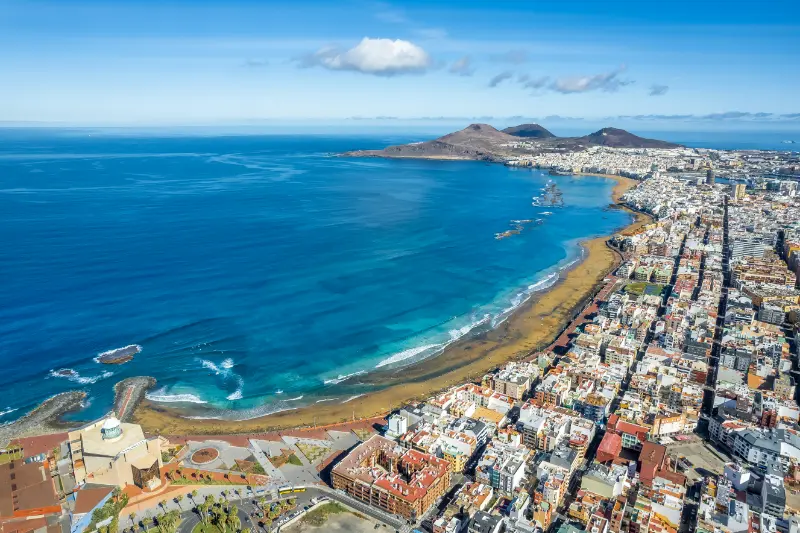
Las Palmas de Gran Canaria
Best for hikers who want city comfort and occasional trail days rather than a pure walking holiday. You can reach some trail areas by public transport or organised transfer, but a car is much more useful for sunrise starts and remote trailheads.
The key question before choosing Las Palmas de Gran Canaria is how many of your planned routes sit in the same geographic sector. If at least three major days start nearby, the base saves meaningful time. If not, use it for two or three nights rather than forcing the whole holiday into one location.
San Mateo / central-north villages
A smart compromise for travellers who want local atmosphere and quicker access to inland paths without staying in the smallest mountain villages. It works particularly well with a rental car.
The key question before choosing San Mateo / central-north villages is how many of your planned routes sit in the same geographic sector. If at least three major days start nearby, the base saves meaningful time. If not, use it for two or three nights rather than forcing the whole holiday into one location.
One base or two?
For a dedicated hiking week, two bases can be ideal when they divide the island into natural zones. The aim is not to collect hotels but to remove repeated cross-island drives. A three-night / four-night split often works better than moving every second day. Keep the move itself light: hike in the morning only if the route is short, then transfer before dark.
Trail conditions and safety
Road access and parking near popular mountain areas can be regulated or crowded. Cloud and wind in the highlands can differ sharply from the coast, so keep a lower-level alternative for poor visibility.
- Check official trail status close to the walk, not only when you book the trip
- Download an offline map and carry a charged power bank
- Take more water than a city walk would require
- Use sun protection even in cool wind or cloud
- Carry a light insulating/wind layer for elevation changes
- Tell someone your route on remote days and turn around early if conditions deteriorate
Do not treat a GPX file as permission to walk. Routes can cross protected land, temporary closures, private access or terrain affected by rockfall and fire. Official notices override old blog posts and user-uploaded tracks.
Do you need a rental car for a hiking holiday?
A car is not mandatory for every hike, but it creates flexibility when the weather changes. Point-to-point routes are the exception: a second vehicle does not automatically solve them, so buses, taxis or dedicated hiking transfers can be useful. Before booking a car, compare where it can actually be parked at the trailheads you plan to use.
If you prefer public transport, check our Gran Canaria public transport guide. Build the trip around routes with workable return times instead of assuming that any town served by a bus is equally practical for hikers.
Best time of day to hike
Start early for exposed routes, but “early” does not mean blindly hiking in darkness. The best departure time balances heat, daylight, cloud patterns, parking and the length of the route. In winter, high ground can be much colder than the coast; in summer, open volcanic terrain can become punishing before midday. Always check sunrise/sunset and current weather for the route’s elevation.
What to pack for hiking in the Canary Islands
- Trail shoes or boots with real grip
- 1.5–2+ litres of water per person for longer exposed routes, adjusted for conditions
- High-SPF sunscreen, sunglasses and a hat
- Windproof layer and a warmer layer for high terrain
- Small first-aid kit and blister treatment
- Offline map, phone battery/power bank and emergency contact information
- Snacks with enough calories for delays
- Swimwear only if the route genuinely finishes near a safe swimming area—not as a substitute for proper hiking gear
Food and accommodation strategy
Hiking bases work best when breakfast and an early dinner are easy. Check whether the hotel serves breakfast early enough, whether the apartment has a kitchen and whether shops close before you return. In small villages, buy the next day’s water and food before evening rather than assuming a supermarket will still be open.
A washing machine or drying space can be more valuable than a spa on a week of hiking. Also look for secure space for poles, boots and wet jackets, plus parking that does not require a long uphill walk after the trail.
A practical 7-day hiking structure
- Day 1: arrive, short orientation walk and supplies
- Day 2: moderate signature hike close to base
- Day 3: longer mountain or volcanic route
- Day 4: recovery day—town, beach or short coastal walk
- Day 5: second major hike in a different landscape zone
- Day 6: weather-flex day for the route you most want to protect
- Day 7: short walk only, then easy departure logistics
The recovery day is intentional. It protects knees, reduces the temptation to hike in poor weather and gives you space to appreciate the island beyond trailheads. Strong walkers can replace it with an easy route, but keeping one low-commitment day makes the whole week more resilient.
Common hiking-planning mistakes
- Choosing accommodation before mapping the trailheads
- Underestimating road time because the island looks small
- Planning a high-elevation hike immediately after a late flight
- Using coastal weather to judge mountain conditions
- Leaving no spare day for wind, cloud or closure
- Attempting remote routes with inadequate water
- Following unofficial shortcuts across fragile or protected terrain
Frequently asked questions
What is the best area to stay in Gran Canaria for hiking?
For most dedicated walkers, Tejeda is the strongest all-round choice. The other bases become better when your itinerary is concentrated in their specific part of the island.
Should I change hotels during a one-week hiking trip?
Often yes, but only once. Two bases can reduce repeated driving and give you better weather flexibility; three or four bases usually create more packing than benefit.
Can beginners hike here?
Yes. The islands have everything from short viewpoint walks to demanding mountain routes. Choose by elevation gain, exposure, surface and navigation—not simply kilometres. A 7 km volcanic or ravine route can be harder than a 12 km promenade walk.
Is guided hiking worth it?
For exposed terrain, complex logistics, geology-focused walks or travellers without a car, a guide can add real value. For straightforward signed routes in good weather, independent walking is often practical if you have appropriate experience and equipment.
Final advice
Choose your hiking base in Gran Canaria by geography, not by hotel star rating. Put the routes you care about on a map, group them into two or three zones, then select accommodation that reduces repeated driving while still giving you food, rest and a realistic weather backup. A flexible plan with one spare day will usually deliver more great hikes than an ambitious fixed checklist.
The Booking.com button is an affiliate link. If you book after following it, WelcomeToCanaries may receive a commission at no extra cost to you.