
Fuerteventura in June is a strong choice if you want warm summer weather, long outdoor days and a mix of beaches and sightseeing without midsummer heat. June marks the start of summer in the Canary Islands, with long bright days, very low rainfall and increasingly reliable beach weather. It is an excellent month for travellers who want summer conditions before the busiest school-holiday weeks of July and August. The key is to choose the right base, understand the island’s microclimates and keep at least one weather-sensitive day flexible.
This guide uses the AEMET 1981–2010 climate normals for Fuerteventura Airport as a reference. Those figures describe long-term averages at one station, not a forecast for your holiday. Conditions elsewhere on Fuerteventura can be warmer, cooler, wetter or windier on the same day.
For the archipelago-wide picture, compare this island guide with our Canary Islands in June guide, then use this page for the island-specific microclimates, bases and itinerary.
Fuerteventura in June: quick answer
- Average temperature at the reference station: 22.5°C.
- Average daytime maximum: 25.8°C.
- Average night-time minimum: 19.1°C.
- Average monthly rainfall: 0 mm.
- Average sunshine: about 285 hours for the month.
- Best for: mixed beach days, sightseeing, road trips, walking and escaping colder mainland-European weather.
- Main trade-off: the coast can be pleasant while wind, cloud or altitude make another part of the island feel much cooler.
What is the weather like in Fuerteventura in June?
At Fuerteventura Airport, AEMET records a long-term June mean of 22.5°C, with an average daily maximum of 25.8°C and minimum of 19.1°C. Average rainfall is 0 mm and sunshine totals roughly 285 hours. These numbers are useful for packing and broad trip design, but they should never be read as a promise that every afternoon will be 25.8°C or that rain will be evenly distributed.
Fuerteventura’s biggest weather variable is often wind rather than rain. The island is dry, but exposed beaches can feel cool when the breeze strengthens. A sheltered bay may be comfortable for swimming while a nearby open coast is better for kitesurfing or walking. North-south driving distances also matter more than many first-time visitors expect.
Use a short-range forecast only a few days before each outing, and check the exact place rather than the island name. For a mountain hike, look at the mountain forecast; for a boat trip, look at wind and sea conditions; for a beach day, compare a few coasts. This simple habit is more useful than obsessing over one island-wide weather icon.
Can you swim in Fuerteventura in June?
Yes, many visitors swim in June, but comfort is personal. The Atlantic is cooler than a heated hotel pool and wind can make getting out of the water feel colder than the thermometer suggests. Choose a sheltered beach, swim during the warmest part of the day and pay attention to flags, waves and local warnings. Sunny weather does not automatically mean safe sea conditions.
If swimming is a major priority, accommodation with a genuinely heated pool is valuable in winter and early spring. Ask what “heated” means, because some properties warm only one pool or operate heating seasonally. Families with young children often get more use from a sheltered beach plus a heated pool than from a spectacular but exposed oceanfront location.
Best areas to stay in Fuerteventura in June
Base choice matters more than chasing a theoretical island-wide weather advantage. For Fuerteventura, a useful starting point is: Corralejo for dunes, restaurants, ferries and a livelier north; Caleta de Fuste for central positioning and an easy family base; Costa Calma for long southern beaches; Morro Jable for a more complete Jandía resort with access to the far south.
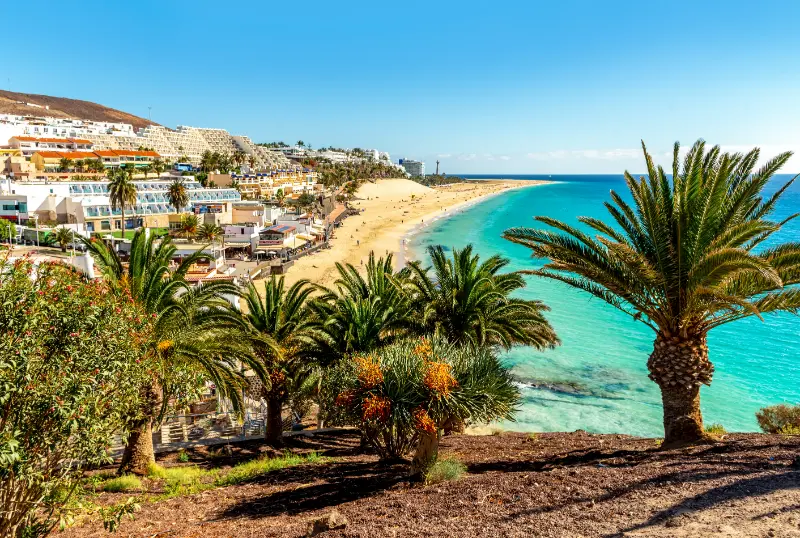
Read our where to stay in Fuerteventura guide before booking. In June, look beyond the room price: check exposure to wind, walking distance to restaurants, parking, pool heating, elevation and whether you will need to drive every evening.
Best things to do in Fuerteventura in June
June works best when you combine one or two weather-sensitive highlights with easier town, coast and food days. Our things to do in Fuerteventura guide has the broader list; these are particularly useful anchors for a June itinerary:
- Corralejo dunes and the north coast. Check the local forecast, access rules and driving time before fixing the day.
- Lobos Island, subject to current access rules. Check the local forecast, access rules and driving time before fixing the day.
- Betancuria and the inland viewpoints. Check the local forecast, access rules and driving time before fixing the day.
- Costa Calma and Sotavento. Check the local forecast, access rules and driving time before fixing the day.
- Morro Jable, Jandía and the southern beaches. Check the local forecast, access rules and driving time before fixing the day.
June events, crowds and booking strategy
The night of San Juan on 23 June and the feast day on 24 June are widely celebrated in Spain and the Canaries, often with bonfires, beach gatherings or local festivities where authorised. Programmes, restrictions and exact events vary by municipality, so check locally rather than assuming every beach hosts a celebration.
June on Fuerteventura is a strong month for beaches and water sports, with virtually no rain at the airport station. Wind is often the defining variable, so choose sheltered swimming bays for relaxed beach days and exposed coasts for wind sports.
June usually sits between spring value and peak-summer demand. The first half can feel relatively relaxed, while family travel and flight prices often rise as European school holidays begin. Book the best-value rooms early if your dates fall late in the month.
If your dates include a major event or holiday, book the scarce items first: accommodation in the right neighbourhood, inter-island transport if needed, a rental car when supply is tight and any activity with limited capacity. Ordinary beach days, restaurant lunches and scenic drives are better left flexible until you know the weather.
Hiking and outdoor activities in June
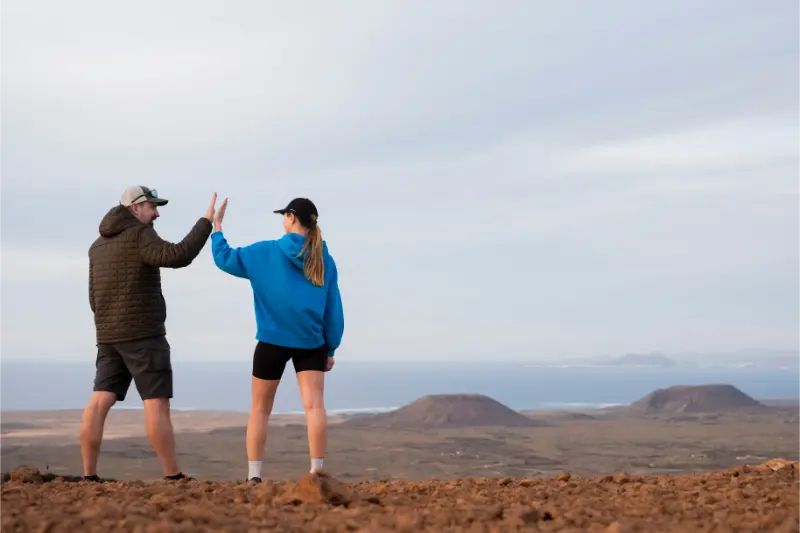
June can be excellent for walking because daytime temperatures are generally more comfortable than in midsummer. That does not make every trail automatically suitable. Check official trail status, road access, wind and rain before leaving, carry water and a charged phone, and turn around if visibility or footing deteriorates. Volcanic rock can become slippery after rain, while exposed ridges can feel much colder than the coast.
Start long hikes early enough to finish before dark and do not measure difficulty only in kilometres. Elevation gain, loose terrain, wind and driving time all matter. A shorter coastal walk can be the better choice on a marginal mountain day, and moving the main hike by 24 hours is often the smartest decision of the week.
Road trips and getting around Fuerteventura in June
A rental car gives maximum flexibility, especially if your priorities are viewpoints, rural villages, several beaches or quick changes between microclimates. But it is not essential for every traveller. Resort stays, city breaks and organised excursions can work well without a car. Compare the total cost of rental, fuel and parking with transfers and tours rather than assuming driving is automatically cheaper.
Plan road trips by time rather than distance. Island roads can be slow, winding and more tiring after sunset. Download offline maps, keep fuel margin, avoid stacking several long driving days back-to-back and always check current access arrangements for popular protected areas or viewpoints before setting off.
What to pack for Fuerteventura in June
Pack for summer coast days: swimwear, breathable clothes, high-SPF sunscreen, sunglasses and a hat. Keep a light windproof layer for exposed coasts and a warmer layer for high-altitude Tenerife or La Palma. Proper walking shoes still matter if hiking is part of the trip.
- Swimwear and a light beach layer.
- High-SPF sunscreen, sunglasses and a hat.
- A sweater or fleece for evenings and exposed viewpoints.
- A light windproof or waterproof outer layer.
- Comfortable walking shoes with good grip.
- Reusable water bottle, small daypack and power bank.
- Any warmer layer needed for altitude, stargazing or early starts.
A practical 7-day Fuerteventura itinerary for June
Treat this as a flexible framework, not a timetable. Move the mountain, boat and beach days after checking the short-range forecast:
- Day 1: Arrive and explore the nearest beach and promenade rather than crossing the island immediately.
- Day 2: Use a calmer day for Corralejo dunes, north-coast beaches or Lobos if you have the required booking.
- Day 3: Explore Betancuria and the central interior with viewpoint stops.
- Day 4: Keep a long, slow beach day for Costa Calma, Sotavento or Jandía.
- Day 5: Drive the opposite end of the island from your base, but avoid trying to see north and south in one rushed loop.
- Day 6: Use the day for a boat trip, water sport lesson or a sheltered beach according to wind.
- Day 7: Leave the final day flexible for weather, shopping or a favourite beach repeat.
The flexible final day is deliberate. It protects the trip from wind, cloud, rain or a cancelled excursion and gives you room to repeat the experience you enjoyed most. A summer itinerary is usually better with one movable day than with every hour pre-booked, especially when a mountain hike or boat trip is important.
Who should visit Fuerteventura in June?
- Good fit: travellers escaping colder weather who are happy with warm spring weather rather than peak-summer heat.
- Good fit: couples and independent travellers who want a mix of coast, food, towns and scenery.
- Good fit: walkers and active travellers who are happy to start active days early and manage stronger sun.
- Think twice: anyone who needs guaranteed hot beach weather every single day.
- Think twice: travellers who dislike wind, changing plans or carrying an extra layer.
Budget, restaurants and practical planning
The cheapest room is not always the cheapest holiday. A poorly located property can create daily taxi costs, parking fees and long drives. Compare the whole trip: flight times, airport transfer, breakfast or self-catering, rental car, parking and the cost of getting to the activities you actually want to do.
For restaurants, keep ordinary meals flexible but reserve special dinners in busy resort areas or during major event weekends. Self-catering travellers should check supermarket hours around holidays and buy breakfast supplies before an early hiking or driving day. A walkable base is particularly valuable if you want wine with dinner and do not want to drive every night.
Common mistakes to avoid
- Choosing accommodation from hotel photos without checking the exact neighbourhood, elevation and wind exposure.
- Using one weather-app icon to describe the entire island.
- Booking every outdoor day in advance with no alternative for cloud, rain or strong wind.
- Packing only beach clothes and being uncomfortable after sunset or at altitude.
- Underestimating mountain-road driving time, parking or changing access rules.
- Assuming a sunny sky means the sea is safe for swimming or boat trips.
Frequently asked questions about Fuerteventura in June
Is June a good month for Fuerteventura?
Yes for many travellers. June is particularly attractive if you want outdoor sightseeing, warm summer conditions and an active island escape. The trade-off is that conditions are more variable than midsummer, so choosing the right base and keeping one day flexible improves the trip.
Is Fuerteventura hot in June?
The AEMET reference station has an average daily maximum of 25.8°C in June. Sunny sheltered locations can feel warmer, while wind, cloud and elevation can feel noticeably cooler. Think “pleasantly warm coast” rather than guaranteed hot summer weather.
Does it rain a lot in Fuerteventura in June?
The reference-station normal is 0 mm for the month. Rainfall can be highly uneven across an island, particularly on mountainous Tenerife, Gran Canaria and La Palma. Check the exact area and short-range forecast rather than cancelling a day because of an island-wide rain symbol.
Do I need a car?
Not necessarily. A resort or city stay can work with buses, transfers and organised tours. A car is most valuable when you want remote viewpoints, rural villages, multiple beaches in one day or rapid changes of plan between different coasts.
Should I book everything in advance?
Book scarce accommodation, major events and limited-capacity activities early, but leave the sequencing of weather-sensitive days flexible. This gives you the benefits of advance planning without locking the trip to a mountain or sea day when conditions are poor.
Final verdict
Fuerteventura in June is a strong choice if you want a warm, active spring trip with more variety than a pure beach holiday. Use climate normals for packing, the short-range forecast for the exact day and the island’s microclimates to your advantage. Choose your base first, keep one day movable and combine coast, scenery, towns and food without treating every hour of the day as equally suitable for activity.
The Booking.com button is an affiliate link. If you book after following it, WelcomeToCanaries may receive a commission at no extra cost to you.