
Caleta de Fuste is one of Fuerteventura’s most convenient family bases. It lies close to the airport, has sheltered golden-sand swimming areas, a marina and a broad range of accommodation, and its central-east-coast position makes north and south road trips easier than from resorts at the island’s extremes.
The resort is best for families, first-time visitors, short stays and travellers who value convenience more than dramatic wild scenery outside the hotel. If your priority is huge natural beaches and a surf-town atmosphere, Corralejo or the Jandía peninsula may suit you better.
Why base yourself here
Caleta de Fuste works best when its location matches the kind of days you actually want. Instead of choosing a hotel only by star rating, look at the walk to the beach or centre, the evening atmosphere, parking, gradients and how often you expect to drive elsewhere on Fuerteventura. A slightly simpler property in the right neighbourhood often produces a better holiday than a more luxurious room in an inconvenient position.
For a first trip, combine this local guide with our Fuerteventura travel guide. It helps place Caleta de Fuste within the wider island and prevents a common mistake: booking one corner of Fuerteventura and then discovering that most of your planned activities are on the opposite side.
The main sheltered beach
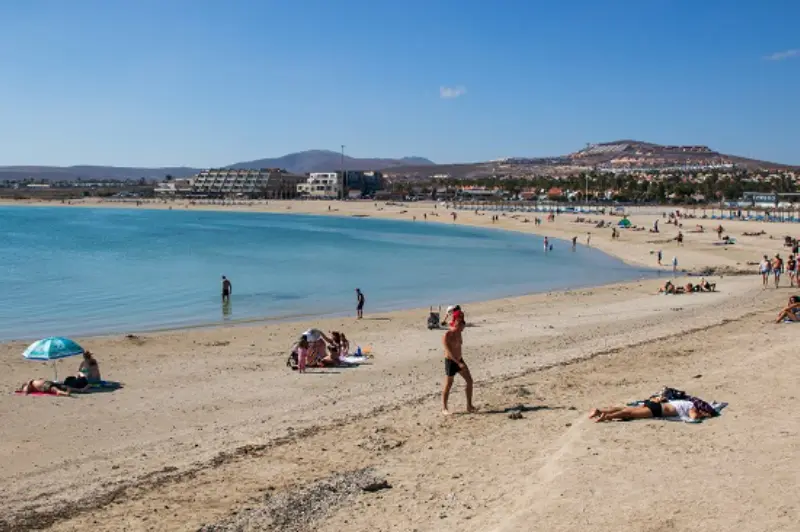
The original bay at Caleta de Fuste is protected and generally feels gentler than many exposed Fuerteventura beaches. Official island tourism information specifically highlights its golden sand and protection from strong waves and currents, which explains its popularity with families.
Even sheltered water should be treated as Atlantic water. Follow beach flags and lifeguard guidance, especially with children, and remember that wind can affect comfort even when the sea itself looks calm.
Marina activities
The marina adds diving and boat activities to a classic beach holiday. It also gives the seafront more variety than a resort built around one beach alone. If you want an excursion, compare trip length, group size and what is actually included rather than choosing by headline price.
Families should check age and swimming requirements before booking. A short glass-bottom or coastal outing may be more enjoyable with young children than an ambitious all-day sea trip.
Central location for road trips
Caleta de Fuste is roughly seven kilometres from the airport according to the official tourism site, so arrival days are simple. More importantly, the position near the middle of Fuerteventura makes Betancuria, the west coast, Corralejo and southern routes realistic on separate days.
Do not use the central position as an excuse to drive everywhere every day. Alternate road-trip days with local beach days so the holiday does not become a sequence of windscreen views.
Salinas del Carmen and local history
Just south of the resort, the Salinas del Carmen area adds a small cultural stop connected with the island’s salt-making history. It fits naturally into a short drive rather than requiring a dedicated day.
Pair it with a coastal drive or a relaxed lunch, especially on a day when strong wind makes a long beach session less appealing.
Where to stay in Caleta de Fuste
Accommodation in Caleta de Fuste should be chosen by micro-location rather than by resort name alone. Two hotels that appear to be in the same destination can offer very different experiences once walking gradients, beach access, road noise and parking are considered.
Before booking, open the map and trace the route you will use every day: breakfast, beach, evening restaurants and the nearest useful transport stop. Then read recent guest comments specifically for noise, parking and steep streets. Those practical details matter more over a week than a small difference in room size.
- Central Caleta: best for walking to beach, restaurants and marina.
- Newer resort areas: often larger hotels and family facilities, but check walking distances carefully.
- Golf-course side: useful for golfers and travellers who value space, though less atmospheric for evening walks.
Getting around and whether you need a car
A rental car adds a great deal of value in Fuerteventura. Buses can cover main towns, but the island’s best viewpoints and quieter beaches are much easier independently. Caleta de Fuste is a particularly convenient base for a car because the airport transfer is short and the main road network is close.
If you do rent a car, keep at least one or two local days when it stays parked. The Canaries reward road trips, but a holiday becomes tiring when every morning starts with navigation and every afternoon ends with a search for parking. On Fuerteventura, group sights geographically and leave room for stops you did not plan.
Best day trips from Caleta de Fuste
Betancuria and the central mountains make an excellent cultural-scenic day. Corralejo and the dunes deserve a northern outing, while Morro Jable and Jandía are better as a full southern day because Fuerteventura is longer than it appears on the map. If you want both extremes repeatedly, consider a split stay.
A useful rule is to make one major objective the anchor of each excursion, then add only nearby secondary stops. This protects the day when weather, queues or a long lunch changes the timing. It also gives you permission to stay longer when a beach, village or viewpoint turns out to be better than expected.

Food and evenings
Family resorts make easy meals simple, but do not spend a whole week inside international menus. Look for local goat cheese, fish, papas arrugadas and Majorero flavours. A lunch during a Betancuria or coastal road trip is also a good way to experience a less resort-oriented side of the island.
For restaurant choices, recent reviews are most useful when you read for patterns rather than scores. Look for repeated comments about fresh fish, service pace, noise and value. Reserve only the meals that genuinely matter to you; keeping other evenings flexible lets you return to a place you discover during the trip.
Best time to visit
The resort works year-round. Winter temperatures are mild, summer is warm and the island can be windy in any season. Fuerteventura’s openness means wind matters as much as air temperature when judging beach comfort. Keep a light layer in the car and choose sheltered coves on stronger days.
Do not rely on a single “Fuerteventura weather” icon. Elevation, orientation and trade winds create strong microclimates across the archipelago. Check the forecast for the exact coast or mountain area you plan to visit, and move your most weather-sensitive day when necessary.
A realistic three-day plan
Day 1: Stay local. Walk Caleta de Fuste, use the nearest beach or waterfront and learn where you actually want to eat. This sounds modest, but it prevents the common mistake of driving away immediately and never understanding the place you booked.
Day 2: Make the biggest nearby excursion your priority, starting early if parking or visitor numbers are likely to matter. Keep lunch in the same geographic area and add only one secondary stop on the return journey.
Day 3: Choose contrast. If the first two days were coastal, go inland; if they were active, make this a slower beach-and-food day. A good Canary Islands itinerary alternates effort and recovery rather than trying to maximise the number of pins visited.
Common planning mistakes to avoid
The first mistake is judging distance only in kilometres. Island roads can be fast and easy on the coast, then slow dramatically in mountains or old villages. Use realistic driving times and add a buffer for viewpoints, parking and roadworks.
The second is assuming every famous beach is suitable for swimming every day. Atlantic swell, wind and currents can change quickly. Follow flags and local advice, especially at wild beaches and natural pools.
The third is overbooking. Cable cars, protected trails, ferries and popular tours may deserve advance reservations, but a completely fixed week leaves no room to respond to weather. Book the scarce experiences and keep ordinary sightseeing flexible.
- Do not leave valuables visible in a parked car.
- Carry water, sun protection and a light layer even on apparently easy sightseeing days.
- Save important tickets and confirmations offline.
- Check official access information on the morning of hikes, ferry journeys and regulated attractions.
Useful official information
For current local information, beach services and destination updates, use the official Caleta de Fuste tourism page. Opening hours, ferry schedules, trail rules and event arrangements can change, so the official source should always take precedence over an older itinerary.
For broader trip planning, also see our Corralejo guide and Canary Islands with kids guide. Linking local guides with island-wide planning pages makes it much easier to decide where to stay and how many days to allocate.
Frequently asked questions
How many nights should you stay in Caleta de Fuste?
Three nights is enough to understand the area and make one substantial day trip. Five to seven nights works well when Caleta de Fuste is your main base. If your plans repeatedly take you to the opposite side of Fuerteventura, split the stay instead of spending hours on the road.
Is Caleta de Fuste good for a first visit to Fuerteventura?
Yes, provided its strengths match your travel style. The location offers a practical introduction to Fuerteventura, but no single base is perfect for every traveller. Compare beaches, nightlife, transport and the attractions you care about before booking.
Should you book tours before arrival?
Book experiences with limited capacity, fixed permits or a very specific date. For ordinary boat trips and general sightseeing, keeping some flexibility can help you choose the better-weather day. During school holidays and peak winter periods, popular excursions may still sell out.
Can you visit without renting a car?
Yes for a local stay, especially if you choose accommodation near the centre or beach. A car becomes much more valuable when you want to explore multiple parts of Fuerteventura independently.
Final planning advice
The best way to enjoy Caleta de Fuste is to use it as a base rather than a box to tick. Learn the local promenade, beach or historic centre first, then let the rest of Fuerteventura unfold in manageable day trips. This produces a holiday with both discovery and downtime instead of a schedule that feels like a driving challenge.
Keep one half-day unplanned. It can absorb bad weather, a delayed ferry or a closed trail, but it can also become the moment you return to your favourite beach, stay longer over lunch or follow a recommendation you hear locally. That flexibility is one of the simplest ways to make a Canary Islands trip feel personal.