
Playa Blanca is Lanzarote’s relaxed southern resort and one of the best bases for travellers who want beaches, easy evenings and quick access to Papagayo. It also has a ferry connection to Fuerteventura, a long seafront promenade and enough restaurants and accommodation to work for families, couples and longer winter stays.
The resort is spread along the coast rather than concentrated around a single beach. The old centre, Playa Dorada, Marina Rubicón and Las Coloradas each create a different daily rhythm, so choosing the right area can save a surprising amount of walking and taxis.
Why choose Playa Blanca
Playa Blanca is calmer than Puerto del Carmen and generally feels more spacious. It is particularly strong for families, couples and travellers who want an evening promenade without a heavy nightlife focus.
It is also well placed for southern Lanzarote: Papagayo, Los Hervideros, the salt pans, El Golfo and Timanfaya can all fit naturally into road-trip days from here.
The main beach areas
Playa Blanca town beach
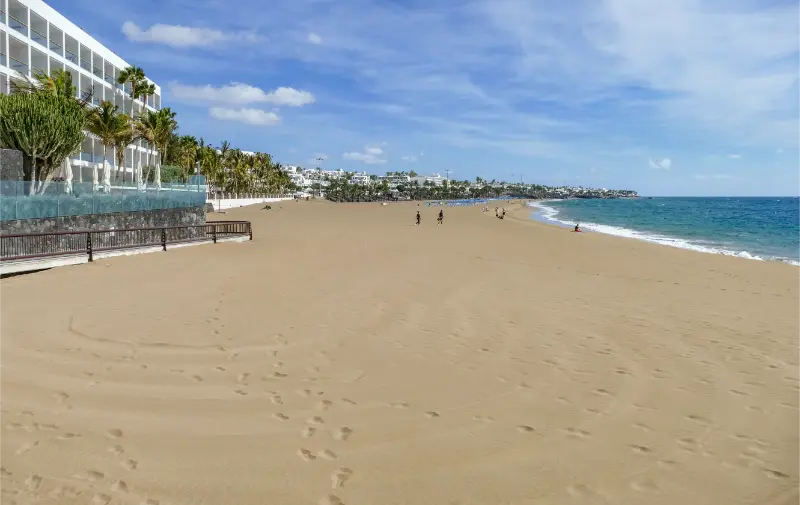
The small central beach is convenient for a quick swim and sits beside restaurants and the promenade. Official tourism information describes calm water and family-friendly conditions, although the beach itself is compact.

Playa Dorada
This is one of the easiest resort beaches for families, with a protected feel and services nearby. It also sits between the old centre and Marina Rubicón, making it useful if you want to walk rather than drive.
Playa Flamingo
On the western side of the resort, Playa Flamingo is another sheltered option with accommodation and restaurants close by. It can be a practical choice for families who want the beach almost outside the door.
Papagayo: the essential day trip
Papagayo is the reason many travellers choose the south of Lanzarote. Golden coves sit within a more natural landscape beyond Las Coloradas. Access conditions, road surfaces and any vehicle charge can change, so check current local information before driving.
The official Canary Islands tourism page lists Papagayo as a calm-water beach and notes parking and restaurant facilities in the wider area. See current Papagayo information and arrive with water, sun protection and everything you need for a less-developed beach day.
Marina Rubicón and evening walks
Marina Rubicón adds restaurants, shops and a polished waterfront to the resort. Even if you stay in the old town, walking or cycling the promenade toward the marina is one of the easiest evening activities.
The marina area suits couples who like modern restaurants and families who want pedestrian-friendly evenings. Accommodation here can be quieter than the most central streets while still feeling connected.
Ferry to Fuerteventura
Ferries from Playa Blanca connect with Corralejo, making Lanzarote and Fuerteventura a natural two-island trip. The crossing is short enough that day trips are possible, but a multi-night stay lets you experience Fuerteventura’s dunes and beaches without watching the clock.
If you are taking a rental car, confirm ferry permission with the rental company. Some contracts restrict moving vehicles between islands even when the ferry operator accepts cars.
Montaña Roja and local walking
The volcanic cone of Montaña Roja provides a short, exposed walk with wide views over the resort and coast. Go early or late in hot weather and wear proper shoes; loose volcanic ground can be slippery despite the route’s modest scale.
This is a useful half-day activity when you want something active without driving across the island. Combine it with a beach rather than trying to turn it into a full hiking day.
Best road trips from Playa Blanca
Timanfaya, Yaiza, El Golfo, Los Hervideros and the Janubio salt pans form the classic south-west circuit. Starting from Playa Blanca lets you reach these landscapes before some visitors arriving from the north or central resorts.
For Timanfaya itself, read our Timanfaya National Park guide because access inside the park is controlled and not equivalent to an ordinary self-drive scenic road.
Where to stay
Choose the old centre if restaurants and the ferry are priorities. Playa Dorada is a strong all-round location. Marina Rubicón suits a polished evening atmosphere, while Las Coloradas gives easier access toward Papagayo but can be farther from central nightlife.
Check the exact walking distance along the promenade rather than relying on straight-line distance. Playa Blanca stretches farther than many first-time visitors expect.
Families in Playa Blanca
The resort is one of Lanzarote’s easiest choices with younger children because there are sheltered beaches, apartments, supermarkets and a long promenade. Family holidays are simpler when you can walk to dinner and keep the car parked after a sightseeing day.
Papagayo is beautiful but less convenient with very small children than the resort beaches because services are limited and access is more rustic. Use it as an adventure day rather than assuming it should replace every pool-and-beach day.
Best time to visit
Playa Blanca works year-round. Winter is popular with northern Europeans, summer is warm and dry, and spring or autumn are excellent for road trips. Wind is still a factor on Lanzarote, but the southern setting can feel more sheltered than some exposed coasts.
For the best balance of sightseeing and swimming, avoid over-scheduling the middle of the day. Volcanic viewpoints and Papagayo walks are more pleasant outside the strongest sun.
Frequently asked questions
Is Playa Blanca better than Puerto del Carmen?
Playa Blanca is calmer and better placed for Papagayo and the Fuerteventura ferry. Puerto del Carmen has more nightlife, a longer established strip and convenient central-island access.
Do you need a car?
Not for a resort holiday, but a car is highly useful for Timanfaya, La Geria and northern Lanzarote. Renting for several days rather than the whole trip can work well.
How many nights should you stay?
Five to seven nights works for a relaxed Lanzarote holiday. For ten days or more, combine it with Fuerteventura or split Lanzarote between south and north.
Final planning advice
A good trip to Playa Blanca is easier when you plan by neighbourhood and geography rather than by a long checklist. Put nearby beaches, viewpoints, restaurants and historic areas on the same day, then leave at least one flexible half-day for weather, sea conditions or simply slowing down. This is especially useful on Lanzarote, where a short distance on the map can still involve parking, traffic or mountain roads.
For anything with regulated access, limited capacity or exposure to Atlantic conditions, check the official source shortly before leaving your accommodation. Opening arrangements, trail access, ferry times and sea conditions can change. Save confirmations offline and keep a backup plan that does not depend on perfect weather.
Most importantly, do not try to turn every day into a full-island road trip. One of the pleasures of the Canaries is having time for an unplanned coffee, a long seaside walk, a local lunch or a second swim when you find a beach you genuinely like.
A realistic one-day plan
Start with the attraction or neighbourhood that is most sensitive to crowds, parking or weather, then keep the middle of the day flexible. Have lunch in the same part of the destination instead of crossing the island for a restaurant reservation, and use the afternoon for a beach, promenade, short viewpoint or secondary sight. This approach reduces driving and makes it easier to adapt when wind, cloud or Atlantic swell changes the original plan.
For travellers staying several nights, alternate an active sightseeing day with a lighter local day. The Canaries are easy to over-plan because so many places look close together on a map. In practice, the best trips leave room for slow breakfasts, spontaneous swims and longer-than-expected stops at viewpoints or villages.
Before leaving the hotel, check the exact forecast for your destination rather than an island-wide summary. Higher terrain, north-facing coasts and exposed beaches can experience very different conditions on the same day. Save any official booking confirmation offline and keep a second option nearby in case access changes.
Where this stop fits in a longer Canary Islands holiday
If this is your first visit to the archipelago, resist the temptation to change accommodation every one or two nights. Use this destination as a base for several days, learn the local roads and beaches, and then move only when the second base gives you a genuinely different experience. A well-chosen split stay can reduce driving; a poorly chosen one simply adds packing and check-in time.
When comparing excursions, look at the complete day rather than the headline attraction. Departure point, parking, transfer time, lunch options and the return journey often matter as much as the activity itself. For popular experiences, an early departure can improve both parking and flexibility, but on relaxed beach days there is no advantage in following a sightseeing timetable.
Keep practical essentials in the car or day bag: water, sun protection, a light layer and shoes suitable for volcanic surfaces. Even resort-based travellers often end up at a windy viewpoint, a rocky coast or a cooler inland village. The ability to change plans without returning to the hotel makes the whole trip feel easier and more spontaneous.
Finally, use local signs and official information as the final authority. Blog posts are useful for ideas, but access controls, beach safety, trail rules and transport schedules can change. Checking the same morning is a small habit that prevents many avoidable problems.